Latvian law enforcement agencies will investigate the recently released materials related to the convicted and mysteriously deceased sex offender Jeffrey Epstein, which widely mention Latvia. Potential crimes are not yet subject to the statute of limitations. Politicians are also calling for a possible reconsideration of the regulation of modeling agencies. TV3 News contacted a representative of this industry mentioned in the Epstein files—Erik Meisans.
The Epstein case materials, which have attracted attention for years, have caused a powerful international resonance after the U.S. Department of Justice released more than three million pages of documents a few days ago, reports TV3 News here.
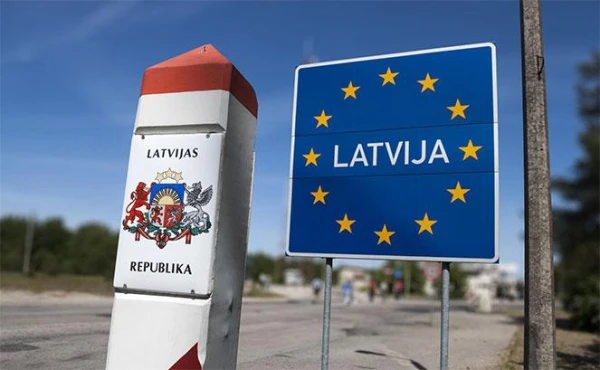
These documents mention not only the names of influential people from around the world but also Latvia and Riga in hundreds of instances.
Emails and other documents indicate that Epstein not only showed interest in recruiting potential victims in our country but may have also personally visited Latvia. Among the case materials, photographs of Latvian women's passports were also found.
Among other things, there are specific details such as plane tickets to and from Riga, as well as hotel bookings in the capital. Apparently, the most favored location for Epstein's circle was the Grand Palace Hotel, located between Dome Square and Castle Square. Its name appears most frequently in the materials.
Latvia is mentioned in these files from 2001 to 2018; however, most of the documents are related to around 2007—a time when Riga had quite an explicit reputation as a popular destination for so-called sex tourists.
The materials also feature the names of Latvian models and modeling agencies with correspondence, suggesting possible connections between Epstein's operations and this industry in Latvia.
One of the letters mentions a prominent industry figure—the head of the Natalie agency, Erik Meisans. In a conversation with TV3 News, he emphasizes that this topic was already raised around 2011 but then faded away. Now, according to him, nothing has changed—there are still many people working in the industry.
"No one says, ‘I’m looking for girls to send to Epstein’s island.’ Of all this, only in two cases did it turn out that those people knew Epstein. Out of hundreds I met. (...) No girl was sent or left. That’s important," noted Meisans.
Neither then in the industry were such suspicions discussed, nor does Meisans believe that any agency would dare to risk its reputation so much: "It cast a shadow. Now parents say, ‘It’s good that my daughter didn’t go there’—absolutely unfounded! It destroys a normal industry!"
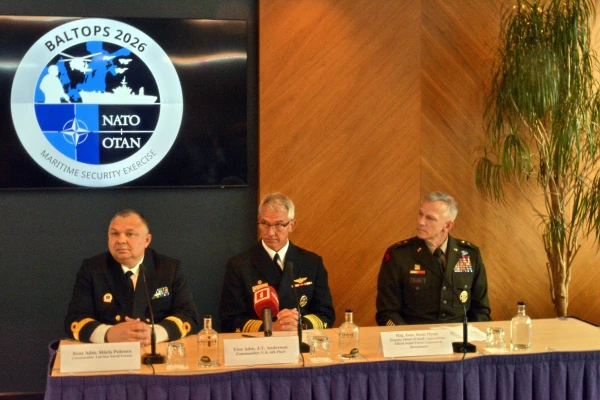
It is still difficult to predict what the consequences of the extensive "Epstein files" will be at all levels. On Monday, this was also the first question raised by President Edgars Rinkēvičs at a meeting with senior officials of the judicial system at the Riga Castle. A separate investigation is expected.
"It is necessary to summarize what information is generally available, what the connection to Latvia is, and also to ensure... The events are old. Some of them may have already been assessed in the context of some investigation. That is, it will be a comprehensive check, during which the prosecutor will draw conclusions about the next step—whether to initiate a criminal case, conduct an investigation into one or several cases," stated Attorney General Armīns Meisters.
During this investigation, it will also be decided whether there are grounds to request additional information from U.S. law enforcement agencies.
Justice Minister Inese Lībiņa-Egnere urges the public to report if they know anything and emphasizes that the statute of limitations for such crimes only begins after 20 or even 30 years after the victim reaches adulthood. A bill has already been submitted to the Saeima for a possible further extension of these terms.
"Now we, as a society, see how involved Latvia was. For me as a mother, it was a shock. I spent the whole weekend studying these files and the Criminal Code. As I mentioned earlier, I proposed extending the statute of limitations. Often, children who experience such monstrous trauma in childhood hide it in their memory and only remember it in adulthood," noted the minister.
And perhaps these will not be the only political changes—there are also proposals in the Saeima to reconsider the regulation of modeling agencies.