
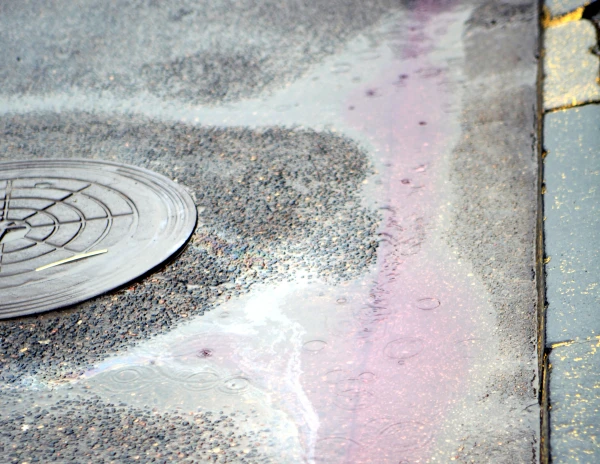
Pensioner Dzidra lives in the capital. In the middle of last year, she moved to a neighboring house. Receiving bills from the management company in winter, she noticed a line indicating a charge for 'stormwater drainage', reports the Bez Tabu program (TV3).
Dzidra points out that there was no rain in December, and she does not understand why the management company is charging residents for such a 'service'.
The pensioner emphasizes that at her insistence, residents at her previous residence managed to abolish the fee for stormwater drainage.
"In winter, it doesn't rain, yet we have to pay for stormwater. This is 'God's dew', why should I pay for it? It's just a way to make money. I'm not the only one receiving such bills. Think about how many thousands of apartments they send them to? What is their profit? Water from our roof does not even enter the 'Rīgas ūdens' system; it goes into the ground," Dzidra is convinced.
The bill lists the same amount of allocated rainwater every month, so the sum does not change. Although it is only 31 cents a month, Dzidra emphasizes that this way a substantial amount is collected from Riga residents.
Rīgas namu pārvaldnieks confirms that at Dzidra's previous address, such a line in the bill is indeed absent. However, this payment does not remain with the management; it is transferred to the services that maintain the sewage system.
"The payment is calculated by 'Rīgas ūdens' according to a specific formula. This is essentially the principle of an averaged payment: average annual precipitation is taken, and regardless of whether it is summer or winter, the amount is the same. We, as the house management, receive a total bill for the house and divide it by the number of apartments," explained Inita Kabanova, a representative of Rīgas namu pārvaldnieks.
The municipal enterprise Rīgas ūdens emphasizes that the water that enters the sewage system is treated — and this costs money, which is why a fee is charged.
"It cannot be said that the water that seeps into the ground disappears without a trace. Considering the huge volumes of rainwater, such as what we had this summer, it is easy to imagine that on the same Artillerijas street, the water would reach the first floor if there were no connection to the sewage system. There are also our collectors underground, where the water flows," explained Sandris Vanzovich, a representative of Rīgas ūdens.
Houses that have a direct connection to the stormwater drainage system are exempt from this payment. If the water enters the common sewage system, the payment is mandatory.
"This water enters our common sewage system, then to the pumping stations, and ultimately to the biological treatment station 'Daugavgrīva'. It doesn't matter if the water is cleaner or dirtier — the pumps still work, and the water undergoes treatment. Bacteria do not distinguish between clean water or not. The treatment cycle is the same," Vanzovich added.
Dzidra is determined to fight for the cancellation of the fee. In the meantime, she notices that in the first bill of this year, the cost of 'stormwater drainage' increased by seven cents.












Leave a comment