
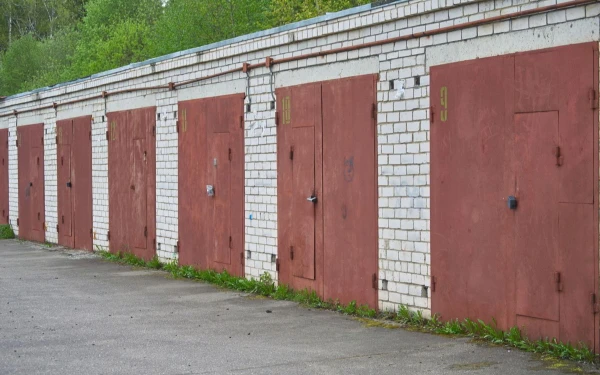
I rented a garage from an acquaintance, we did not conclude a written contract, we agreed verbally that I would pay a certain amount every month. But it turned out that I could not pay for the last four months.
The owner changed the lock and stated that he would not give me the key until I fully settled the payment. I cannot fully settle it right now. The car is currently in the garage, I have no access to it, and I need it. Moreover, I will need to pass the technical inspection in three months. Does the garage owner have the right to act this way? How can I gain access to the car? I can't break the lock in someone else's garage, even though my own car is locked inside? Reader bb.lv
Alevtina Grigorenko, lawyer:
– According to Article 1401 of the Civil Law, a contract in its narrowest sense is a mutual expression of will based on an agreement between several parties, the purpose of which is to establish an obligation right.
In simpler terms, people (contract participants) enter into some agreement, negotiate with each other about something, and take on certain obligations to fulfill the terms of this contract. In certain cases, regulations do indeed require participants to conclude a contract in writing, but in this particular case, it was not necessary.
It is important to note that even if the agreement of the parties is initially expressed verbally, it does not lose its legally binding nature simply because it is an oral agreement. In other words, the participants are obliged to fulfill the obligations they have taken on, even if the agreements are not documented in writing.
Regarding the specific situation described in the reader's question, since there is an oral agreement between the garage owner and the person using the garage, all actions and consequences (including the termination of such an agreement) must occur in accordance with the requirements of the law. Here, it is necessary to separate two components of the conflict situation.
The first is the dispute related to the collection of a debt (in this case, for rent). According to the general rule, in such cases, the landlord should file a lawsuit in the court at the location of the defendant (debtor). Retaining property, in this case, the car, without grounds is unlawful.
Therefore, the first step: the car owner should contact the landlord and point out the unlawfulness of his (the landlord's) actions. If the issue cannot be resolved through negotiations, the car owner should write a statement to law enforcement requesting a legal assessment of the situation and help the owner retrieve his property (the car). Such a measure is effective in the overwhelming majority of cases: after contacting the police, unlawfully retained property is usually returned to the owner.
The second is that the debtor should understand that his actions as a participant in the contract must also comply with the law – that is, he is obliged to repay the debt to the landlord. If a person is currently experiencing financial difficulties for any objective reasons, an agreement can be drawn up for the gradual repayment of the debt.
And to avoid any doubts later regarding the obligations taken on by the parties, it is better to conclude the contract in writing, where the conditions are specified, as well as possibly a repayment schedule.











Leave a comment