

To enhance the protection of Riga Airport from unauthorized drone flights, €2.42 million will be allocated, the government decided on Tuesday.
The rules prepared by the Ministry of Transport provide for the allocation of €2.42 million, of which €1.955 million will be financed by the European Regional Development Fund, and national co-financing will amount to at least €465,637.
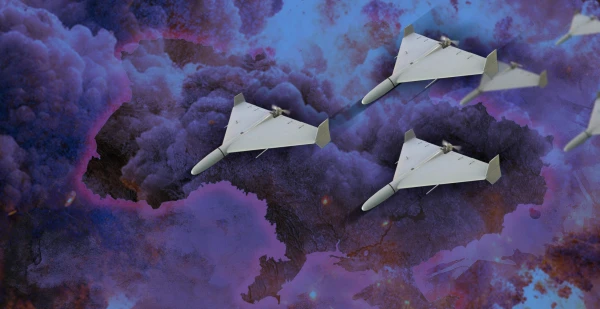
The project involves the implementation of modern comprehensive technological solutions for tracking and neutralizing unmanned aerial vehicles in the event of unauthorized flights.
As part of the project implementation, infrastructure for receiving unmanned aerial vehicles will be created, the airport will be equipped with the appropriate sensors, and the necessary software will be provided.
The aim of the rules is to enhance the capabilities of Riga Airport to detect, identify, track, and neutralize unmanned aerial vehicles conducting unauthorized flights in critical airspace zones and within the airport territory.
The ministry explained that Riga Airport is a facility of critical state infrastructure: its damage or incapacitation hinders the performance of state functions and poses a threat to public and state security. At the same time, drones pose an increasingly serious threat, making it necessary to strengthen the airport's protective capabilities.
The relevance of the issue was confirmed by an incident involving drones at Riga Airport on January 13 of this year. In this regard, the matter was discussed at a meeting of the National Aviation Safety Commission to develop a unified plan of necessary measures, the ministry clarified.
The financial report of Riga Airport for the nine months notes that the selection of a supplier for the implementation of a system for receiving, identifying, tracking, and countering unmanned aerial vehicles has been completed. A contract was signed with the selected supplier on July 6, 2025, and the first part of the procurement was implemented in the third quarter of this year. The airport is expected to require an investment of €3.5 million for the acquisition of the system.











Leave a comment