
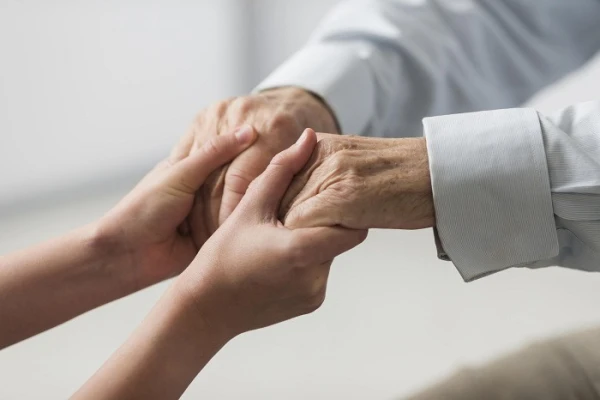
The financial situation and health status of many residents of Riga compel them to seek support from the local government. As noted at a meeting of the Social Affairs Committee of the Riga City Council by Irena Kondrate, the director of the Department of Welfare, next year preparations must be made for a new wave of requests...
Funding Increased Fourfold, Recipients Doubled
According to statistics from the Department, over the last 10 years — from 2014 to 2024, allocations for social needs in Riga have increased from €33.8 million to €127.6 million, or by 278%. The number of recipients has also increased by 93% — during the same period, the number grew from 18,106 to 34,886 people. This means that more than 1 in 20 residents of Riga — of which there are about 605,000 in total — receives assistance from the city authorities. This does not include recipients of state pensions and benefits.
At the same time, the staff of social assistance institutions is, to put it mildly, not the youngest — the average age has reached 53 years, 26% are aged 60 and over, and 13% have surpassed retirement age.
Ms. Kondrate noted that, against the backdrop of an increasing number of clients and demand for social services, the distribution and workload among various structural units still remains uneven. There are still queues for receiving social assistance or services. A restructuring of this important sector is necessary to allow for its development and orientation towards recipients. By the way, in monetary terms, the social block accounts for 8% of the capital budget.
The Department of Welfare itself is a relatively compact institution — it employs 67 workers, overseeing 6 institutions, 4 capital societies, and working with 50 contractual organizations. Most often, these are societies implementing assistance programs for various categories of the population, whether in the field of social assistance, healthcare, reducing various dependencies, employment, etc.
Personnel Matters
The municipal social service itself (director — Andris Iziņkevičs) consists of 465 people, distributed across 17 structural units, providing 76 types of services and 17 types of benefits. There is always more work than personnel — 10% of positions are vacant...
It should be noted that the profession of social worker has recently become more prestigious. During multiple visits for work in the Social Committee of the Riga City Council, nursing homes, children's shelters, and institutions for the homeless, your author has interacted with young people who have received a bachelor's degree in social assistance. In addition to the immediate results and gratitude from the served population, employees receive social guarantees and opportunities for growth, which, let’s agree, is significant in our turbulent times. Recently, the famous Riga documentary filmmaker Stanislav Tokalov released a film titled "The Third Attempt," set in the cozy and humane nursing home "Mežciems," which celebrated its 50th anniversary in November.
Communication In-Person and Online
Next year, it is planned to reorganize the work of both the Department and the Service. In the spring, a unified center for social issues will open in Pardaugava, employing 106 workers. In one place, every working day, one can receive all necessary information, by appointment or on a first-come, first-served basis. There will also be free computers for self-service. Workers will assist in filling out electronic declarations. The combined institution at Baldones Street 2 will also serve social homes — 8th Imanta Line 1 k.2 and Mežrozīšu 43. Nevertheless, even after the reorganization, the number of clients per worker will be 314!
In the summer, remote consultations will begin — today many seniors and people with special needs are already familiar with smart devices. To receive such a service, an identification means will be required — an electronic or plastic ID card, SMART-ID, a bank card with codes, or a code calculator.
This arrangement will ensure shorter waiting times and greater privacy during communication. Part of the staff currently engaged in administrative, financial, and computer matters will be transferred to work with people.
The Riga Social Service promises to operate under unified principles and standards — whether in the Northern or Latgale department. By the way, the Riga Center is somehow not entitled to its own department. However, after the reorganization, there will be a special department for assistant services, which will have 22.5 positions.
In 2026, the work of family support will be centralized; the practice of social care and social rehabilitation will be assessed more thoroughly; paperwork will be reduced, and administrative burdens will be lessened. As a result, it is expected that clients will reach workers more quickly and spend more time with them. The response time to crisis and threatening situations will decrease.
Safety Precautions
Often, lonely elderly people have doubts about whether the person claiming to be a social worker actually represents the Riga Social Service. To avoid potential fraud, the department informs that workers of the Riga Social Service have official identification cards, which they always present when visiting clients. If the identification seems suspicious, they invite you to call the unified information phone of Riga 80001201 or the phone of the Riga Social Service 67105048.
Here’s what else you need to know about social workers:
-
They always contact the client before a visit and agree on the time of the visit (exceptions are official requests from the police, orphan court, family doctor, etc.);
-
During the assessment, a report is drawn up, which the client reads and signs;
-
The worker never demands money;
-
The worker always states their last name and presents an official identification card with a photo, personal code, name of the institution, signature, and seal of the head.
The identification card is a laminated card with security features; it indicates the first name, last name, position, number, and date of issue of the worker's identification. The card bears the signature of the head of the Riga Social Service and the seal of the institution. The identification card is the property of the institution, and after the termination of employment or internship, it must be returned to the employer.
If a person cannot present an identification card, has not announced their visit in advance, or is unfamiliar, do not trust them and do not let them into your home. Do not give your identification documents — and especially money! — to a stranger!
NEW BENEFIT
Since November, Riga has started paying €150 twice a year to politically repressed individuals — there are 1,718 of them living in the capital. The youngest among them is already well over 60 — they were born in exile, which lasted until the early 1960s.










Leave a comment