
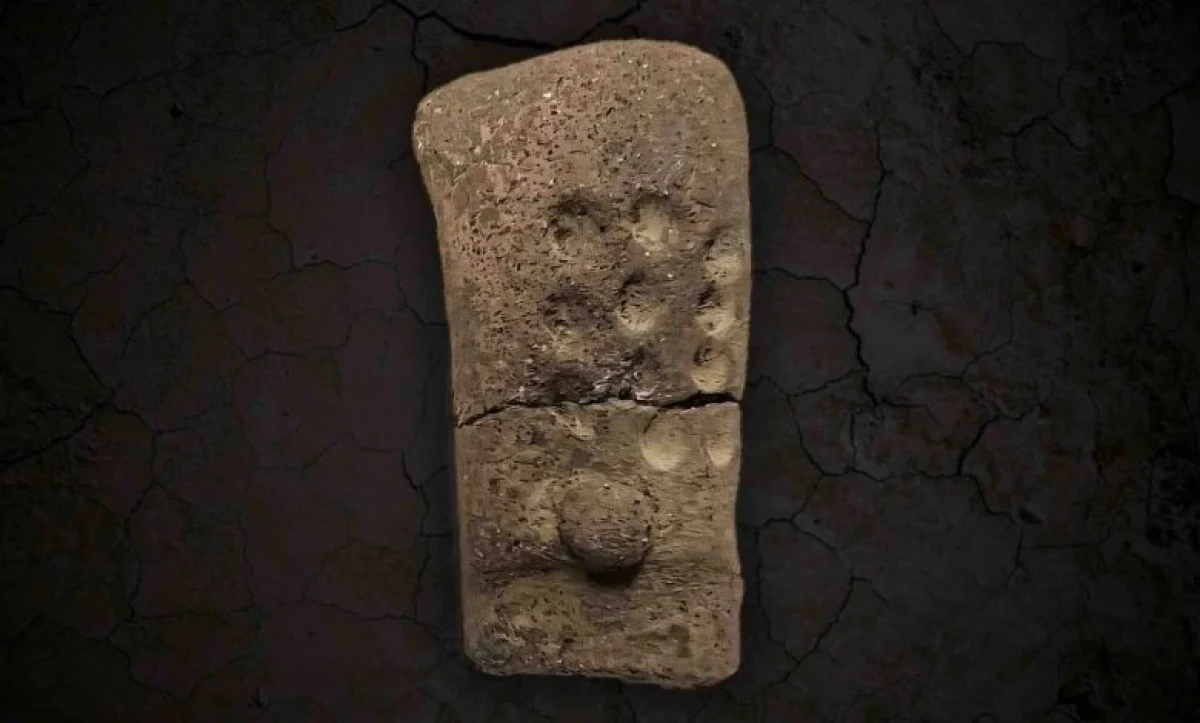
The mysterious artifact deserves the most careful study.
Archaeologists have discovered an unusual artifact that may be the earliest known evidence of the use of written numbers in Mesoamerica. It is a small clay figurine with eleven dots carved on its surface, arranged in three columns. Although the exact purpose of the find remains unknown, researchers believe that they may be looking at one of the oldest examples of graphical recording of numbers used for simple calculations or similar purposes around 750 BC. According to the authors of the study, this possible evidence of early numerical recording could shed light on the connection between counting systems, the human body, and concepts of identity in the worldview of ancient Mesoamerican peoples. The artifact was found at the ancient settlement of La Blanca, located on the Pacific coast of Guatemala. In shape and size, the figurine resembles a small television remote control. It belongs to a group of mysterious objects known to archaeologists as 'tablet figurines'.
Hundreds of similar items have previously been discovered in the area of La Blanca. These figurines received their name due to their characteristic rectangular shape. They also possess anthropomorphic features: their surfaces include decorative elements, including ornaments and symbolic representations of jewelry and clothing items. However, despite the presence of anthropomorphic elements, they are not naturalistic representations of a human head. Although similar figurines have been found in La Blanca before, the new specimen is notably different due to the presence of dots arranged in columns. This feature led scientists to suggest that the indentations on the surface might not serve a decorative function. The authors of the work, Julia Guernsey, Stephanie M. Strauss, and Michael Law, note that the ordered dots on the figurine's headdress raise more questions than they answer.
According to them, such a situation is characteristic of unique finds that cannot be fully interpreted by comparing them with a large number of similar items from La Blanca or other archaeological sites. The researchers emphasize that the figurine should not be viewed merely as an archaeological curiosity or an isolated addition to the complex history of the emergence of writing in Mesoamerica. In their opinion, the artifact deserves the most careful study. One clue to deciphering the purpose of the find may be the connection of tablet figurines with the human head—a part of the body traditionally associated with individuality. This is particularly important, as there was a close connection in ancient Mesoamerica between numbers and concepts of a person's identity. Archaeological data indicate that by the time the figurine was created, local societies were already experimenting with numerical systems. One well-studied system was the dot-and-bar notation for numbers, where dots represented units and bars represented fives. Scientists note that when studying the codices of the Mixtec and Aztec peoples, one can quickly become accustomed to reading even long sequences of individual dots and approximately determining their quantity through visual perception of numbers. This process is known as subitizing.
At the same time, regardless of the specific form of numerical notation, the Mesoamerican vigesimal counting system was closely linked to the human body. Its basis consisted of ten fingers on the hands and ten toes, and the number twenty itself was associated with the concept of individuality and human being. Notably, in the K'iche' language, the word 'winik' means both 'person' and 'twenty'. This coincidence is explained precisely by the connection to the twenty fingers of the human body. Despite the compelling parallels between the found figurine and known Mesoamerican counting systems, researchers urge caution. They warn against automatically interpreting the artifact through the lens of later written traditions of the region. One reason is that there likely never existed a single universal system of numerical notation in Mesoamerica. Nevertheless, the find adds to the growing body of evidence that the inhabitants of La Blanca were actively experimenting with symbolic ways of conveying information centuries before the emergence of full writing systems. The exact meaning of the eleven dots on the figurine remains unknown. However, researchers argue that these marks could represent a name, date, or some other personal identifier.
If this hypothesis is correct, the arrangement of the dots may indicate an early connection between counting, identity, and social expression during the formation of the first urban communities in Mesoamerica. The authors also acknowledge that the question of what specific identity the figurine with eleven dots expressed—human, supernatural, or a combination of both—remains open. However, the overall analysis of the artifact points to a close connection between time, numbers, and concepts of identity that existed in the minds of the ancient inhabitants of Mesoamerica. In conclusion, the researchers draw a philosophical parallel with the reflections of the ancient Greek thinker Aristotle. They recall the words of philosopher Paul Ricoeur regarding the interpretation of Aristotle's ideas, according to which existence in time means not just presence at the moment of the existence of time but also 'existence in number'. Perhaps the early concepts of the Mesoamerican peoples regarding time and the nature of being were not so far removed from such philosophical ideas.















Leave a comment