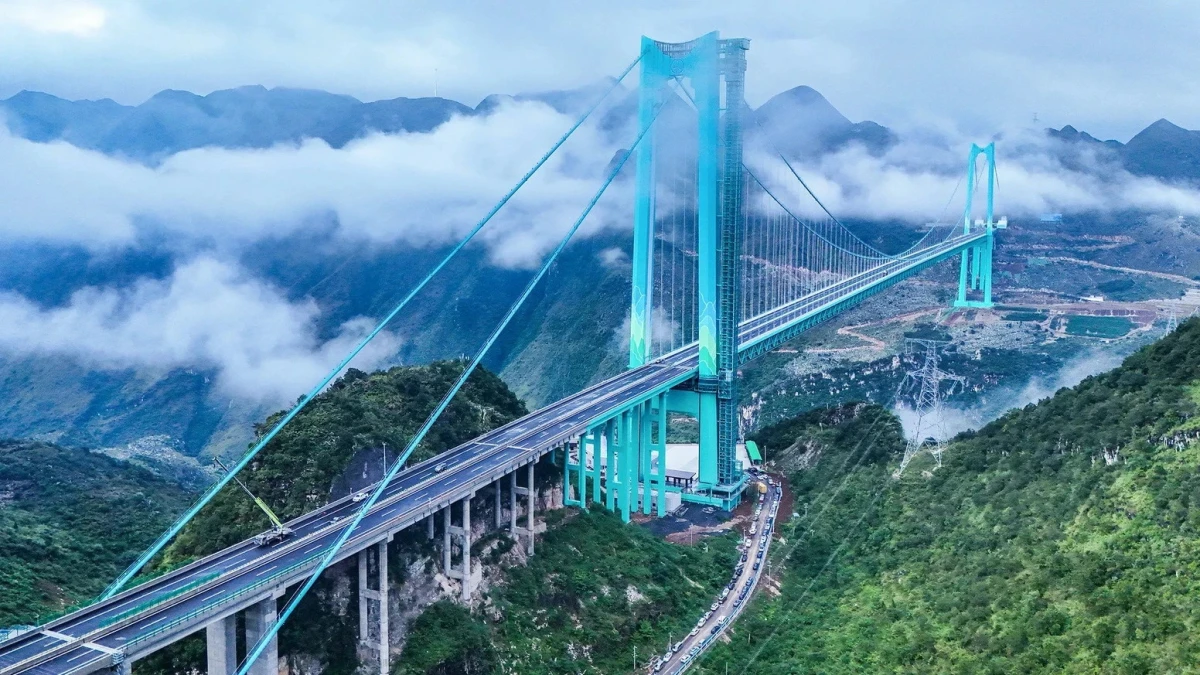
The new Huajiang Bridge over the Grand Canyon in China's Guizhou Province has become not only an engineering marvel but also a true engine of change for local residents. Thanks to this large-scale infrastructure project, remote areas have gained convenient transportation, modern communication, and a significant influx of tourists.
The Huajiang Bridge, located in southwestern China, is considered the highest bridge in the world. Its roadway is situated 625 meters above the river, and the total length of the structure reaches 2890 meters. The main span of the bridge is 1420 meters.
For tourists, this grand structure quickly became a popular attraction and a spot for stunning photographs. However, for the local residents, its significance runs much deeper. The new transportation route has provided convenient access to the highway and reduced travel times from several hours to just minutes.
After the bridge opened in September 2025, travelers began to flock to Guizhou Province. At the same time, authorities and private companies started investing in the development of digital infrastructure, including 5G networks and modern telecommunications.
The increase in tourist traffic has positively impacted the local economy. New restaurants, shops, hotels, and family guesthouses are opening in the region, creating additional jobs.
As noted by journalists from the Associated Press who visited the region during a special press tour, the improvement in transportation accessibility and communication quality is helping to develop not only the areas near the bridge but also more remote settlements.
One such place is the ancient city of Tianlong Tongpu, located more than 100 kilometers from the bridge. Its history spans over 600 years. The settlement was founded during the Ming Dynasty as a military outpost and is now known for its unique Dixi opera performances featuring wooden masks and military themes.
Local residents note that thanks to social media and improved infrastructure, interest in the city has noticeably increased. More and more tourists are coming here to learn about the traditional culture and history of the region.
The story of the Huajiang Bridge demonstrates that large infrastructure projects can not only set world records but also change the lives of entire regions. New roads, connectivity, and tourist interest help remote areas attract investment, preserve cultural heritage, and create new opportunities for the development of local communities.