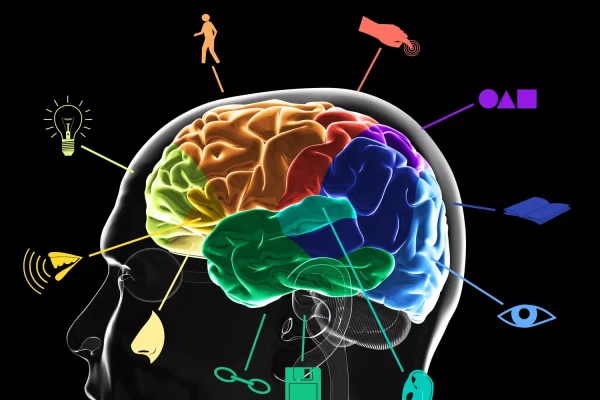
Our actions do not arise on their own — they are preceded by thoughts that trigger internal reactions in the body. Even if a person is not aware of this process, the brain is already forming signals that influence behavior and decision-making.
How Thoughts Trigger Reactions
It is commonly believed that action occurs first, followed by reflection. However, in practice, it works differently: a thought arises first, and only then does the body react to it.
This can be observed in a simple example with a pendulum: if you hold a suspended ring and mentally pose questions, it begins to move. From the outside, this may seem unusual, but it can be explained scientifically.
What is the Ideomotor Effect
Such reactions are related to a phenomenon known as the ideomotor effect. According to Encyclopaedia Britannica, this is the process by which thoughts or images trigger involuntary muscle movements.
A person merely formulates a response in their mind, and the body already reacts to it with barely noticeable contractions. These impulses may be minimal, but sufficient to initiate a physical action.
How This Affects Behavior
Thinking gradually shapes habitual reactions. What a person thinks about regularly influences:
- behavior in everyday situations;
- decision-making;
- emotional state.
If the internal dialogue is filled with anxiety or doubts, the body begins to act in accordance with this mindset. As a result, reactions are reinforced that may hinder the achievement of goals.
Why It Is Important to Control Thoughts
Changing behavior starts with working on thinking. It is important to track which beliefs are repeated most often and adjust them if necessary.
Focusing on clear goals and constructive phrasing helps to reprogram the brain's reactions. Over time, this reflects in actions: a person begins to act more consciously and consistently.
How This Affects Results
The connection between thoughts and actions shapes an overall life vector. When the internal dialogue becomes more organized and positive, behavior changes as well. This allows for achieving set goals more effectively and establishing sustainable decision-making patterns.