
Returning to a city I visited thirty years ago is always particularly interesting. Especially if it is a million-strong metropolis in the summer, belonging to a country with the largest population in the eastern part of the European Union.
How to Get There
I heard nothing about the scandals surrounding the construction of the railway from Krakow's John Paul II Airport to the Central Station; apparently, they somehow laid the track without noise and dust. A modern terminal; for passengers with electronic devices at the ready – the old good ticket office. A ticket costs 20 zlotys, or about 5 euros.
Here comes the comfortable electric train. While we settled in, new passengers constantly entered through the button-operated doors – and soon the carriage was almost full, with many standing. Next to us were tourists from Italy; I later noticed that there were many visitors from Catholic (one might even say former) states of "Old Europe". They are returning to their roots, so to speak.
With each hour in Krakow, you realize that the idea of going there in the "low season" – during the still Polish cool and rainy spring (the weather in the Carpathian foothills is as changeable as it is on the Baltic) – was definitely sound. If their year starts with this number of tourists – what will it be like in the height of summer!
Krakow Airport is a testament to this – with traffic incomparable to Riga (11 million versus 7 million passengers a year), it is already somewhat cramped. At least, finding a place to sit is not so easy – unless, of course, you don't buy anything in the numerous cafes and bars. A crowded terminal also promises quite long lines for security checks – so it’s better to arrive a couple of hours before your flight.
As for public transport, Krakow is extremely friendly, again, in the sense that foreigners do not need to load local ticket apps onto their smartphones – simply, every wheeled unit has its own ticket office where you can pay by card or with cash in zlotys. Krakow has a developed public transport network, including about 120 bus routes and 23-25 tram lines (day and night). The tram network covers 90 km of tracks, and transport operates from 5:00 AM to 11:00 PM with intervals of about 15 minutes. The ticket price, converted to euros, ranges from 1 to 2, depending on the duration of the trip.
Of course, our taxi apps are also valid for Krakow. To inquire, I entered the address of the zoo, located almost on the outskirts – and it came out to about ten euros, with an economy car option.
Where to Stay
The most popular sites like Booking.com throw out hundreds of options for Krakow – I chose a classic option. A hotel built during the reign of the blessed Emperor Franz Joseph, located right by the train station and literally at the gates of the Old Town. Within walking distance was the Barbican – under such a menacing name, there stands a compact, red-brick fortress with sharp towers, built in 1498–1499 during the reign of Polish King Jan I Olbracht, who, after the battle at Kozmin Forest, awaited an attack on Krakow by the troops of the Moldavian lord Stephen the Great. Those were the days – Moldovans would storm the Poles...
Let me return for a moment to the station theme: why it is advantageous to stay close to Kraków Główny. The former classic building of the railway "palace" (in Polish, this word fits very well) is now merely an architectural landmark; still, transport functions go through the new terminal, which is connected to a huge shopping center. Here, you can stroll for hours among shops of well-known – or completely unfamiliar clothing brands, trying on, comparing prices (most often they are already marked in euros on the tags); and then bring your finds back to your temporary abode. All this uncompromising shopping also happens on Sundays – although, it would seem, religious traditions should have left this day for the church. But lo and behold – on the medieval streets, everything is open, awaiting foreign customers.
Right there, in the station mega-mall, there are all sorts of dining establishments – from Mediterranean to Eastern; with a relative predominance of "unhealthy" fast food. Young people in Krakow, like everywhere else, love burgers and shawarma!
Our hotel provided the opportunity for a hearty breakfast – purely Polish, throwing into the body such a fantastic dose of proteins, carbohydrates, fats, and vitamins in the morning that one could easily storm the historical bastions of Krakow until evening. In terms of hotel dining, the Commonwealth, despite any crises, still represents the best example of hospitality! In large places, like ours, there is also lunch, where you can choose from the menu, a soup, for example, with pierogi.
Pierogi are a traditional Polish dish, consisting of dumplings made from unleavened or slightly sweet dough with various fillings: savory (potatoes, cheese, meat, cabbage with mushrooms) or sweet (berries, fruits). The most famous dish of Polish cuisine, they are often served with cracklings, fried onions, or sour cream. "Russian pierogi" is a tribute to the region that Poles once called Chervona Rus. Currently, part of this territory belongs to Poland, and part to Ukraine. In any case, you’ll lick your fingers!
Everywhere we went – we first looked for the famous Krakow cake. And there were countless of them. Even in the form of dessert croissants, for a moment, at 7 euros each in a tourist spot. In the version from our childhood: with a sponge cake at the bottom and meringue on top, for some reason, we didn’t find it. And a Russian-speaking girl in her 20s, working as a waitress, was puzzled. Well, how could it be, since all the pastries around – they are Krakow cakes.
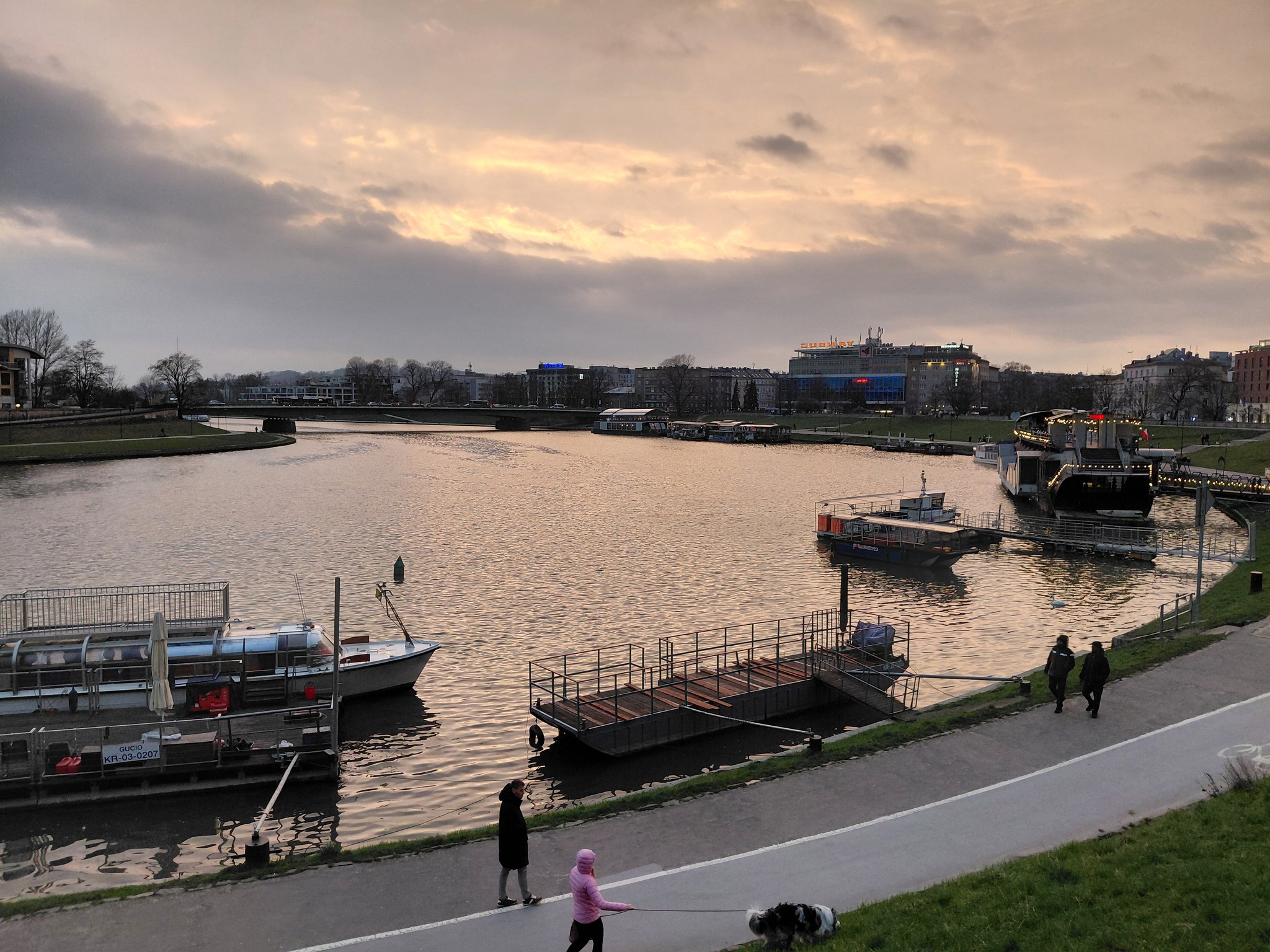
Wisla is power.
What to See
First of all, I note that Krakow differs from its former Austro-Hungarian capital neighbors – Vienna or Prague – by the absence of the obligatory red double-decker bus in tourist capitals. Indeed, how could it turn around in the narrow streets of the Old Town?
Therefore, the Krakow tourist business took a cunning path – they brought in Chinese mini-electric trains, which transport trusting foreigners around. But, unfortunately, it must be stated – this is a scam. You will see little through the murky plastic canopy, and you will pay at least fifty euros for half an hour. The only thing more expensive might be a ride in a horse-drawn carriage.
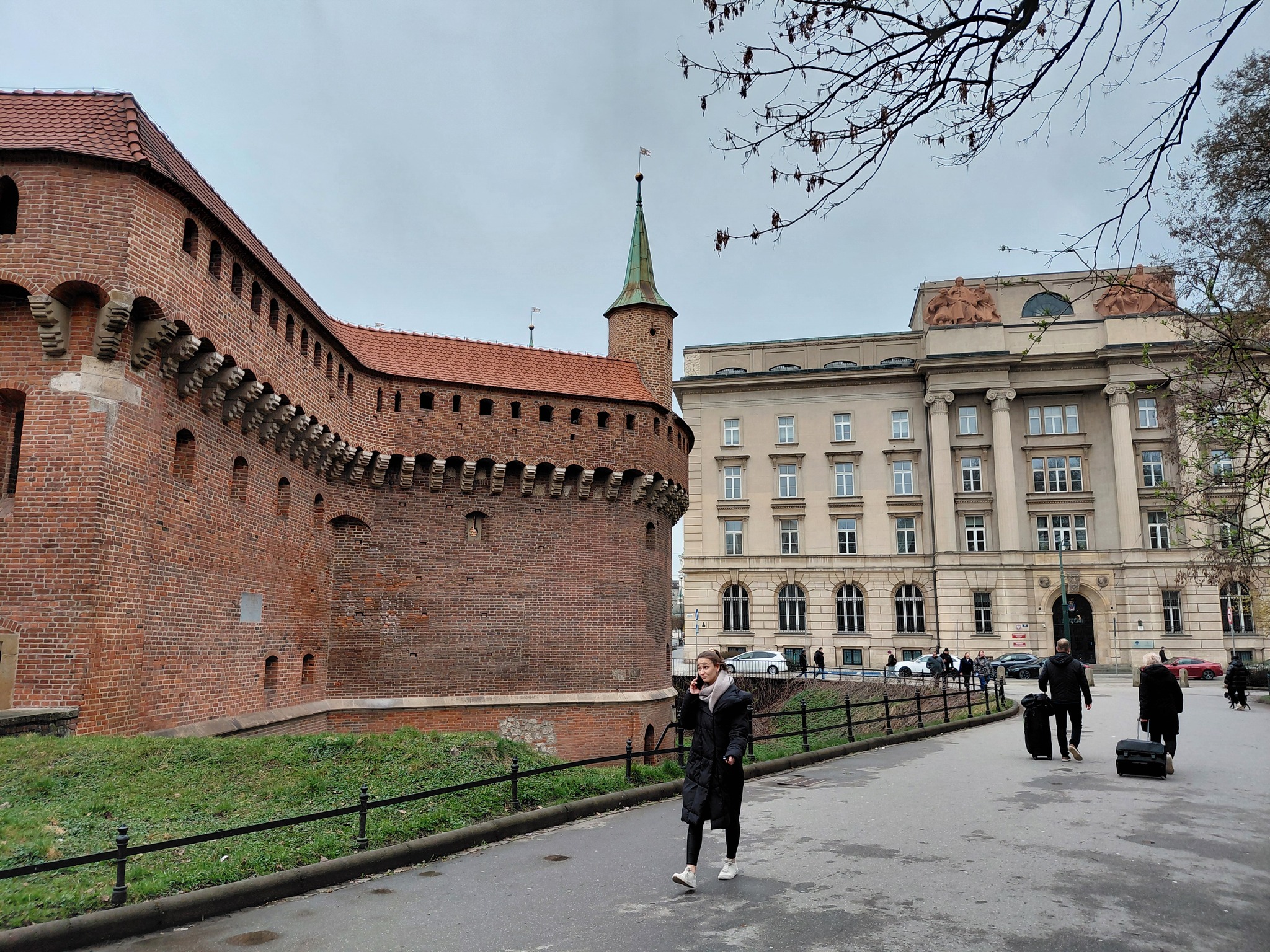
Barbican – a fortress of the Middle Ages.
We will choose a walking route. To avoid getting lost, with the help of the beloved Waze service, setting it to pedestrian mode, we will cross the Old Town in all possible directions. The electronic pedometer records – in three days in Krakow, we walked about thirty kilometers through its wide boulevards and narrow alleys, which is not too much. Because we constantly wanted to linger somewhere for a couple of hours.
The Holy Mass at St. Mary's Basilica particularly impressed us. The first stone temple in the Romanesque style was founded in 1221–1222 by Bishop Ivo Odrowąż on the site of a previous wooden church. Soon, however, it was destroyed as a result of Tatar raids. This again looks wild in the context of geopolitics: where modern Tatarstan is, and where the Commonwealth is, a country of the EU and NATO!
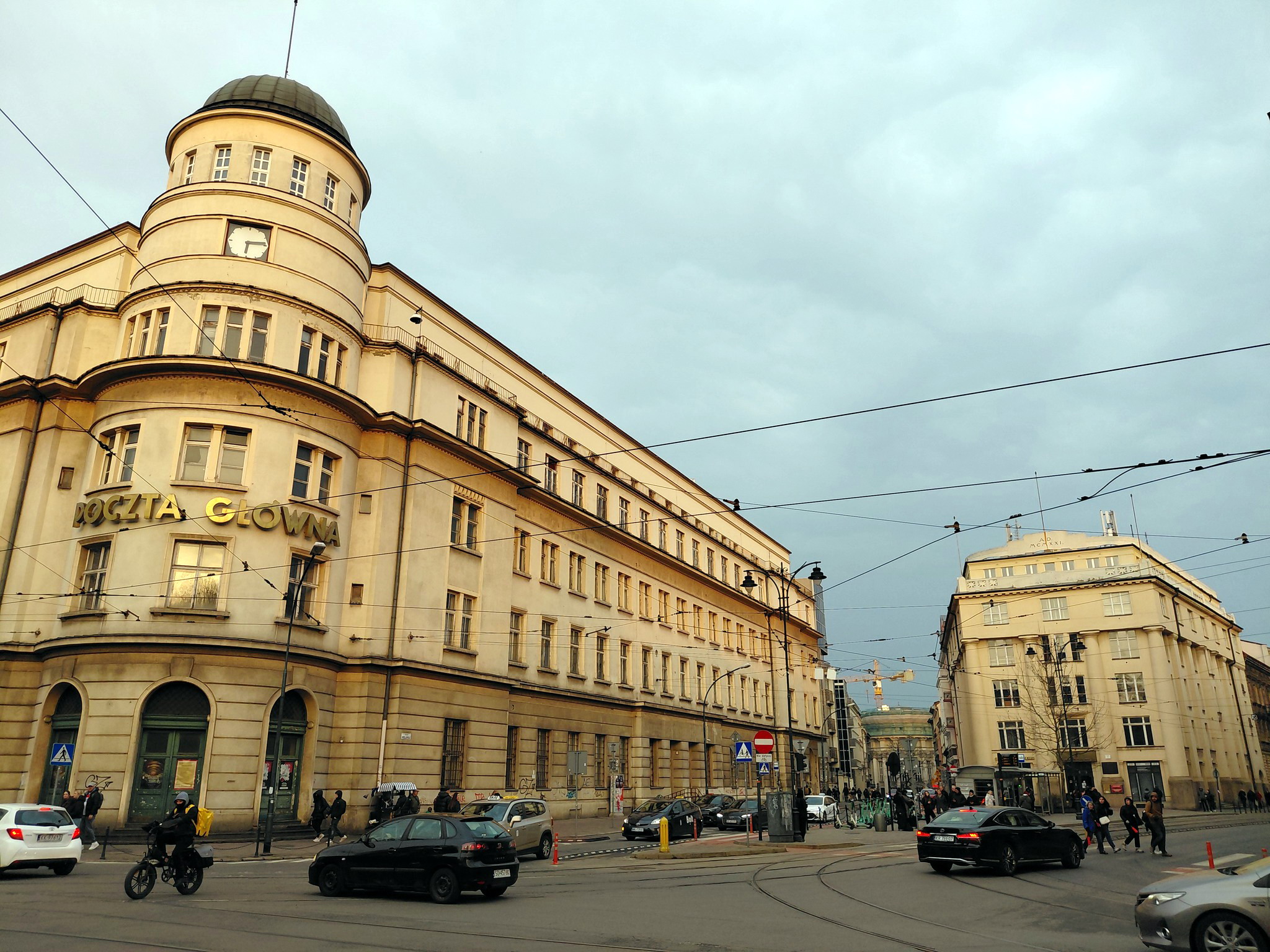
Architecture of interwar Poland, on the left the closed post office.
In 1290–1300, partially on the previous foundation, an early Gothic hall church was built, consecrated around 1320–1321. In 1887–1891, under the guidance of Tadeusz Stryjeński, the church was given a neo-Gothic appearance. The church acquired polychromy – magical stained glass in the presbytery and above the main organs. On March 8, 1973, the church was entered into the register of monuments of the Lesser Poland Voivodeship.
Allow me a small excursion: why suddenly "Lesser"? Because after the partitions of the Commonwealth in the 18th century, "Greater" Poland, with the capital Warsaw, came under the control of the Romanov Empire, which, after a series of heroic and doomed uprisings, underwent Russification. And under the Austrians – the area of present-day Krakow, "Lesser", the guardian of religion, language, and traditions. Since then, the toponym has remained, and even the railways here are their own, "Lesser Polish".
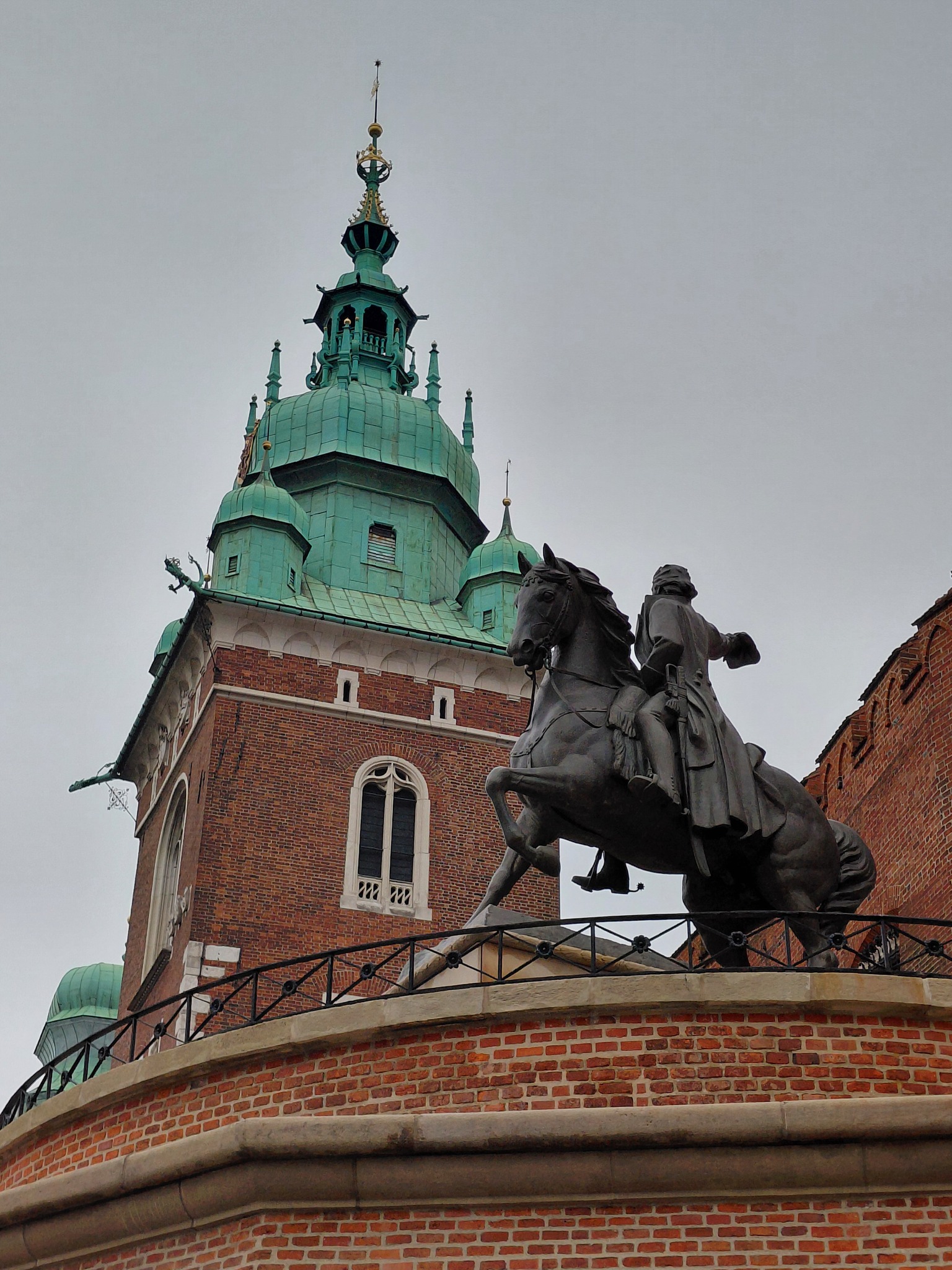
Rebellious General Kościuszko against the backdrop of Wawel Castle.
In the 1970s, when the Polish People's Republic was at its most prosperous, maneuvering between cheap raw materials from the East and loans from the West, by the way, not only basilicas were restored, but they also built a humorous symbol of Krakow – the Dragon at the foot of the royal Wawel Castle, on the banks of the epic Vistula River. Every five minutes, this six-meter demon, standing on its hind legs, shoots a gas, fiery salute into the sky. It is very impressive in the evening, definitely worth seeing.
Market and Palaces
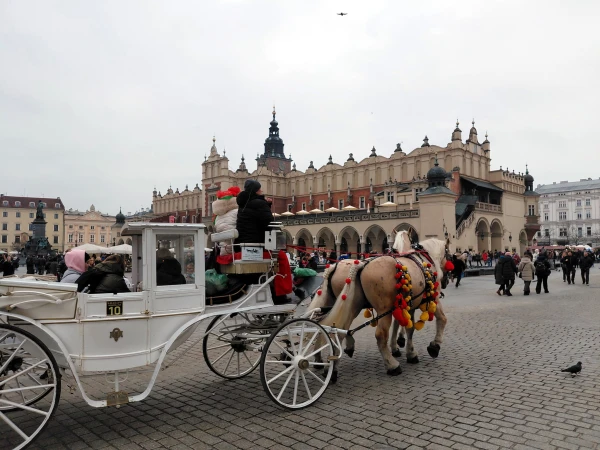
The main trading square of Old Krakow – is still filled with merchant shops, there is everything here. My favorite is oscypek, a traditional Tatra smoked sheep cheese of elliptical shape, made by the Górals, a mountain sub-ethnos. In the heights of the Tatras and Beskids, which make up the Carpathian range, they also make lovely axes (souvenir wooden or real steel), all sorts of fur and woolen items. All this is presented at a constantly operating fair, in the middle of the medieval rectangle of buildings and temples. And a folk choir performs from the stage.
Art lovers and military history enthusiasts, I invite you to the Palace of the Czartoryski Princes in Krakow. This influential Lithuanian-Russian, and later Polish magnate family of the "Pogoń" coat of arms, descended from the Gediminas family. Since the 15th century, they owned Czartorysk in Volhynia (now a village with about 1,500 inhabitants). In the 18th century, they formed a powerful political "Family", owned vast lands, and contributed to the development of culture. The building, known today as the Museum of the Czartoryski Princes in Krakow (St. John Street, 19), was originally built as a city arsenal in 1565. Later, in the 19th century, it was rebuilt to house the collection brought by Władysław Czartoryski in the 1870s, and the official opening of the museum took place in 1878–1887. By the way, "czartoryski" means – deep ravine...
Admiring the illustrious lords and ladies depicted in the costumes of the Middle Ages, Renaissance, and Modern times, their armor, weapons, and jewels, we move on to the artistic collections of the Czartoryskis. In the 19th century, already under the scepter of the Habsburgs, they became avid collectors of various antiquities. The huge ancient collection includes hundreds of originals – there are vases from Cyprus that are 6000 years old, artifacts from the Hellenes and Etruscans, marble Rome, brought by Poles directly from excavations in Italy, and even several ancient Egyptian mummies.
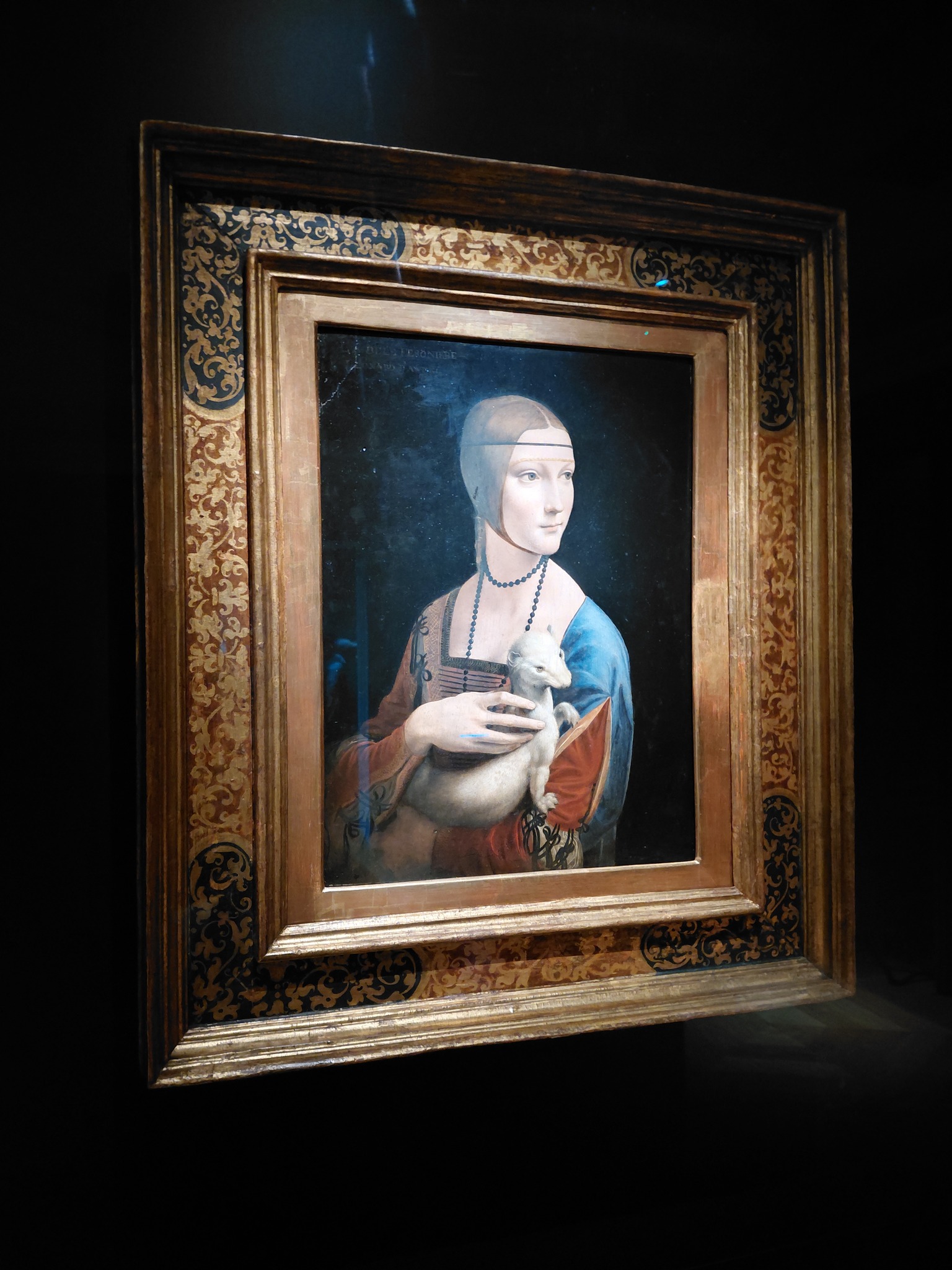
A cult work by the great Leonardo.
The star of the museum is "Lady with an Ermine" (1489-1490), a portrait of Cecilia Gallerani – the mistress of Ludovico Sforza, nicknamed Il Moro (Italian - the Moor), Duke of Milan, which is confirmed by the complex symbolism of the painting. Along with the "Mona Lisa", "Portrait of Ginevra de' Benci" and "La Belle Ferronnière", the canvas belongs to the number of four female portraits by the great Leonardo.
The next museum visit is to the Krzysztofory Palace (St. Christopher), located right on the Market Square. Super-modern, with multimedia features, the history of the city of Krakow. Precious rings of the mayor are presented, as well as the garments of ladies from the gallant age, the Jewish crown of the Torah… The rich and influential Jewish community of Krakow all perished in the nearby Auschwitz death camp, as narrated in the dramatic film "Schindler's List". The former pottery factory of this entrepreneur, where he saved the doomed, has now become a landmark of Krakow.
And most importantly – all this we can now observe, thanks to the fortunate coincidence of the Second World War, the courage of Polish underground fighters, and the intelligence of the Red Army. May your days last for centuries, Krakow.
INDEX OF BUBLIKA
The traditional Krakow obwarzanek (from Polish – "to boil"), dates back to the reign of King Władysław II Jagiełło and Queen Jadwiga, mentioned in chronicles from 1394. It is a huge bagel, covered, depending on the variant, with cheese, salt, caraway, or poppy seeds. Blue trays are found throughout the city – here they prefer cash.
The most expensive obwarzanek was found at the airport, for 6 zlotys (1.5 euros) – while the cheapest were sold around 10 PM by vendors at the Market Square, for 1 zloty (25 cents). The best way to stave off hunger!
Riga – Krakow – Riga.




Leave a comment