
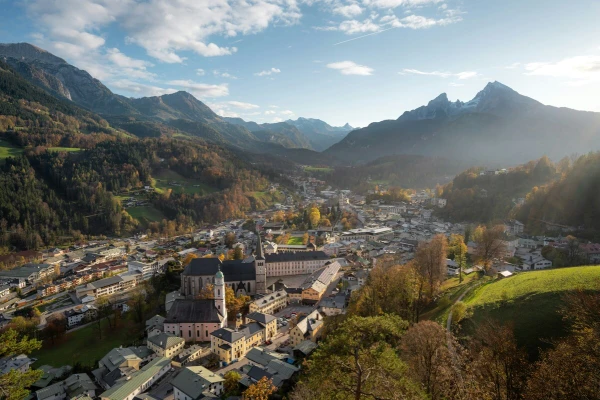
These little places combine history, nature, and a tranquil atmosphere.
Secret places in Bavaria: the federal state traditionally attracts tourists with Neuschwanstein Castle, Munich, and the highest mountain in Germany — Zugspitze. However, the region offers many more destinations for recreation. Many of them remain off the beaten path but combine history, nature, and a tranquil atmosphere.
Obernzell: A Resort with Episcopal Past
Obernzell is located in the Passau district and officially has the status of a state resort. In Germany, this title is awarded to localities with confirmed wellness conditions and developed recreational infrastructure.
The town served as the summer residence of the bishops of Passau. The market square was formed as early as the 13th century and was rebuilt in the 19th century.
Nearby runs the Jagersteig trail in the Bavarian Forest. It is considered part of the Donausteig route, which connects the Passau region with the Austrian cities of Linz and Grein. The trail offers panoramic views of the Danube Valley.
Altmühl Lake and Prunn Castle: Nature and Medieval History
Altmühlsee is located northwest of Gunzenhausen. The lake is part of the Fränkisches Seenland — Franconian Lake Plateau. Water sports and family recreation are developed here.
The so-called Vogelinsel — Bird Island — is of particular importance. It is one of the key protected areas for migratory birds in Bavaria.
Nearby stands Prunn Castle. It was founded around the year 1200. Today, visitors can only enter as part of a guided tour. In the 19th century, the castle came under state care, and King Ludwig I supported its restoration.
Elb Lake: Legends and the Glacial Era
Elb Lake is located near Aitrang, not far from Kaufbeuren in the Allgäu region. It was formed about 15,000 years ago at the end of the last Ice Age.
The dark water is explained by its swampy origin. The swamp acts as a natural filter, so the water quality remains high. Local legends are associated with the lake. According to tradition, residents drowned church bells during the Thirty Years' War. It is said that on quiet nights, their ringing can be heard.
Today, the area around the lake is equipped with lawns, a campsite, and a restaurant by the water. The place is suitable for both a short trip and a weekend getaway.
Wasserburg am Inn: Older than Munich
Wasserburg am Inn is located about 50 kilometers from Munich. The town is considered one of the most historically significant in Old Bavaria.
The old town is filled with colorful Gothic houses. Narrow streets, cafes, and the waterfront create the atmosphere of a southern town. This is why Wasserburg is often chosen for leisurely strolls.
Felsengarten Sanspareil and Zwernitz Castle
Felsengarten Sanspareil was created in 1744. It was initiated by Margravine Wilhelmina, sister of Prussian King Frederick the Great.
The garden features natural rock formations. The architects made minimal changes to the natural landscape. Nearby is Zwernitz Castle. Together with the park, it forms a unique historical and natural ensemble.
Wölkauer Meander of the Main: The Center of Franconian Wine
This is the largest river bend in Bavaria. The region is known for winemaking and active recreation.
The town of Volkach has more than 1,100 years of history. It is considered the center of the Franconian wine region. Tourists come here for tastings, cycling routes, and walks through the historic center.













Leave a comment