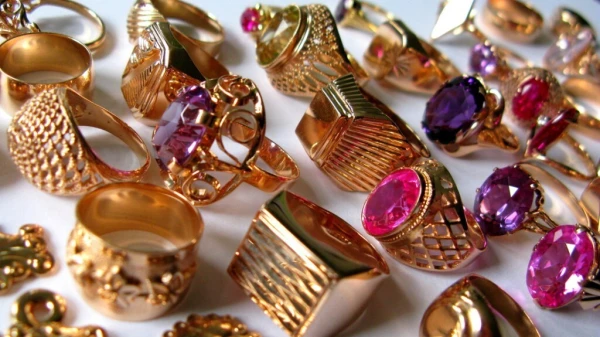
One such ring could cost several annual salaries.
Rubies, sapphires, topazes — when sorting through their grandmother's jewelry boxes, heirs often find clunky Soviet jewelry with large colored stones. The design of these pieces often leaves much to be desired, and young people hopefully take their inheritance to pawnshops, where they are met with harsh disappointment: they are not offered millions for the jewelry.
Jewelers pay scrap prices for precious metals, and the stone insets are returned — they are of no use to anyone, except perhaps for artisans crafting costume jewelry for sale on online platforms. The thing is, these stones are synthetic, and they were originally intended for purposes other than the jewelry industry.
Military Legacy
The first such ruby was synthesized in the USSR in 1939 at the Institute of Crystallography, but fashionistas were not on their minds at that time. All synthetic stones were intended for technical needs, primarily for the military industry: precision engineering, avionics, and later — lasers. Synthetic stones began to be used as jewelry only after the war.
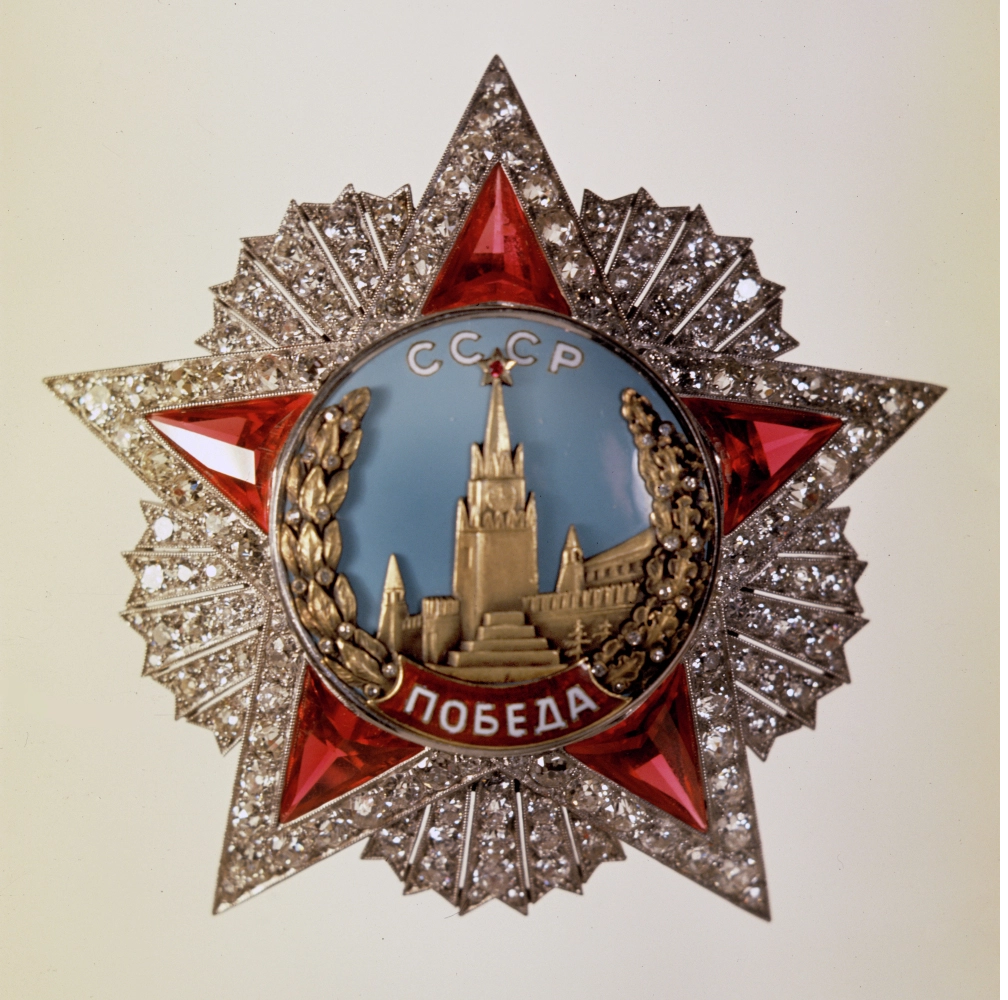
"Starting from the 1950s, they began to be synthesized on a mass scale, but even then, there was no talk of purposefully producing material for the jewelry industry. It was only closer to the end of that decade that one of the well-known factories, 'Korund' in Dzerzhinsk, began to mass-synthesize rubies in large quantities, including for jewelry. By the way, in some rare cases, natural rubies were found, but this was the exception rather than the rule. There were no deposits of jewelry rubies and sapphires in the USSR. One could say that all rubies in the Union were synthetic," explained gemologist and lecturer at the Gemological Center of Moscow State University Elena Novoselova to "AiF". Even in the famous Order of Victory, of which only 20 were made, artificial rubies were used.
Emeralds for the Chosen Few
As for jewelry with natural gemstones — emeralds and diamonds — these were also rare items, despite the presence of local deposits. The fact is that these stones were also utilized for defense purposes. Before the war, emeralds mined from the Malyshevsky deposit were cut and sold abroad, earning foreign currency for the state, and after 1941, they found another application.
"The country was in dire need of beryllium, which was used for steel alloying and armor production. In the 1940s, emeralds mined from the Malyshevsky deposit were sent for processing to obtain beryllium concentrate. During this period, there was no talk of mining jewelry emeralds at all. This resumed somewhere in the 1960s–1970s, so we say that in the Soviet Union, there were indeed rings with natural emeralds for sale, but one must consider the realities and characteristics of our country during that period. Buying a ring with a real emerald in free sale was practically an unreal story. They were sold in 'Beryozka' stores, and they could be sold through the 'Soyuzkvartsamotsvety' system of the USSR Ministry of Geology. Only non-ordinary people could buy such items. For example, there is a very famous ring with an emerald that was given to Marina Vladi by Vysotsky. There were emeralds in the unique collection of Lyudmila Zykina. Ordinary people did not have them," Novoselova said.
Best Friends of Soviet Girls
A similar story was true for diamonds. In 1947, Stalin signed a decree: "Find our diamonds. At any cost." He was not concerned about jewelers, of course. Machines, drilling rigs, semiconductors, optics — all of these required diamonds, which had to be purchased with foreign currency, something that was unacceptable.
The search for diamonds dragged on for many years, and they were only found in the mid-1950s. "This became one of the important export items for the USSR. By the late 1960s, the Soviet leadership concluded that exporting diamond raw materials was not the most profitable venture, and they began to develop the cutting industry. By the 1970s, it had become so professional that the term Russian Cut appeared on the international market, and diamonds cut in the Soviet style were recognized as the best in the world. This is a mark of quality, with perfect cutting in terms of execution, proportions, and polishing. They also appeared in Soviet jewelry, but despite the colossal reserves and quality of kimberlite pipes, the idea that an ordinary Soviet citizen went and bought a diamond piece was out of the question.
For example, earrings with small stones totaling 0.3 carats could be purchased for the price of a Volga car (about 9,000 rubles at the beginning of the 1970s. According to the State Statistics Committee, the average salary in the USSR in 1970 was 122 rubles, meaning one would have to spend six years' worth of income for jewelry with 'diamonds'). They were found in private collections, such as that of Galina Brezhneva, but not among ordinary citizens," explained the gemologist.
In the USSR, diamonds were much more expensive than in modern Russia. According to Novoselova, when owners of items with stones cut in the Russian Cut style go to pawnshops and buying points, they are not prepared for the price quoted, which is significantly lower than it was in the Union: such are the current market realities.
Those who could not afford diamonds wore jewelry with cubic zirconia — crystals of zirconium dioxide that are similar in characteristics to diamonds. The Physical Institute of the Academy of Sciences of the USSR developed the technology for their synthesis in 1970. They were, of course, also not intended for jewelry but for lasers, but they appeared in jewelry very quickly, providing women with an inexpensive alternative to diamonds, as these crystals are very close in characteristics to precious stones.
Where Do Diamonds Come From?
Today, 90% of all the world's diamonds are cut in India, including Russian ones. In our country, only large stones are processed today.
"This story has developed over several decades, and Indian cutters learned to cut diamonds from our cutters. After the collapse of the USSR, many of them were left without work, and they were invited to India, where, with their help, probably the most powerful cutting industry in the world today was created," Novoselova said.
How to Distinguish a Synthetic Stone?
"It cannot be done at home. Often, to distinguish a natural diamond from a synthetic one, the involvement of a laboratory, experts, and the use of special instrumental equipment is required. If we are talking about synthetic emeralds, rubies, sapphires, certain gemological competencies are also necessary, although there may not be a need for special equipment.
Therefore, to avoid being caught buying a laboratory-grown diamond and to purchase an item with a real natural stone, one must demand a certificate from an independent gemological laboratory in the store, because synthetic stones today are of very high quality," explained the gemologist.
<iframe width="560" height="315" src="https://www.youtube.com/embed/9u3j4Tw-Xv8?si=xKvpE2zWrxAt8fu_" title="YouTube video player" frameborder="0" allow="accelerometer; autoplay; clipboard-write; encrypted-media; gyroscope; picture-in-picture; web-share" referrerpolicy="strict-origin-when-cross-origin" allowfullscreen></iframe>