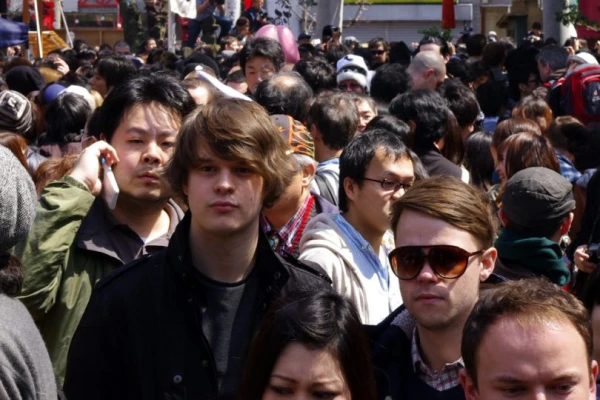
In the Land of the Rising Sun, there are about 4 million foreigners, but this is less than 3% of the population.
Japanese citizenship is becoming increasingly attractive to many foreigners wishing to start a new life. However, there remains a chasm between formal recognition of nationality and the acknowledgment of a person as a 'true Japanese.'
Kikajin, 'naturalized citizen' – this term refers to people who have obtained Japanese citizenship. The legal term provided by Japanese nationality law and used in administrative procedures is kikasya, 'naturalized person.' A few years ago, I myself went through the naturalization process and became a citizen of Japan.
In ancient Japanese, the word kika meant adherence to the laws of the country and obedience to its ruler. The application for naturalization and obtaining Japanese citizenship, like the foreigners who did so, were sometimes viewed negatively. Therefore, many newspapers prefer to use expressions like 'people who have obtained Japanese citizenship' or 'holders of Japanese citizenship.'
In recent years, more and more foreigners have shown interest in obtaining Japanese citizenship. According to data published by the Ministry of Justice, by 2024, 610,208 people had received approval for naturalization, about 80% of whom are from Korea and China.
Previously, naturalization required taking a Japanese name, and the application was submitted not by the individual but by the head of the family. Now, the obligation to take a Japanese-style name is no longer in place. Administrative requirements for naturalization have also been somewhat relaxed under the influence of global trends and issues of aging population and declining birth rates in Japan.
Nevertheless, many believe that obtaining Japanese citizenship is not the same as becoming Japanese. Even with a Japanese passport, a person is not necessarily perceived by society as a compatriot. Legally, of course, a naturalized citizen possesses all the rights and obligations of any Japanese subject, but this does not mean that others will stop considering him a foreigner.
A few years ago, a study was conducted in Japan, asking 400 young people aged 18-21: 'Can one become Japanese by obtaining Japanese citizenship?' More than 95% answered 'No.' If citizenship does not make a foreigner Japanese, then the question arises – what is this distinction based on?
Many survey participants cited criteria for determining whether a person is Japanese or foreign based on characteristics such as appearance, name, and so on. The average Japanese person would find it strange if an Egyptian named Almoamen had a Japanese name like Tanaka or Kamikawa. Therefore, many naturalized citizens prefer not to change their names.
Paradoxically, societal attitudes change when athletes or other famous personalities are naturalized: they are readily accepted as Japanese.
Catchy phrases like 'One World,' 'A World Without Borders and Discrimination,' and 'A World Where Culture and Civilization Merge' are intended to smooth over existing contradictions. However, there are still those who classify people based on superficial geographical traits.
Naturalized individuals face an identity crisis: they have become citizens but do not become Japanese.
<iframe width="560" height="315" src="https://www.youtube.com/embed/fOFzid_Hom4?si=mjMZJROq482xdWV9" title="YouTube video player" frameborder="0" allow="accelerometer; autoplay; clipboard-write; encrypted-media; gyroscope; picture-in-picture; web-share" referrerpolicy="strict-origin-when-cross-origin" allowfullscreen></iframe>