
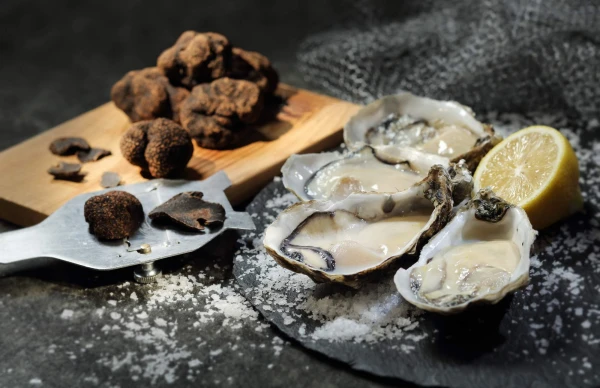
There are dishes and products in the world that, unfortunately, not everyone can afford to buy.
Saffron
This spice is considered one of the most expensive in the world, and for good reason — to obtain one kilogram of this spice, 300,000 stamens of the saffron crocus must be hand-picked, which blooms only one to two weeks a year. Saffron is most often used as a food coloring — for rice or Swedish lussekatter buns for the Feast of Saint Lucia.
Oysters
In the 19th century, oysters were considered food for the common people, and therefore their overharvesting and environmental pollution had a catastrophic effect on the population of these mollusks, while the shortage increased their cost. And, of course, today their price is significantly influenced by the fact that oysters are considered a powerful aphrodisiac. Currently, relatively inexpensive oysters can only be tasted directly in the places where they are farmed — in New Zealand, for example.
White Truffle
The most expensive of the most expensive truffles is the white truffle, which is harvested only in Italy, in the Piedmont region. This mushroom costs a fortune because it grows exclusively under certain types of trees, and it cannot be cultivated at home. Connoisseurs also revere it for its particularly expressive aroma.
Kopi Luwak Coffee
The "harvesting" of kopi luwak coffee is somewhat unusual: first, ripe coffee beans are eaten by the civet, and then people collect the same beans, but already digested, from the animal's feces. Opinions on the taste of the drink vary: some consider this coffee magnificent because the coffee beans are processed by the civet's gastric juice, while others are repelled by the bitterness of such a drink.
Iberico Ham
This Spanish delicacy, a subtype of cured ham, is made from a black pig. To obtain the highest quality product, producers feed the pigs exclusively acorns — this results in top Iberico ham bellota. A notable fact: ham is prepared only from the hind legs of the pig, while the front legs are called paletas.
Foie Gras
Simply put, foie gras is a pâté made from goose or duck liver. The dish is valued for its delicate creamy taste. But the catch is that foie gras is made using barbaric methods — animals are force-fed to such an extent that their livers grow to a size ten times larger than normal. Well, this is the price of gastronomic "luxury."
Wagyu Marble Beef
This meat is prepared only from four breeds of Japanese cows. It is called marbled because its cut is streaked with thin veins of fat, which makes the finished steak particularly juicy and tender. The best marbled beef comes from young Japanese bulls that are intensively fattened for the last 3–4 months of their lives before slaughter, with the animal being completely immobilized. This technology is called "Kobe," and the meat produced under this method is particularly fatty, "melting" in the hands. Original Kobe beef is prohibited from being exported from Japan.














Leave a comment