Janis Streics, the outstanding Latvian film director and a magnificent person, passed away at the age of ninety. He died in Lithuania, where he lived for the last decades (his wife Vida was Lithuanian).
“Director of the Highest Category”
When we mention the name Janis Streics, the first thing that comes to mind is his great two-part film "The Theater," in which the unforgettable Vija Artmane played the lead role. Janis Yanovich himself appeared alongside Vija on screen – a role by the author and director, who joked that he and his heroine had never been to London, so... "Therefore, everything you will see will simply be theater."
The film became a classic of Latvian cinema, for which Vija Artmane received a fee of two thousand Soviet rubles. This is significant considering that the average salary at that time was 120-140 rubles. And it’s nothing compared to Hollywood standards, given that the cheapest Soviet car then cost three thousand.
However, Janis Streics became the first "director of the highest category" in Latvia, and this title came with a higher pay. The second and last holder of this category was the author of the immortal "The Long Road in the Dunes," Aloiz Brenč.
From Latgale
But of course, we also remember "The Limousine of the Color of the White Night" – it is associated with many memories for every resident of Latvia. A film about a wise woman, a mother and grandmother, played by Lilita Berzina. A film that is included in the Canon of the Republic of Latvia.
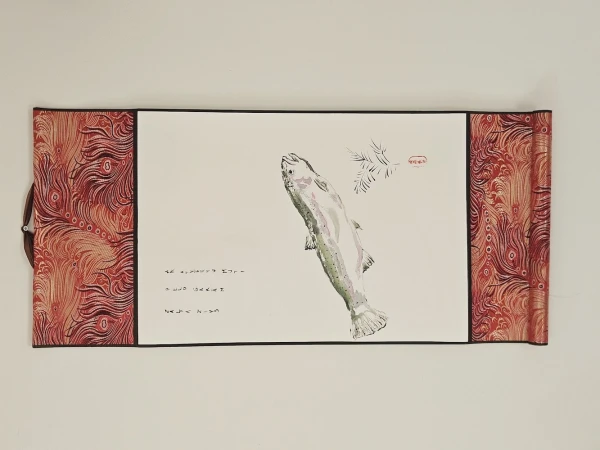
In the last two and a half decades, Streics actively and successfully engaged in painting. By the way, he exhibited his works on his last, 89th birthday, which he celebrated at the house of the Riga Latvian Society.
The future classic of Latvian cinema was born in the village of Anspoki in the Preili parish of the Daugavpils district, in the family of Janis and Olga Streics. In the same Latgalian region, he studied at the seven-year school in the town of Gaiļiši.
In 1955, he graduated from the Rezekne Pedagogical School, worked as an educator in an orphanage, and as a teacher in a secondary school. It was only later that he graduated from the directing department of the Latvian State Conservatory (1963), worked as an assistant director at the Riga Film Studio, and then became a "director of the highest category."
“Child of Man”
But his native Latgale remained in his soul for life. It was here, in the early nineties, that he shot his feature film in the Latgalian language "Child of Man," about a teenager's first love for a girl.
At the turn of the era, the film was shot with Moscow money, but then the authorities of Daugavpils and Rezekne bought the film. "Child of Man" became the first film that independent Latvia nominated for an Oscar, and the film entered the official list of candidates for the award.
And it was there, in Latgale, at the beginning of the millennium, that he first tried to create landscapes – prompted by his friend, the famous artist Janis Anmanis (who sadly passed away last year). A quarter of a century ago, the first solo exhibition of the film director took place at the House of the Blackheads.
Reflecting on His Life
"I speak almost like the grandmother in 'The Limousine of the Color of the White Night,'" Streics recalled. "But these are my words – they are simply spoken by the heroine in the film. Why didn’t she leave her precious car as an inheritance to anyone who suddenly came to Ligo? Because she reasoned wisely. Before leaving for another world soon after that Jāņi night, to her beloved husband Janis, she reflected on the true meaning of the Ligo holiday.
Here’s a reason, you see – and let’s go until morning! At the same time, this is the period of the solstice, the shortest night, a wonderful time. It seems like summer is already here, but on the other hand – it is breaking and soon it will be autumn. And then winter. The seasons here resonate with the segments of a person's life. And yes, this is a reason – to rethink your life anew, to listen to calm golden melodies. To remember your ancestors, for example..."
"Almost all my films that were released on the all-Union screen were dubbed into Russian at 'Lenfilm.' And quite successfully," Streics said. "But with 'The Limousine,' it turned out to be a different story – I really didn’t like the result of the dubbing. I think they missed a very important nuance at 'Lenfilm'...
Watching the Russian version, it seems from the outside that all these relatives who came to the village to their grandmother for the inheritance are bickering among themselves. Yes, they are quarreling, but I would say they are tenderly quarreling; this moment is very important."
“Song of Horror”
Streics has 22 feature films to his credit; he was the author of the scripts for many of his own films and those of his colleagues, and he played episodic roles.
But among the classics' filmography, there is a little-known film – Carmen Horrendum (“Song of Horror”). Shot by the director in 1989, this film stands out from the overall style of the master. The action of the film takes place in a hospital where women who have become disabled undergo treatment. Some are without a leg, some have gone insane, some have jumped out of the window. And only the main character believes in the future.
Perhaps that was how the director himself was – in this mad, mad world, he believed that everything would be fine for us.
And That’s All About Him
Janis Streics was a distinguished figure in the arts of the Latvian SSR, a laureate of the Lenin Komsomol Prize of Latvia (1976, for the films: "Faithful Friend Sancho," "My Friend is a Serious Man").
After the restoration of independence, he was awarded the Order of the Three Stars, honored with the title of honorary member of the Latvian Academy of Sciences, served as the chairman of the Union of Filmmakers of Latvia, and as the chairman of the Riga Latvian Society. He was awarded the national film prize "Big Kristaps" five times.