Both groups of animals inhabit the mountainous forests at a low altitude.
The indigenous people of New Guinea helped find marsupials that scientists believed had permanently vanished from the face of the earth. Initially, the authors of the study assessed the chances of such a discovery as virtually zero.
The island of New Guinea is located north of Australia and is divided between two countries: Papua New Guinea in the east and Indonesia in the west. The western part of the island, known as Papua, has dense forests and mountain ranges that hide a vast number of rare animals.
Many areas there remain inaccessible, but sometimes scientists manage to find species of which they were previously unaware. In science, this is referred to as the "Lazarus effect" — named after the biblical character whom, according to the book, Christ raised from the dead.
Such species disappear for thousands of years. Then researchers unexpectedly discover living representatives of them. Most often, these are marine organisms. Finding a living mammal among such "returnees" is extremely difficult. Therefore, biologist Tim Flannery from the Australian Museum in Sydney considered the likelihood of such a find to be negligible.
Flannery is known to the general public as the author of the book The Weather Makers. However, he built his scientific career as a paleontologist. For many years, the scientist has been studying the fauna of New Guinea and the islands of the Pacific Ocean. Recent expeditions to remote areas of the island yielded results that the researcher himself called the culmination of his scientific career.
Together with the indigenous people of the island, the scientist discovered in the forests of West Papua two groups of marsupials that science believed had gone extinct six thousand years ago. The first "resurrected" animal — the dwarf long-fingered possum (Dactylonax kambuayai) — is distinguished by its unusual paw structure. The animal's fourth finger is almost twice as long as the others. With it, it extracts insect larvae from wood and feeds on them.
Previously, the species Dactylonax kambuayai was known to science only from fossil remains. Paleontologists found the bones of these animals in deposits in central Queensland, Australia, dating back 300,000 years. It was assumed that the species went extinct in Australia during one of the ice ages.
However, later discoveries showed that the animal survived in West Papua. But even there, traces of the species disappear about six thousand years ago — this is the latest time at which fossil remains of Dactylonax kambuayai found in New Guinea are dated. That is why scientists considered it extinct.
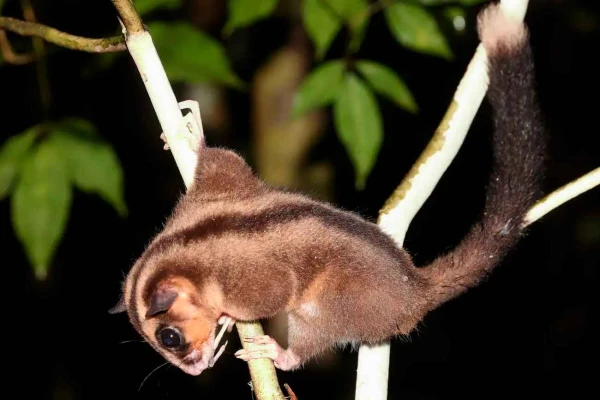
The second animal — the ringtail glider (Towsayamaruensis), a relative of the Australian greater glider, but distinguished by its small ears and strong grasping tail, which it uses to hold onto branches like a hand. It was first described by Australian zoologist Ken Aplin based on fragments of fossils found in West Papua in the late 20th century. It was assumed that these creatures went extinct almost at the same time as Dactylonax kambuayai.
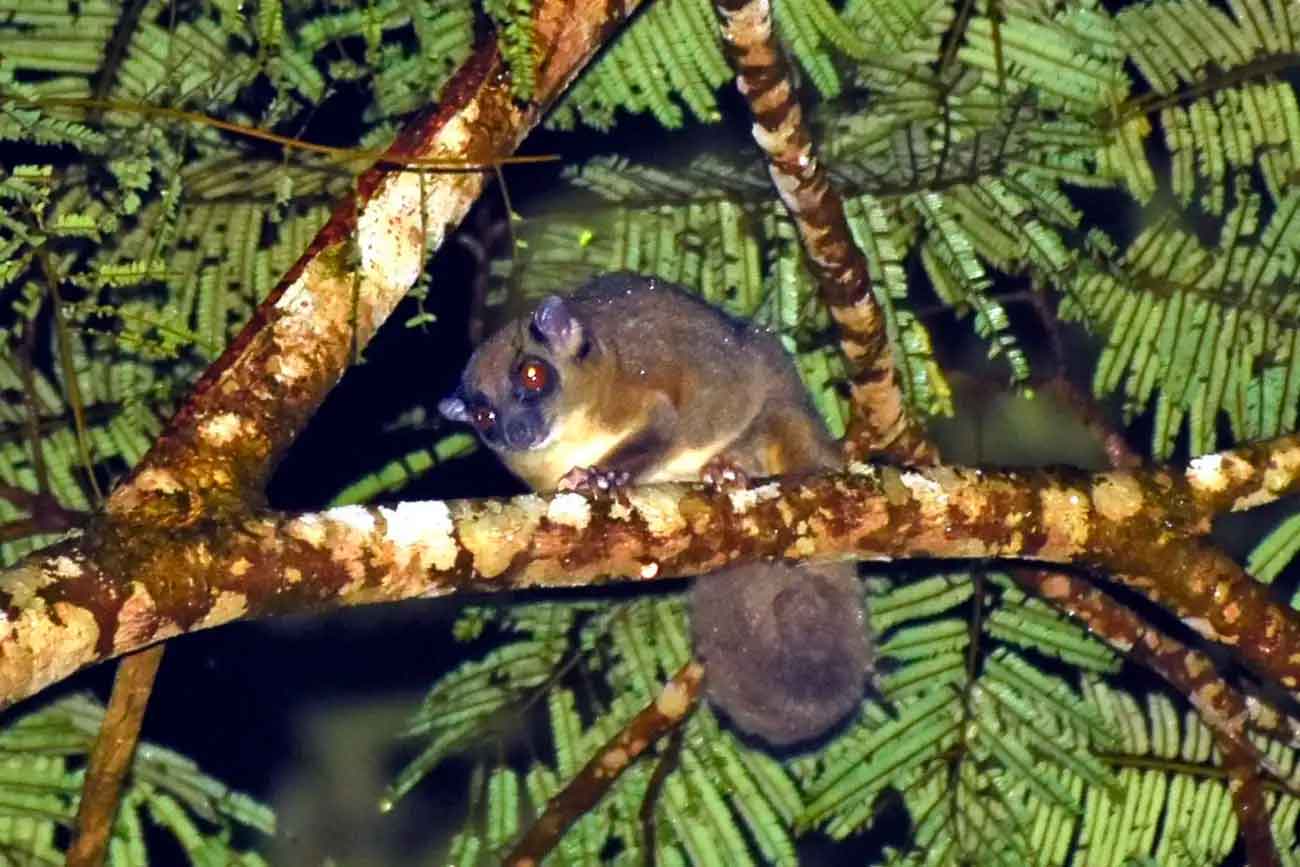
Flannery's team proved that the animal is still alive. Moreover, the researchers classified it into a separate genus — thus, during one expedition, they were fortunate enough to encounter both a "living fossil" (a species thought to be extinct) and to discover a completely new branch of marsupials for science (a new genus). This is the first description of a new genus of marsupials from New Guinea since 1937.
Both groups of animals inhabit the mountainous forests at a low altitude. Their home is the large Cendrawasih Peninsula, also known as Bird's Head (due to its shape resembling the head of a sitting bird). It is located in the northwest of the Indonesian part of New Guinea. The area is sparsely populated and poorly studied.
<iframe width="442" height="786" src="https://www.youtube.com/embed/9J9xUQFE74A" title="The Smallest Possum in the World" frameborder="0" allow="accelerometer; autoplay; clipboard-write; encrypted-media; gyroscope; picture-in-picture; web-share" referrerpolicy="strict-origin-when-cross-origin" allowfullscreen></iframe>