
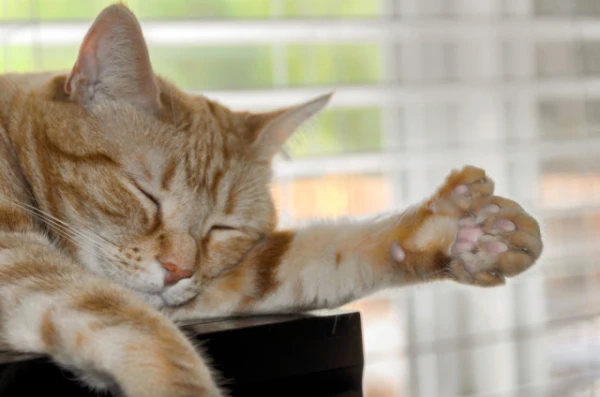
Not all cats purr. Some express affection and calmness in their own way. Cats produce this sound by rhythmically contracting the muscles of the throat and the area around the vocal cords. The resulting vibrations create a soft sound that we associate with a feeling of satisfaction.
Kittens start purring a few days after birth and continue to do so during feeding, signaling to their mother that they feel safe and content. Purring may be a way for cats to self-soothe: it helps regulate breathing and even lowers blood pressure — both in the animal and in humans.
Like humans, cats have different vocal habits. Some meow frequently, while others are almost silent. A cat that doesn’t purr may simply be quiet by nature.
Sometimes the purring is so soft that it can only be noticed by touching the pet's throat or placing an ear against its body. Some cats 'save' their purring for special moments — such as during meals or before sleeping.
If a cat doesn’t purr but cuddles, follows its owner, rubs against their legs, or kneads a blanket with its paws, it still feels calm and affectionate. Purring is just one way to express love. A relaxed posture, slow blinking, or quietly sitting nearby can also be signs of a content pet.
If a cat used to purr but suddenly stops, it may indicate stress, pain, or illness. An unhealthy animal often experiences changes in appetite, sleep patterns, or grooming habits.
Diseases affecting the throat, vocal cords, or respiratory system can often interfere with purring. In such cases, it is advisable to consult a veterinarian to rule out physical problems. A frightened or anxious cat also stops purring. It may remain silent until it feels safe again.






Leave a comment