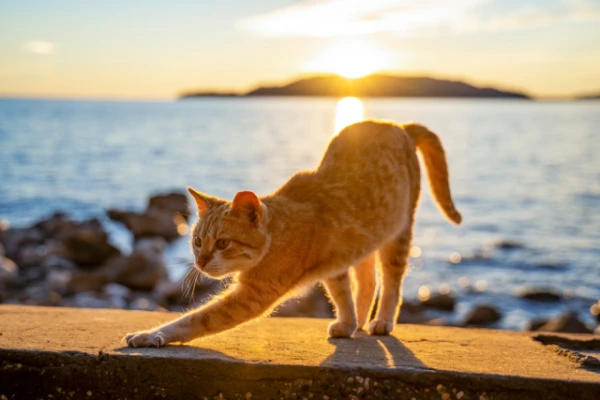
Scientists from the University of Sydney reported that they have managed to determine the reason for the appearance of ginger fur color in domestic cats.
Geneticist Clarence Cook Little suggested back in 1912 that the coat color of cats is linked to sex chromosomes. He proposed a theory that the ginger color is determined by a variant of a gene located on the X chromosome (and he did this before the discovery of the chromosomal mechanism of sex inheritance, referring to the X chromosome as the 'sex-determining factor').
In males, who have only one X chromosome, the presence of a mutation in that chromosome that determines color automatically makes the animal ginger.
In females, the situation is a bit more complex: one of the two X chromosomes in the cells is randomly inactivated. This leads to some areas of skin having the active X chromosome with the mutation (ginger color), while in other areas, the X chromosome without the mutation is active. As a result, the fur appears calico or tortoiseshell. If both X chromosomes in a female contain the necessary gene mutation (which is rare), the female becomes ginger.
For the same reason, calico males are virtually non-existent, except for very rare exceptions related to anomalies in the sex chromosomes, ScienceAlert reports.
Nowadays, scientists have been able to confirm this hypothesis, finding that skin cells of cats with ginger fur produce 13 times more RNA of the Arhgap36 gene compared to areas of skin where ginger fur is absent.
Initially, scientists suggested that the increased activity of this gene might be due to a mutation in its protein-coding region. However, further analysis showed that it is due to a deletion — a rearrangement of the chromosome in the preceding DNA sequence, which is believed to affect the expression of the specified gene.
This deletion, five kilobases in size, was found in all examined ginger cats. The study covered a total of 188 animals, among which there were 145 ginger, six tortoiseshell, and 37 cats with other colors.