
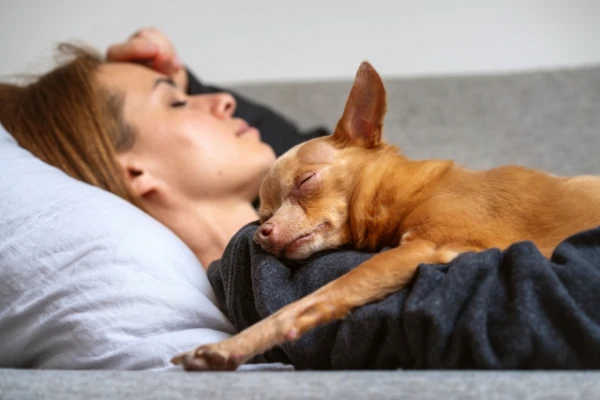
We may never know with absolute certainty whether dogs dream in the same way we do — they cannot describe their nighttime experiences or undergo a dream analysis session. However, scientists have indirect evidence suggesting that dogs are indeed capable of dreaming.
The key to the puzzle lies in brain activity during sleep. The stage when the brain is most active and prone to dreaming is called the rapid eye movement (REM) phase. Not all living organisms enter this phase, but most mammals — including dogs — go through it regularly. Moreover, studies have shown that the brain waves of dogs during REM are similar to those recorded in humans during vivid dreams.
Since dogs exhibit a sleep structure and brain response similar to ours, it is logical to assume that they also experience dreams — perhaps recalling events from the past day, walks, playtime, or encounters with other animals and people.
This is also supported by the bodily reactions of sleeping dogs: tail wagging, twitching of paws, faces, and ears, as well as the sounds they make — barking, growling, whimpering, whining. Sometimes it seems like they are running in their sleep or experiencing strong emotions. What exactly they "see" remains a mystery. And perhaps it will remain so until someone teaches a dog to talk about its dreams.













Leave a comment