
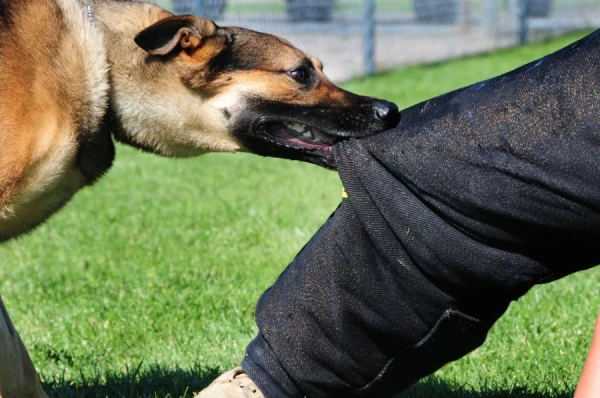
Dog behavior specialist and trainer Tatiana Romanova discussed how dog owners often misinterpret their pets' aggressive behavior.
“Often, people mistakenly consider a dog's behavior to be aggression when it actually is not, while true aggression goes unrecognized,” she emphasized.
As an example, Tatiana Romanova cited a study conducted by British veterinarian and biologist, Professor of Veterinary Behavioral Medicine at the University of Lincoln, Daniel Mills. According to his data, nearly half (48%) of dog owners admitted that their pets sometimes growl or even attack people and other dogs. At the same time, more than half (52%) considered this merely a habit of their animals and did not perceive such behavior as aggression. A quarter associated it with behavioral issues, and only 9.6% attributed it to manifestations of aggression.
“The situation is exacerbated by the fact that the same behavior of a dog can be perceived by the owner as desirable in one case and aggressive in another. For example, if a stranger enters the house and the dog bites him, we praise her, but if a familiar person enters and the dog attacks him again, such behavior is condemned as aggression,” the expert explained.
The specialist noted that a dog can be considered aggressive if it intentionally tries to harm another animal or person. This behavior is accompanied by excitement and increased heart rate. Before an attack, the dog displays threatening behavior towards its victim.
“Aggression is a complex of adaptive actions used to protect against a real threat, gain access to or guard valuable resources, as well as to establish or change social status. A dog's aggressive behavior is not a disease but is aimed at solving a specific problem. It is important to understand this,” she added.
For example, if a dog is eating and a person tries to disturb her, the animal may growl and show its teeth to demonstrate that it does not want the person near its bowl. If the owner ignores these signals, the dog may bite. However, if the owner steps back, the dog will calm down. The animal does not bite for no reason.
The expert also noted that neutering and spaying are not effective methods for addressing aggressive behavior issues. In 95% of cases, aggression in animals is explained by fear.
To correct undesirable behavior in a dog, it is necessary to analyze the reasons for its occurrence, the circumstances under which aggression manifests, as well as the pet's motivation and emotions. By changing the emotional state, one can also change aggressive behavior, Tatiana Romanova is confident.














Leave a comment