
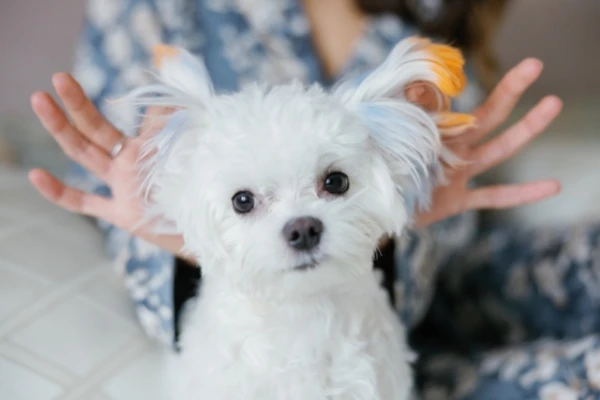
Studies show that even experienced owners often misinterpret their dogs' emotions.
The main reason is anthropomorphism, that is, the tendency to attribute human traits and motives to animals. For example, tail wagging is often automatically interpreted as "happiness," although in reality it is merely a sign of excitement, which can be either positive or negative.
Key mistakes arise from fragmented perception. People often focus on one detail — the position of the tail or sounds — ignoring the totality of signals: body language (muscle tension, ear and lip position), the context of the situation, and breed characteristics. Thus, exposed teeth can be a sign of aggression or a "submissive smile" — a gesture of appeasement.
Cultural differences also play a role. Studies show that people from countries with less developed canine culture are worse at recognizing dog emotions. Scientists emphasize that accurately "reading" a dog requires observation and specialized knowledge. It is based not on intuition but on understanding that animal signals form a complex system, in which the same gesture can have different meanings depending on the context.















Leave a comment