
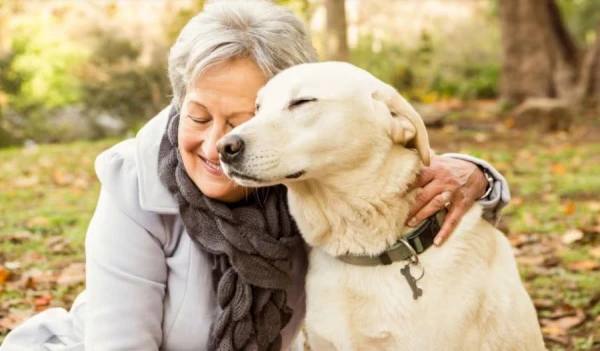
Scientists from Japan have found that among people over 65 who own dogs, the likelihood of developing dementia is significantly lower compared to those who do not have pets. Interestingly, a similar effect is not observed in cat owners.
This is yet another confirmation that a dog is a man's best friend. However, cat owners should not be disheartened! These furry companions can also have a positive impact on health.
A 2021 study predicts that by 2050, the number of dementia cases worldwide will nearly triple, reaching 152 million. The greatest increase in incidence is expected in East Africa south of the Sahara, as well as in North Africa and the Middle East. Therefore, the question of finding ways to slow the spread of this disease is becoming particularly urgent.
Japanese scientists decided to test the hypothesis of whether pets, particularly dogs, can influence the cognitive functions of elderly people.
The study involved 11,194 Japanese individuals aged 65 to 84. At the initial stage, none of the participants were diagnosed with dementia. They also completed a short questionnaire indicating pet ownership, lifestyle, and level of physical activity.
After four years, the researchers conducted a health assessment of all participants, including the detection of any forms of dementia.
The Impact of Dogs on Health: Study Results in Numbers
After accounting for various factors, the researchers calculated the risk ratios for developing dementia among dog owners, cat owners, and those without pets. The results showed that for dog owners, the ratio was 0.6, while for cat owners it was significantly higher at 0.98. The figure for people without pets was 1.
Next, the researchers considered another important factor - the level of physical activity. This also had a significant impact, especially on dog owners. Those who regularly exercised and had dogs had a dementia risk ratio of only 0.37.
At the same time, among dog owners who did not engage in sports, the odds ratio significantly increased to 0.89 compared to people without dogs leading a sedentary lifestyle.
Thus, dog owners indeed have a significantly lower likelihood of developing dementia, but only if they regularly walk their pets, socialize with other dog owners, and engage in physical activity.
The authors of the study note that the proportion of dog and cat owners in Japan is lower than in Western countries. Therefore, it is important to conduct further research to study this effect in other regions of the world.















Leave a comment