
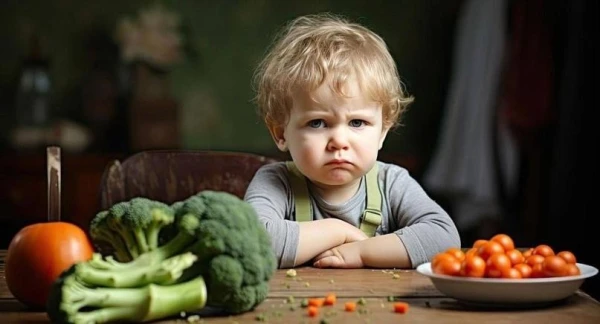
Parents often find it difficult to convince their children to consume the necessary amount of vegetables. Fortunately, scientists have finally revealed an amazing method that will help children love vegetables!
Specialists from Brigham Young University found that children consume 52% more peas and carrots when these vegetables are served alongside potato smileys. However, there is an important "nuance" — this effect is observed only when the potato smileys are in the same bowl as the vegetables.
Children and Healthy Eating
Scientists recommend that children aged three to 18 consume about three cups of vegetables daily. However, the average schoolchild eats only one cup a day, and that is at best! For example, a recent study in the U.S. showed that half of all American children do not eat a single vegetable throughout the day.
This prompted researchers to delve deeper into how different ways of serving food can influence children's behavior and possibly encourage increased vegetable consumption.
As part of the study, children were offered a meal consisting of chicken nuggets, 2% milk, ketchup, applesauce, a mix of peas and carrots, and one option of potato or bread.
Plates of food were weighed before and after to assess how different serving options affect children's food preferences.
In a control experiment, where a bun was served as a side, children consumed 21.1 g of vegetables. When the meal was served with potato smileys (without bread) in a separate bowl from the vegetables, researchers noted that the amount of vegetables eaten decreased by 20%.
However, when smileys and vegetables were served in the same bowl, children ate 51% more vegetables than when they were served separately!
Although the study emphasizes that this improvement is not significant, the authors note that "even small changes in vegetable consumption are important for improving nutrition."
What About Potatoes?
Some parents may worry that potatoes and potato smileys are not the healthiest choice. However, the study showed that adding potato smileys to the meal increases the calorie count by only 21 calories and adds 5 g of fat, all of which are unsaturated.
The authors also examined the impact of other forms of potatoes on vegetable consumption, including seasoned potato squares.
However, less appealing forms did not significantly affect the amount of vegetables eaten by children. When served separately, potato cubes slightly increased vegetable consumption compared to the control group, but when potatoes were served in the same bowl, the amount of peas and carrots eaten actually decreased.
The authors suggest that the reason for such a difference remains unknown, but they speculate that potato smileys are simply more appealing to children.












Leave a comment