
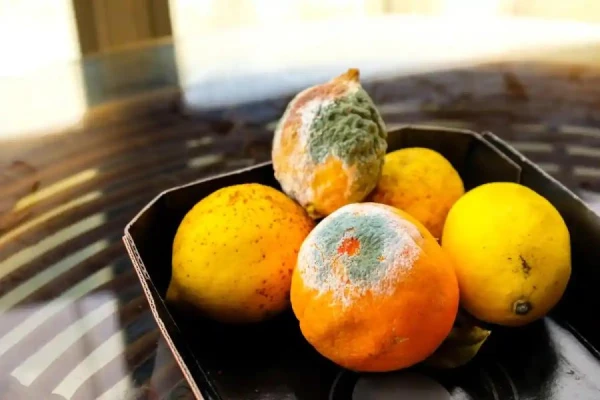
In the absence of serious gastrointestinal diseases, a person may experience mild digestive disturbances. In children, however, the ingestion of mold can cause dangerous allergic reactions or severe diarrhea.
“Mold can unexpectedly appear on any product, and if it gets into the stomach, trouble is unavoidable,” says dietitian Nuria Dianova in an interview with dietology.pro.
If a person does not have serious stomach and intestinal problems, they may experience mild digestive disturbances. However, in children, the ingestion of mold can provoke dangerous allergic reactions or severe diarrhea. An allergic rash may also appear on the skin. Often after such reactions, allergies persist to products containing so-called noble mold, such as cottage cheese, kefir, cheeses, and others.
Bread, fruits, sausages, and cheeses often become covered with mold. These solid products make it easy to notice the dangerous fungus. At the same time, drinks made from sour milk, which are in packaging, can hide mold, making it difficult to detect. Dietitian Dianova recommends carefully inspecting the contents of the bottle, especially the lid, before consuming kefir, ryazhenka, or milk.
There is also a “sneaky” mold that is hard to notice with the naked eye. To avoid unpleasant situations, it is better not to store perishable products for long. They should be kept in the refrigerator for no more than two hours.
At the slightest suspicion of spoilage, the product should be immediately discarded. One should not attempt to cut off the mold or “boil” the product, exposing their body to serious danger.
Which Mold is Safe to Eat
Not all mold is safe to eat. Moldy meat, pasta, soft and crumbly cheeses, dairy products, jam, soft fruits and vegetables, as well as baked goods and pasta should be thrown away. In soft and porous products, as well as in products without preservatives, mold grows inside, spreads quickly, and can breed bacteria. Such mold releases mycotoxins that can cause food poisoning (nausea and vomiting), and in rare cases, damage to the kidneys or immune system.
However, from dried products, hard vegetables and fruits, or hard cheese, one can simply cut off the spoiled part and consume the rest. For example, in the production of salami, the mold Penicillium nalgiovense is intentionally introduced into the raw materials to give the product a unique flavor and prevent the development of more dangerous mold. This effect is achieved through the production of proteolytic and lipolytic enzymes that “preserve” the sausage, while the ammonia produced during protein decomposition enhances the aroma and reduces acidity.
Edible mold is specially cultivated—it does not provide significant benefits, but it does not cause harm either. For example, blue mold (with a sour or earthy taste) is found on cheeses such as Roquefort, blue cheese, Gorgonzola, and Stilton. Their production uses spores of Penicillium roqueforti. On cheeses like Brie and Camembert, white mold—Penicillium camemberti or Penicillium candidum—grows with a pungent and bitter taste.
It is worth noting that although “food” mold belongs to the genus Penicillium, it has little in common with the antibiotic penicillin. Scientists isolated it from the fungus Penicillium notatum and later from Penicillium crustosum, which helped suppress the reproduction of staphylococci and streptococci. However, even these can develop resistance in bacteria, not to mention that they can cause allergic reactions. Therefore, unfortunately, one cannot treat pathogens with expensive cheese.







Leave a comment