
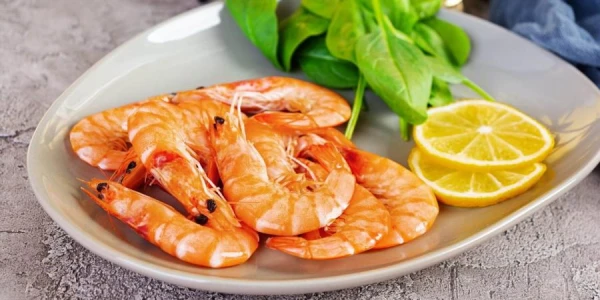
Are the shrimp supposed to be juicy, but they turn out rubbery?
Chef Daniel Gritzer, editor of the Serious Eats portal, stated that it's not just about cooking time, but also about preparation. Shrimp cook in seconds, which is why they are so easy to ruin. To keep them juicy, you need to change the protein structure itself.
Why shrimp become rubbery
When protein is heated, it denatures, meaning it coagulates and loses moisture. The higher the temperature and the longer the cooking time, the denser the structure becomes.
The problem is fixed with a dry brine made of salt and baking soda.
How to prepare a dry brine for shrimp
This technique has long been used in professional kitchens.
Mix 1 tsp of salt and ¼ tsp of baking soda for 500 g of shrimp.
Evenly distribute the mixture over the peeled shrimp.
Let the shrimp sit at room temperature for 15–30 minutes.
Before cooking, pat the seafood dry with a paper towel to remove excess moisture.
Sauté over medium heat — the shrimp should turn slightly pink.
As a result, the proteins contract less when heated, and the shrimp retain moisture, remaining firm and juicy.








Leave a comment