In 1999, the Nipah virus was first discovered among pigs and humans in Malaysia and Singapore.
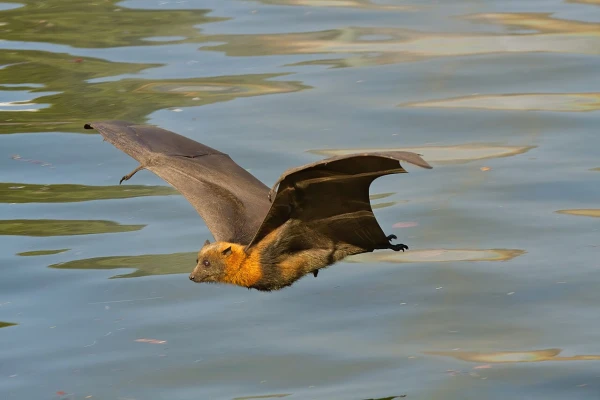
The Nipah virus is not transmitted through airborne droplets and is therefore unlikely to spread beyond Southeast Asia, where this endemic disease is transmitted through the bites of fruit bats. This was reported to RTVI.US by Dr. Ancha Baranova, a biological sciences professor at the George Mason University School of Systems Biology.
As reported by the Independent, the Nipah virus was previously diagnosed in five healthcare workers in the Indian state of West Bengal. The Ministry of Health of India announced that a team of specialists has been deployed in the region to contain the spread of the infection and eliminate the outbreak. About 100 residents of the state are under quarantine.
"Given the serious nature of the Nipah virus infection, which is a zoonotic disease with high mortality and potentially rapid spread, the situation is considered a priority," said a representative of the Ministry of Health after the first cases of infection were identified earlier this month.
In 1999, the Nipah virus was first identified among pigs and humans in Malaysia and Singapore. Initially, the virus was transmitted to pigs by fruit bats, and then the infection passed to humans who kept the animals in captivity. At that time, more than 100 people died from complications of the disease. Subsequent outbreaks of Nipah have been recorded in Bangladesh, India, Malaysia, the Philippines, and Singapore.
Ancha Baranova told RTVI.US that the carriers of the disease are not found in northern latitudes, and the bats themselves are not similar to those that caused the spread of COVID-19 (Nipah is often compared to the coronavirus in the press). These tropical fruit bats are found exclusively in Southeast Asia.
According to the expert, the virus can be transmitted to humans in two ways: directly from the bat or through an intermediate host. In the first case, for example, a bat may bite into a banana, which is then eaten by a person. In the second case, transmission occurs through a pig, as in the aforementioned case.
"But it is probably hard to imagine that bitten bananas would be imported to the USA or Russia. <…> After all, uneaten bananas probably do not reach people here," noted the interlocutor of RTVI.US.
Symptoms and Treatment
The virus is dangerous because there is no vaccine or specific treatment for it, and the probability of death is about 50-75%. Additionally, Baranova notes that the virus can persist on surfaces for a long time.
"Its horror is that this virus is very stable on surfaces. That is, a surface where a bat left saliva will remain contaminated for quite a long time. This is known," Baranova said.
According to the Centers for Disease Control and Prevention (CDC), the Nipah virus can manifest in different forms—from mild, flu-like symptoms to severe cases accompanied by encephalitis. The incubation period usually lasts 4-14 days. During the active stage of the disease, patients experience fever, headache, cough, and difficulty breathing. In more severe cases, brain swelling (encephalitis) develops, which manifests as confusion, drowsiness, and seizures. With such symptoms, the condition deteriorates rapidly—a person can fall into a coma within 24-48 hours.
According to the expert, the outcome of the disease largely depends on the quality of patient care and timely diagnosis. Infected individuals who were prescribed the antiviral drug ribavirin had their risk of death reduced to about 50%.
"There are no vaccines against this virus. There is no specific treatment; there is only a general consideration that ribavirin can be given to patients, for example. With Nipah, the mortality rate is high, 50-75%. And those who took ribavirin were closer to the lower limit. But on the other hand, in such severe diseases, mortality depends on care. And it is obvious that those people who received ribavirin were following a hospital regimen. It was clear that the person needed to be saved," emphasized Baranova.
According to the World Health Organization (WHO), most people who survive acute encephalitis fully recover. However, some patients experience long-term neurological consequences: about 20% have residual impairments, including seizure disorders. A small number of recovered patients may experience relapses or later development of encephalitis.
The expert acknowledged the danger of the virus but assured that a new pandemic does not threaten humanity.
"It may be that five people are not the limit and someone else may get sick, but this will all remain in Southeast Asia. So let’s not worry, dear comrades," concluded the interlocutor of RTVI.US.