

According to the Latvian Association of Small and Medium Enterprises (SMEs) for 2024, there are 114,400 SMEs in Latvia, accounting for 99.8% of all enterprises operating in the country. They employ about 552,000 employees (81% of all employees working in enterprises). Latvian SMEs contribute 7.4 billion euros to the budget in the form of taxes (that is, 71% of all tax payments).
The Foundation of the Economy
The lion's share of all SMEs consists of microenterprises with teams of up to 10 people: these "little ones" make up almost 96% of all enterprises in Latvia, and thanks to them, about 42% of the country's population employed in the private sector is provided with jobs. Thus, the contribution of SMEs to the country's well-being is evident, and, in general, "small" and "medium" can rightfully be considered the foundation of the Latvian economy.
It would seem that the state should create the most favorable conditions for SMEs - to multiply, develop, and earn - for themselves and for society as a whole. But what is happening in reality? An expert discusses the current state of small and medium-sized businesses.

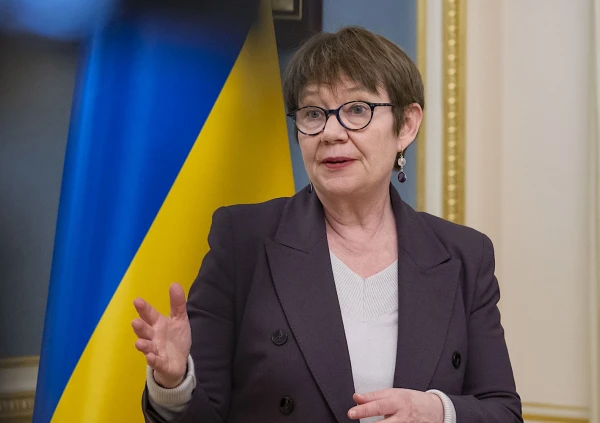
Anna Ozola, Board Member of the Association of Small and Medium Enterprises
On the Sidelines
In many countries, there is an unshakeable principle regarding business: "Think small first." This is natural: small enterprises, actively participating in the economic life of the country, are much less protected from various unforeseen circumstances and are more sensitive to changes in the business environment. They suffer much more from excessive bureaucracy than large companies. However, as soon as the business environment improves, they instantly flourish and develop.
26 years ago, our country joined the European Charter for Small Enterprises, thereby recognizing the importance of the role of small business in the country's economy. However, in the following years, there has been no noticeable progress specifically for SMEs: state policy is still focused on supporting large companies, while the interests of small businesses remain "on the sidelines."
“Micro” Means Unimportant?
If we compare the current situation of large businesses and SMEs, the difference is striking. Laws are mainly created with large companies in mind, and constant changes and amendments are made. But for small enterprises, unlike large ones, it is too costly to maintain a staff of accountants and lawyers to track all these changes!
Laws often turn out to be too complex, contradictory, and confusing. The functions of government institutions are duplicated, and entrepreneurs often find it difficult to understand where to turn for various issues! We know of cases where even employees of the State Revenue Service could not always correctly advise entrepreneurs on how a particular law applies in a specific case. And in case of an error, it is the small entrepreneur who ends up being the "culprit"...
There are serious questions about fairness in the distribution of support. For example, large enterprises receive state assistance, while small businesses remain unsupported. A clear and recent example that has received widespread media attention is the so-called "timber industry scandal," when it was revealed that state assistance was provided unjustifiably.
At the same time, it is small enterprises that provide about 70% of tax revenues, while large ones contribute about 30%. The situation is clearly unbalanced, and this needs to change.
Finally, control and penalties for SMEs are much more thorough and strict, while large companies sometimes accumulate multi-million tax debts that are then written off. This creates a sense of enormous injustice.
Why Do They Go “Underground”?
Unfortunately, we often encounter a narrative in government structures that suggests that medium and especially small entrepreneurs are all crooks who are just looking to evade taxes.
I will respond this way: yes, the problem of the "shadow economy" does exist. But one of the main reasons is that many entrepreneurs from the SME sector do not understand complex laws and requirements, and even if they do understand, it is too difficult to comply with them all. If laws and regulations were simpler and clearer, entrepreneurs would comply with them better and would more often come out of the "gray zone." Not to mention that taxes should be proportionate to the capabilities of small businesses, which is also not the case.
From Ballast to Resource
In Latvia, as in Europe as a whole, the shortage of workers is one of the pressing issues. Hence the discussions about raising the retirement age and the need to attract workers from abroad.
But Latvia has a significant labor resource - working pensioners, people with disabilities, homemakers, students who could work part-time, etc. If favorable and beneficial conditions were created for them in the labor market, along with a well-thought-out immigration policy, it might be possible to increase the number of employed in the country to 950,000 people, which would be quite significant for Latvia.
Several ministries participated in developing state policy to improve the situation in the labor market. If they had worked more effectively and cohesively, making timely decisions, the situation would have changed for the better. But for 4 (!) years, they have not been able to reach an agreement among themselves. The result is evident.
Reasons for Lagging Behind
A very acute issue for Latvia is the state apparatus - its size, efficiency, and quality of work.
There are several problems here. First, the size of the state apparatus is unreasonably large and creates an excessive burden on the budget. Second, there is a lack of trust within state structures; as a consequence, there is excessive control over everything and everyone. This leads to unnecessary procedures and wasted time and human resources. We believe that:
-
The work of state structures needs to be optimized, their numbers reduced, and some employees directed to the private sector: this would significantly reduce state expenditures and make the system much more efficient and accountable.
-
The government system should have as many specialists with experience in the private sector as possible - at least five years in business. They understand the real problems of entrepreneurs much better, unlike today’s officials, who, regardless of the quality of their work, are used to receiving guaranteed salaries and other social bonuses, often not understanding where the money for all this comes from.
-
The approach of the state to business needs to change. The central figure of the country's economic system should be the entrepreneur. And government services should be organized with consideration of the needs of businesses and current events, rather than traditional administrative blocks (for example, business opening, closing, tax payment).
For example, in Estonia, a service platform has been created based on the life events of people: it supports users during various important moments for them - marriage, childbirth, taking on responsibilities for national defense, or seeking funding for their business. In other words, the overarching goal is not control and punishment, but assistance and encouragement. This approach significantly facilitates the interaction between entrepreneurs and the state.
In our case, dialogue with politicians and government institutions seems to exist, but in practice, it rarely leads to real solutions. And this is one of the main reasons for Latvia's economic lag behind its neighbors.














Leave a comment