The country is reducing its cattle herd amid rising external demand.
According to recent data from the National Institute of Statistics and Censuses (Indec), Argentina's goods exports reached $87.111 billion in 2025.
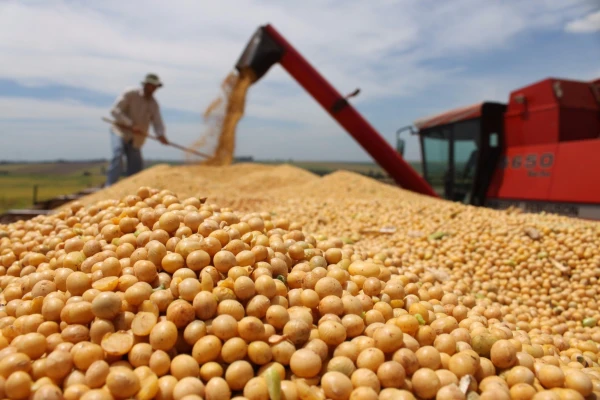
According to Indec, one in four export dollars from Argentina in 2025 came from the soybean complex. The majority came from industrial derivatives: flour and oil accounted for 73.6% of the total volume, while unprocessed beans had a smaller share. As a result, the sector generated exports worth $21.442 billion. However, even the country's main export complex could not cover the dollarization of private sector portfolios, which required $32.300 billion over the year.
In other words, a significant portion of the dollars coming from soy quickly leaves the local financial system, absorbed by the middle class's desire to hedge in foreign currency.
The second most important complex was oil. Thanks to the Vaca Muerta field, sales reached a historic high in the series starting from 2002, totaling $11.772 billion. 57 percent of this export was crude oil, mainly directed to the United States.
Other sectors that achieved historical records in 2025 included gold and silver, beef (mainly directed to China), sunflower (mainly due to oil sales), the pharmaceutical complex (with retail medicines), the peanut complex, and lithium. These are sectors where Argentina has significant opportunities but also serious challenges. In the case of gold, against the backdrop of a bull rally in prices—starting in 2024 but accelerating in recent months due to international conflicts fueled by the Trump administration—the Argentine government is missing the opportunity to earn good money by eliminating export duties on this metal.
As for beef, the main task is to prevent the pressure on retail prices created by the shrinking cattle herd amid rising external demand. This year, exports will include shipments to the U.S. under an agreement signed in February, although this procurement commitment was merely "verbal," as stated by the Foreign Ministry.
Besides soy and meat, a large portion of lithium exports is also directed to China and has a low degree of processing, in the form of lithium carbonate. This is a product with very low relative value; to be used in a battery, it must be converted into cathode material or lithium hydroxide. In Argentina, there are projects still in the implementation stage for producing the latter component at a facility of the South Korean company POSCO in Salta and Arcadium Lithium in Catamarca.
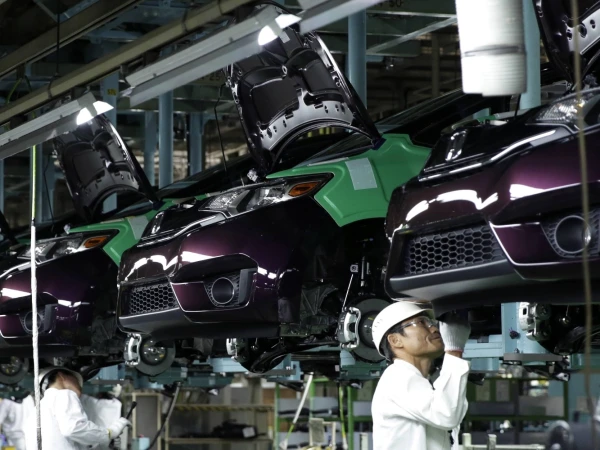
The third most significant export complex was automotive, with sales of $8.784 billion, where 61.1% was accounted for by vehicles for transporting cargo. However, in this segment, the trade balance was notably deficit—around $6.887 billion.
<iframe width="560" height="315" src="https://www.youtube.com/embed/a_YEpMoTViQ?si=FvuawSF-SsjiDrRg" title="YouTube video player" frameborder="0" allow="accelerometer; autoplay; clipboard-write; encrypted-media; gyroscope; picture-in-picture; web-share" referrerpolicy="strict-origin-when-cross-origin" allowfullscreen></iframe>