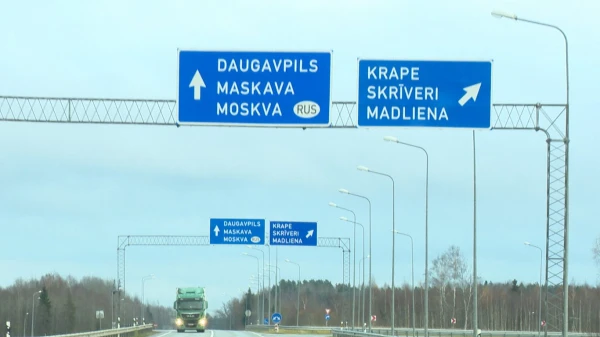
A special annual anti-corruption plan is being prepared in the country. Anti-corruption activities in Latvia are already being conducted in accordance with the recommendations of the Organization for Economic Cooperation and Development, and a special law on counteracting conflicts of interest will soon be adopted. Risk management will begin to be carried out systematically, and Latvia will become one of the leading countries in the world in this regard.
Separating administrative and commercial
Last week, the director of the Corruption Prevention and Combating Bureau (KNAB) Jānis Straume appeared before the Saeima to report – according to him, the past year set a record for the last 10 years in the number of cases referred to the prosecutor's office for criminal prosecution.
The agency received 17 additional positions due to the transfer of internal investigation functions from the State Revenue Service to this structure. However, some of these positions are still unfilled, as several employees are still awaiting access to state secrets. From the State Chancellery, KNAB received the obligation to work with "whistleblowers" – authors of reports on potential corruption.
As reported by the Deputy Head of KNAB for investigative actions Ineta Cirule, in 2025, 35 criminal cases were completed, including the confiscation and allocation to the state of 820,000 euros. The amount of seized crypto assets is 64,000 euros, and 2 real estate properties have also been seized. Special attention was paid to border checkpoints – 5 criminal cases were initiated there.
The funding for the Bureau in 2025 cost the state budget 18.9 million euros, including 6 million euros for political party financing, which was officially distributed (and deducted) through KNAB.
So that officials do not relax
Most often, the Bureau's activities involve bribery and the illegal use of official position. KNAB interacts with the European Prosecutor's Office. Last autumn, the Bureau proposed to the European Prosecutor's Office to initiate criminal prosecution against three officials of the Valka municipality for possible large-scale fraud. As a result of the criminal actions, the officials fraudulently obtained more than 168,000 euros from the European Regional Development Fund and state budget funds.
Some cases concern the jurisdiction of the Schengen area, where individuals listed in sanctions lists attempt to enter the Union through bribes.
In total, in 2025, sentences were handed down in KNAB cases against 28 individuals, with no acquittals. This means that the evidence base for the anti-corruption fighters is in order.
Will Russia help us?
Ms. Cirule pointed out a positive trend – more and more officials are seeking consultation to avoid punishment regarding the combination of administrative and commercial activities. The Organization for Economic Cooperation and Development plans to complete its monitoring of bribery concerning foreign officials in Latvia in June this year. Anti-corruption checks in the country are also conducted by the UN.
In 2025, the bureau received 17 requests for assistance from foreign states (Ukraine, Moldova, Lithuania, England, the Netherlands, and Poland). For its part, to ensure the collection and consolidation of evidence in the Bureau's ongoing criminal cases, Latvia prepared 15 requests for legal assistance to be sent to EU countries, as well as Ukraine and… Russia!
Signals from the field
Last year, KNAB set a kind of record: it received 2,000 various reports of potential violations, which the agency explains not as a rise in corruption, but as an increase in awareness! At the same time, there were only 80 "whistleblowers" from various enterprises and organizations.
Deputy Edmunds Zivtiņš ironically pointed out that anti-corruption measures, particularly regarding political advertising, are tied to the election campaign schedule and are selective in nature. Bureau officials acknowledged certain shortcomings and promised to work more objectively…
In 2025, the Bureau managed to train 6,710 people, which is fewer than in previous years. In its training functions, KNAB focuses on preparing anti-corruption coaches who will then educate employees of their institutions.
Illegal agreements
At a meeting of the Saeima Commission on Defense, Internal Affairs, and Corruption Prevention, the issue of criminalizing cartel agreements was also raised. According to KNAB officials, price collusion is now strictly punished with monetary fines from the Public Utilities Commission and other state structures.
Meanwhile, according to KNAB surveys, 28% of the population and 21% of entrepreneurs have used unofficial methods to resolve various problematic situations over the past two years. Compared to the previous period, such practices have increased! "Among the residents of Latvia, there is also a growing willingness to bribe officials," the Bureau's report states.
According to the statistics of anti-corruption fighters, the municipal level retains the highest risks – out of 45 criminal cases initiated last year, 20 relate to municipalities. Meanwhile, the Bureau's own operational activities allowed for only 13 processes to be initiated, while 21 were based on statements from legal and physical persons.
Bribes in white coats
Corruption crimes in Latvia are extremely latent, the Bureau's leadership points out. Of course, there are those that are more or less on the surface – for example, when a truck driver hands a 50-euro bill to a person in uniform. However, violations related to enterprises with municipal capital usually remain in the shadows.
Thus, in the 2026/27 years, KNAB's activities will be focused in this direction.
In particular, as early as February of this year, criminal processes were announced in two district hospitals – LLC Liepājas Reģionālā slimnīca and LLC Ogres rajona slimnīca – in connection with "the possible commission by state officials of the hospitals of illegal agreements with specific suppliers of medical goods regarding the victory of these enterprises in five public procurements."
DEFICIT OF PERSONNEL
As of December 31, 2025, there were 181 positions in the Bureau, with 153 filled. The majority of the employees – 92 – are women.