The escalation of the military conflict in the Middle East, especially in Iran, has not yet had a significant impact on retail prices in Latvia.
However, industry representatives note that if the hostilities drag on, their consequences may become noticeable in the local market — primarily due to rising energy resource prices and transportation costs.
The Chairman of the Board of Latvijas Tirgotāju savienība (Latvian Traders' Union, LaTS) Raimonds Okmanis explains that the main factor in this situation is the duration of the conflict. If tensions in the region decrease relatively quickly, the market will be able to stabilize, and consumers are unlikely to feel an increase in prices for essential goods.
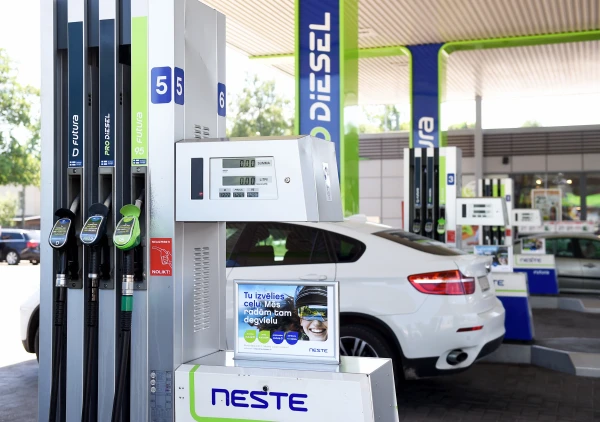
"If the escalation of the military conflict is relatively short-lived, fuel price fluctuations will be temporary and will hardly be felt in retail. The market can adapt quite quickly to such shocks if they do not last long," notes Okmanis.
However, if the conflict drags on for more than a month, broader consequences for the economy are possible. In such situations, energy resource prices usually rise, which gradually reflects in transportation and logistics costs. In retail, such changes typically manifest with a certain delay.
"If the conflict drags on, the impact on prices in Latvia may become apparent in about three months. This means that any potential price increase may be felt by consumers in the fall, when the rise in costs is fully reflected in supply chains," explains Okmanis.
Economists also note that inflation in Latvia remains relatively moderate — around 2–3%. However, global geopolitical processes may create additional pressure on prices in the future. The energy resource market is particularly sensitive to political upheavals, and any prolonged instability can affect the dynamics of oil and fuel prices.
At the same time, changes in retail prices are not always directly related to geopolitical events. They are often determined by seasonal factors or the situation in specific industries. For example, the recent rise in coffee prices has been linked to poor harvests in major producing countries. A similar situation was observed a few years ago in the olive oil market when a drought in Europe significantly reduced olive yields, leading to a sharp increase in prices.
Okmanis emphasizes that price formation in retail depends on a combination of factors, and geopolitical events are just one of them.
"Consumers often associate price changes with international events, but in practice, price dynamics are determined by seasonal fluctuations, harvest volumes, and delivery costs. Therefore, each situation needs to be assessed in a broader context."
Currently, the retail sector in Latvia continues to operate steadily, and traders are closely monitoring global processes that may affect supplies and price levels. If the conflict in the Middle East does not drag on, significant price fluctuations for Latvian consumers are not expected in the near future. However, in the case of prolonged geopolitical tension, the impact on retail prices may become noticeable as early as this fall.