In the question of whether Latvian forest policy is long-term and nature-friendly, reaching a consensus is difficult, writes Latvijas Avīze.
The closer the respondent is to the state and its policies, the more positive their opinion; the closer they are to non-governmental organizations, the more critical it becomes.
From a subjective perspective, it seems that Latvia's state policy in forest management prioritizes timber harvesting for the country's woodworking industry. This industry accounts for 30% of Latvia's manufacturing sector, provides jobs for 14,000 people, and constitutes 20% of Latvia's goods exports.
Non-governmental organizations place greater emphasis on the interests of the forest as a unified ecosystem and biodiversity, opposing the current levels of logging. This is how Aris Jansons, the director of the Forest Department of the Ministry of Agriculture, explains Latvia's forest management policy:
"I believe that there is a long-term forest management policy in Latvia that promotes the specialization of forests according to their intended use and the associated restrictions."
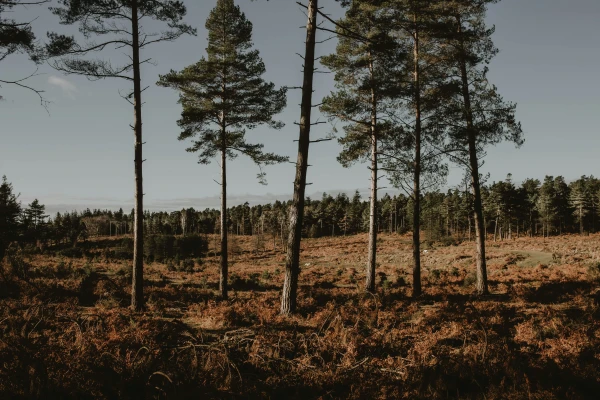
From this perspective, Latvian forests can be divided into several groups. The first group consists of forests whose management goal is to increase or maintain biological diversity—such forests make up just over 10%, and in them, with few exceptions, economic activities are not possible; only natural processes occur here—these are various nature reserves and protected areas.
The next group includes forests whose main goal is the protection of biodiversity; however, limited economic activities, such as thinning operations, are possible. Finally, the largest group is the so-called commercial forests, which occupy 70% of all forested areas in Latvia. In these forests, the primary goal is economic activity, but elements that support biodiversity are also preserved, such as so-called ecological trees, which are left at a minimum of five per hectare in all forest clearings, often up to ten. Currently, the accumulation of such ecological trees in Latvia already amounts to 19.8 million cubic meters.
It is also important to mention other elements of biodiversity in commercial forests: deadwood, ant hills, animal burrows, various depressions, bird nests, and groups of trees around them. Thus, during economic activities in Latvian forests, the interests of nature conservation are taken into account.