
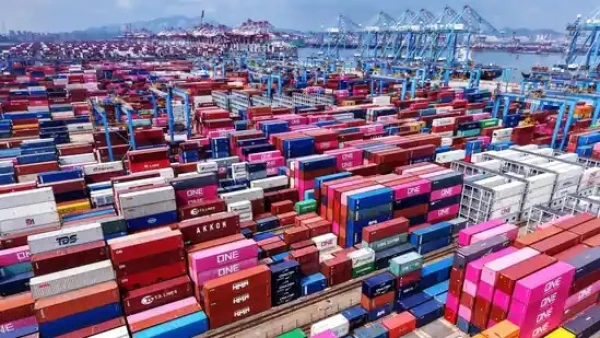
Modi left several loopholes from Trump’s attacks.
The punitive tariff of 50%, which threatened the country’s manufacturing sector, will be reduced to 18%, which is slightly better than key competitor Vietnam (20%). This is also a discount from the 26% retaliatory rate that Trump announced for India as part of his "Liberation Day" package last April. Overall, this is a great public relations move for Prime Minister Narendra Modi, who can use it as an example that good things come to those who wait.
But before celebrations begin in New Delhi, the deal that Trump announced on social media and which Modi confirmed must be signed. It also needs to be clarified what exactly the leaders of the two countries agreed upon – both in the agreement and during the phone call that concluded the deal.
For India, the threat of losing access to the largest export market turned out to be not such bad news. The isolationist arrogance with which ministers and officials in New Delhi approached global trade issues had its consequences. Pressure from domestic industry demanding to find alternatives to the American consumer led to separate trade agreements with the United Kingdom and the European Union. Negotiations for the latter agreement have been ongoing for two decades. Some of India’s most egregious non-tariff barriers related to quality control are being dismantled.
Modi has also begun to mend relations with Chinese President Xi Jinping, which soured after border clashes began in 2020 and were exacerbated by China’s military support for Islamabad during last year’s conflict between India and Pakistan.
But problems arose. For three decades, India has viewed the U.S. as its primary buyer not only of textiles, shrimp, jewelry, and other labor-intensive goods but also of white-collar software services. The Trump administration’s dual attack – on trade and work visas for Indian tech specialists – undermined broader cooperation. This was not just some vague threat: New Delhi’s budget for the next fiscal year, released on Sunday, raised concerns in the markets about the financial costs of shielding India’s economy from Washington’s wrath.
But the situation should improve, and the risk of being pushed out of the American sphere of influence should decrease, provided that all the rough edges preventing the deal from being finalized are smoothed out. But is that the case? Trump’s message states that Modi "agreed to stop buying Russian oil and to purchase much more oil from the U.S. and possibly from Venezuela." However, Modi’s confirmation of the agreement does not mention Russian oil. Did he agree to an immediate halt to purchases or a phased reduction?
Ethane, a byproduct of shale gas production in the U.S., is attractive as a feedstock for the petrochemical business of tycoon Mukesh Ambani. His refinery can also process heavy Venezuelan oil. But when it comes to gasoline and diesel supplies for 1.4 billion consumers, will Indian state-owned refineries be allowed to switch to Iranian oil if Trump threatens to impose a 25% tariff on countries doing business with Tehran? The real contours of the agreement between Trump and Modi could have implications not only for India’s energy security but also for the global oil and gas market.
Trump stated that India "will seek to reduce tariffs and non-tariff barriers with respect to the United States to ZERO," and will purchase "American energy, technology, agricultural, coal, and many other products worth MORE THAN $500 BILLION."
Are weapon systems part of the agreement to reduce India’s traditional dependence on Moscow? Will there be unrestricted access to advanced artificial intelligence chips? Will American e-commerce platforms like Amazon.com Inc. be allowed to have their own product lines? Again, the details are crucial.
Take agriculture, for example. Will Modi ease the ban on genetically modified food crops that cannot be grown in the country? India blends 10 billion liters (2.6 billion gallons) of ethanol with gasoline each year – enough to absorb a significant portion of the corn harvested in the U.S. Midwest. But Indian motorists will find it hard to accept fuel made from American corn in their tanks.
It is difficult to preach the benefits of free trade to local farmers when they are not allowed to benefit from it. After 2022, the government forced Indian wheat producers off the global market to feed the local population. Except for a recent one-off case, this export ban is still in effect. Opposition parties will be particularly watchful of how Modi supports agriculture.
New Delhi struck a lucrative deal with Brussels that provides for a more liberal visa regime for Indian students wishing to work in Europe. The reason is clear. As the U.S. takes a hard line on foreign workers, Indian politicians and officials needed an alternative. Not just for their fellow citizens, but for the future of their own children outside the country.
However, for them, as well as for Modi’s supporters from the urban middle class, the appeal of the American labor market remains strong, despite tightening immigration and customs controls. With Indians accounting for 70% of H-1B work visas, any concession from Trump regarding the $100,000 fee for a new employee will benefit Modi, provided he can achieve it.







Leave a comment