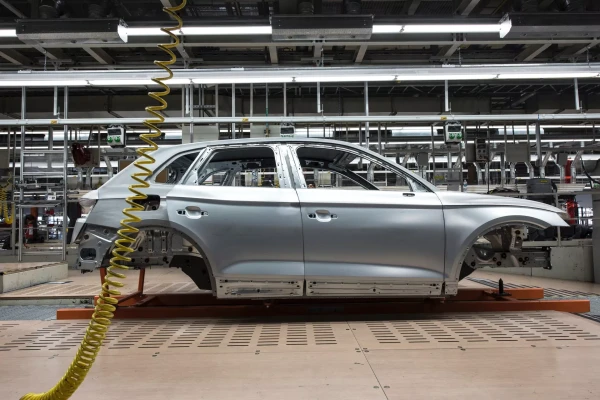
At the Dresden facility, which began production in 2002, fewer than 200,000 vehicles have been produced to date.
The German automotive giant Volkswagen is set to make history by preparing to close a manufacturing facility in Germany for the first time in its 88-year history. Starting tomorrow, the company will completely halt car production at its plant in Dresden, the capital of the federal state of Saxony.
The decision to close is seen as a result of the multifaceted pressures Volkswagen has faced in recent years. Intense competition from Chinese manufacturers, weakening demand in the European car market, and a slower-than-expected transition to electric vehicles have led to a deterioration in the company's financial and operational balance. In this context, Volkswagen reached an agreement with its works council and unions on a restructuring plan in Germany, which included layoffs affecting approximately 35,000 employees and a reduction in production capacity.
The closure of the Dresden plant followed a decline in sales, particularly in the Chinese market, stagnation in Europe, and export pressures caused by U.S. tariffs. These events have significantly impacted Volkswagen's cash flows, while the group is also expected to finance an investment program of around 160 billion euros over the next five years.
The Dresden plant, which began production in 2002, has produced fewer than 200,000 vehicles to date. At its inception, the plant was positioned as a "flagship" showcasing Volkswagen's technological capabilities. Initially, the Phaeton model was produced there, followed by the ID.3. However, neither model had the expected impact on the company's global sales figures.
Industry observers interpret the closure of the Dresden plant as a limited but symbolic step in Volkswagen's efforts to survive amid structural issues, including fierce competition from China, trade measures in the U.S., high energy prices in Germany, strong bureaucracy, and extensive workers' rights.