A billion residents of the country have been freed from the risk of hunger.
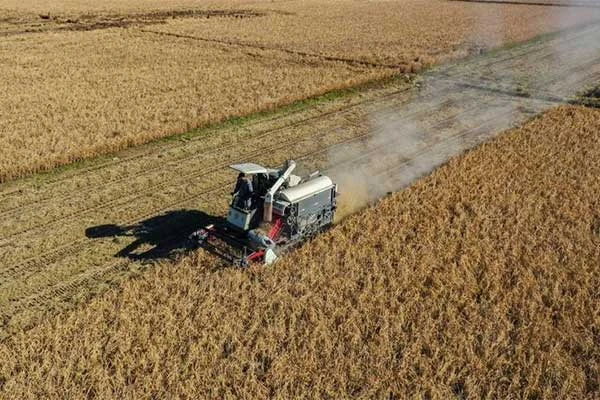
In 2025, China harvested a record grain crop of nearly 715 million tons. This was reported by the Xinhua News Agency, citing data from the National Bureau of Statistics of China.
According to the statistics collected by the bureau, the gross grain harvest in the country reached nearly 714.9 million tons. Compared to the previous year, the volume of grain production increased by 1.2%.
Such a rich grain harvest was achieved thanks to an increase in both sown areas and yield per unit area. In 2025, the area sown with grains exceeded 119 million hectares. This figure has been growing in the country for the sixth consecutive year. At the same time, grain production per unit area increased by 1.1% compared to the previous year.
Weih Fenghua, an official from the bureau, explained the stable growth of sown areas by the implementation of comprehensive measures, which include strengthening the protection and improving the quality of arable land, optimizing the structure of crop production, and promoting the reclamation of abandoned agricultural land. Weih Fenghua noted that this achievement provides strong support for efforts to restore China's economy and promote high-quality development, as well as contributes positively to stabilizing the international grain market and ensuring global food security.
Earlier, Chinese President Xi Jinping emphasized that China's food security can only be ensured when the people firmly hold seed resources in their own hands.
According to him, the high grain harvest in the country has laid a solid foundation for accelerating the modernization of agriculture and rural areas, as well as for a comprehensive uplift of the countryside. "To ensure that China's seed resources are under our own control, it is necessary to rely on our own strengths and capabilities in mastering technologies in the seed industry," Xi Jinping noted during an inspection of a seed laboratory in Sanya, Hainan Province (Southern China).
Emphasizing the strategic importance of the relevant work, the Chinese leader called for the development of the spirit of scientists and researchers of the older generation, including the famous scientist and agronomist, the 'father' of hybrid rice, Yuan Longping. He also called for tireless efforts to develop seed breeding in the country.
Yuan Longping began developing the idea of hybrid rice in the 1960s. In 1973, he managed to solve the main problem - the reproduction of hybrid rice on a large scale.
Currently, hybrid rice varieties are grown on half of all rice fields in China. They account for 60 percent of the total production of this agricultural crop in the country. Thanks to the scientist's developments, millions of residents in China have been freed from the threat of hunger.