
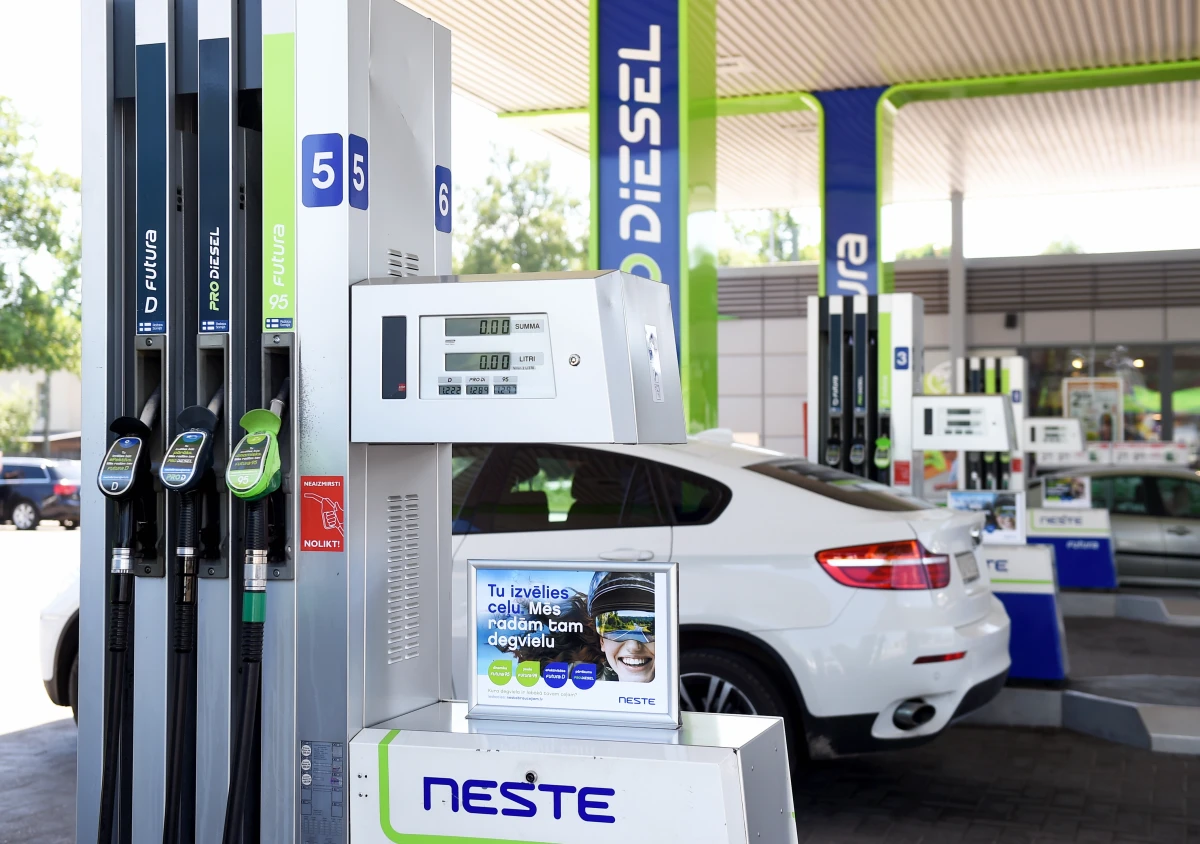
Last week, the price of diesel fuel at popular gas stations in Latvia was lower than gasoline for the first time in several months. The government published a response from the Saeima commission regarding "the necessity to provide support to those sectors of the Latvian economy, as well as households, that were particularly affected by the conflict in the Middle East."
The scenario is bad – and even worse
The package of documents was prepared by the Minister of Economics, Viktors Valainis (Union of Greens and Farmers), who retained his position in the new cabinet of Andris Kulbergs.
"Given the current situation and possible scenarios for the development of events, two mutually exclusive options for further action were considered – preventive preparation for the introduction of support measures or waiting for a certain price threshold to be reached. Regardless of possible scenarios, it is necessary to develop potential measures in advance to mitigate the consequences of the crisis and determine options for their financing. In light of this, the ministries presented information on the increase in expenditures directly related to the rise in energy prices as of May 8, as well as proposals for regulating the situation within the existing budget."
The government emphasized that the current situation cannot be compared to that during the Covid-19 pandemic – the European Commission "did not give instructions that member states could abandon compliance with fiscal conditions."
Brussels limited assistance
Although among the tools available to Brussels is the EU fiscal clause – an economic-legal precedent that allows a state to legally exceed the permissible budget deficit and increase public debt in the context of large-scale crises; for example, economic downturns or pandemics.
Support recommended by the EU Council can be "fiscally neutral solutions, including commercial measures, to offset any increase in expenditures or decrease in revenues..." Among the measures may be:
-
targeted at the most vulnerable households and sectors;
-
temporary measures with a clearly defined end date;
-
designed to take into account fiscal costs and minimize them.
Hurry up, it's cheaper
The most significant public resonance this spring was caused by the Law on Limiting the Increase in Fuel Prices, prepared by the Ministry of Finance and adopted by the Saeima, which ensured a reduction in the excise duty on diesel fuel from 467 to 396 euros per 1000 liters, "which is expected to reduce the price by approximately 8.6 cents per liter."
In turn, marked diesel fuel for agricultural use was taxed at 21 euros per 1000 liters, which lowered the price by 5.9 cents/liter. The temporary rates are expected to end by June 30. "It is expected that this will partially mitigate the impact of rising energy resource prices on consumer prices and reduce the inflation peak in the first half of the year," predicts the Ministry of Economics. It was separately noted that the aforementioned "fiscal neutrality" of the adopted measures – because, despite a decrease in excise revenues by 6.7 million euros, revenues from VAT on fuel continued to grow: "These unplanned revenues were used as a compensatory mechanism."
Alongside this, the Ministry of Economics introduced the Law on the Solidarity Payment for Fuel Traders, which provides for such a payment in the event of exceeding "objectively calculated benchmark retail prices by more than 3%." The department of E. Valainis conducted operational monitoring of fuel prices on its website.
Inčukalns was filled since March
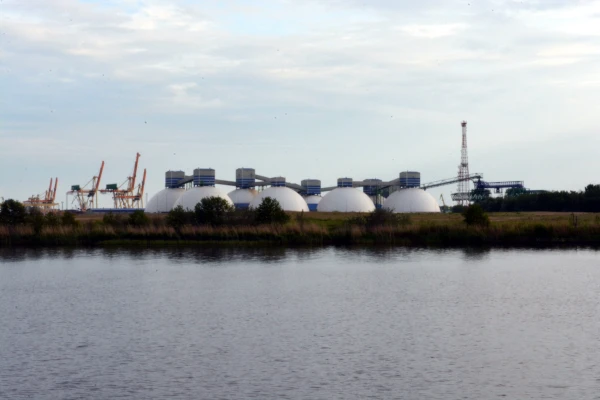
Of course, the government is also considering what we will face in the next autumn-winter period of 2026/27. "The gas injection season in the Inčukalns underground gas storage (hereinafter – the storage) usually begins in May after the end of the previous heating season. Due to the modernization project of the storage, completed in 2025, its operating principle has changed significantly, allowing for flexible regulation of gas injection and withdrawal. Before the modernization, natural gas could only be injected during the injection season and withdrawn during the withdrawal season. Now, gas injection into the storage is possible even during the withdrawal season, and this year traders gradually began filling the storage with natural gas from the beginning of March, although the natural gas withdrawal season is still ongoing.
As of May 7, 2026, the storage contains 6.5 TWh of natural gas (for comparison, in March there was about 1 TWh less in the storage).
It should be emphasized that Latvia also has its own strategic reserves in the storage amounting to 1.8 TWh. Latvia has been storing strategic reserves since 2022, when corresponding amendments were made to the Energy Law."
Since February of this year, the ministries of the Baltic states responsible for energy have been conducting operational online meetings at the leadership level – every Monday – to exchange current information on the state of energy supply and the energy market. The gas transmission system operators of the Baltic states and Finland "forecast future filling of the storage to assess readiness for the next heating season."
Home electricity storage
Amendments to the Energy Law are necessary to incorporate 2 new Cabinet of Ministers rules regarding the operation and dismantling of wind power plants. According to the Ministry of Economics, they can be put into effect by the end of this year (i.e., before the end of the XIV Saeima's term).
In the near future, the introduction of new energy solutions is expected, in particular, the purchase and installation of electricity storage devices with a capacity of up to 5 kW by households, funded by the Emission Quota Sales Instrument.
At the same time, Latvia "consistently adheres to the principle of a market approach, namely, direct financial state support is not provided for the development of such projects, so as not to distort the market and ensure effective resource allocation."
What about fertilizers?
Energy storage systems, whose status will soon receive legal definition, will be easier to connect to networks, participating in the electricity market and providing system services. The Ministry of Economics promises to take storage into account in the Latvian Energy Strategy until 2050.
The response to the parliament was approved by the Ministries of Finance, Communications, Climate and Energy, and the State Revenue Service. It is worth noting that the Ministry of Agriculture did not participate in the coordination process – although events in the Middle East directly impacted the mineral fertilizers market. However, there is no mention of this in the document – not a word…








Leave a comment