The state has recognized the deposits as internal debt.
From 2026 to 2028, nearly 5 billion rubles (50,000,000 euros) will be allocated from the federal treasury of the Russian Federation for compensation payments to Russians for Soviet deposits.
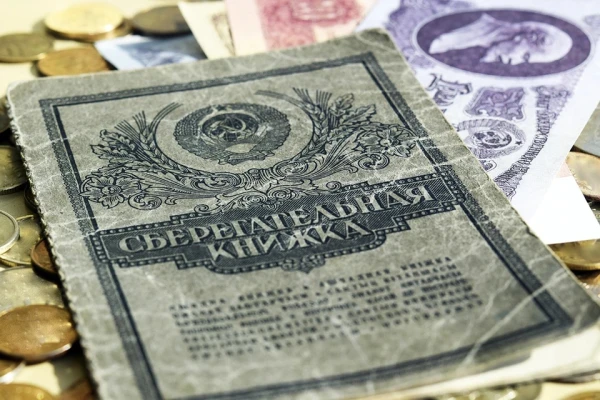
Deposits that were opened before June 20, 1991, in the Savings Bank of the USSR have been recognized by the state as internal government debt. And it has decided to compensate them. Moreover, payments are made not only to the depositors themselves but also to their heirs. Compensation is also due for targeted deposits for children.
First of all, the amount of compensation depends on the age of the recipient:
-
For depositors born in 1945 or earlier, the compensation is paid in a threefold amount.
-
For depositors born between 1946 and 1991, it is paid in a twofold amount.
In simple terms, the amount of money that was in the savings book as of June 20, 1991, is taken and multiplied by two or three, depending on when the person was born.
But that's not all. The amount of compensation also depends on the duration of the deposits and the date of the contract's completion. That is, the size of the deposit is also multiplied by a coefficient: from 0.6 to one. The longer the time since the deposit was closed, the lower the coefficient will be. Accordingly, the less money the depositor will receive. The highest coefficient – one – is applicable for deposits that have not been closed to this day or were active between 1992 and 2025 and were closed between 1996 and 2025.
Dmitry Prokofyev, an economist and author of the Telegram channel "Money and the End," comments:
- Soviet deposits in savings banks essentially represented government debt. After all, people placed money in deposits not because they had excess funds, but because there was nothing to buy – the Soviet Union simply did not produce enough consumer goods. The government used the funds from deposits to finance its projects that were not intended for the consumer market. Well, we understand what this is about.
By the late 1970s and early 1980s, it was clear that the Soviet Union would not be able to settle these obligations. There was a wonderful economist, Igor Birman, who wrote that at the first opportunity, the government would rid itself of these obligations – either through inflation or these deposits would be confiscated or frozen. That is exactly what happened – in the early 1990s, this money sharply depreciated. Nevertheless, in 1995, a law was passed to compensate for these deposits. The procedure for payments was determined. And now the government is gradually paying out these funds – such a purely political gesture... If we assume that there are a million citizens receiving this, then it amounts to 1,600 rubles per person per year (16 euros). You can go out for lunch once... But at least one can always say: "we are compensating for Soviet deposits!"