
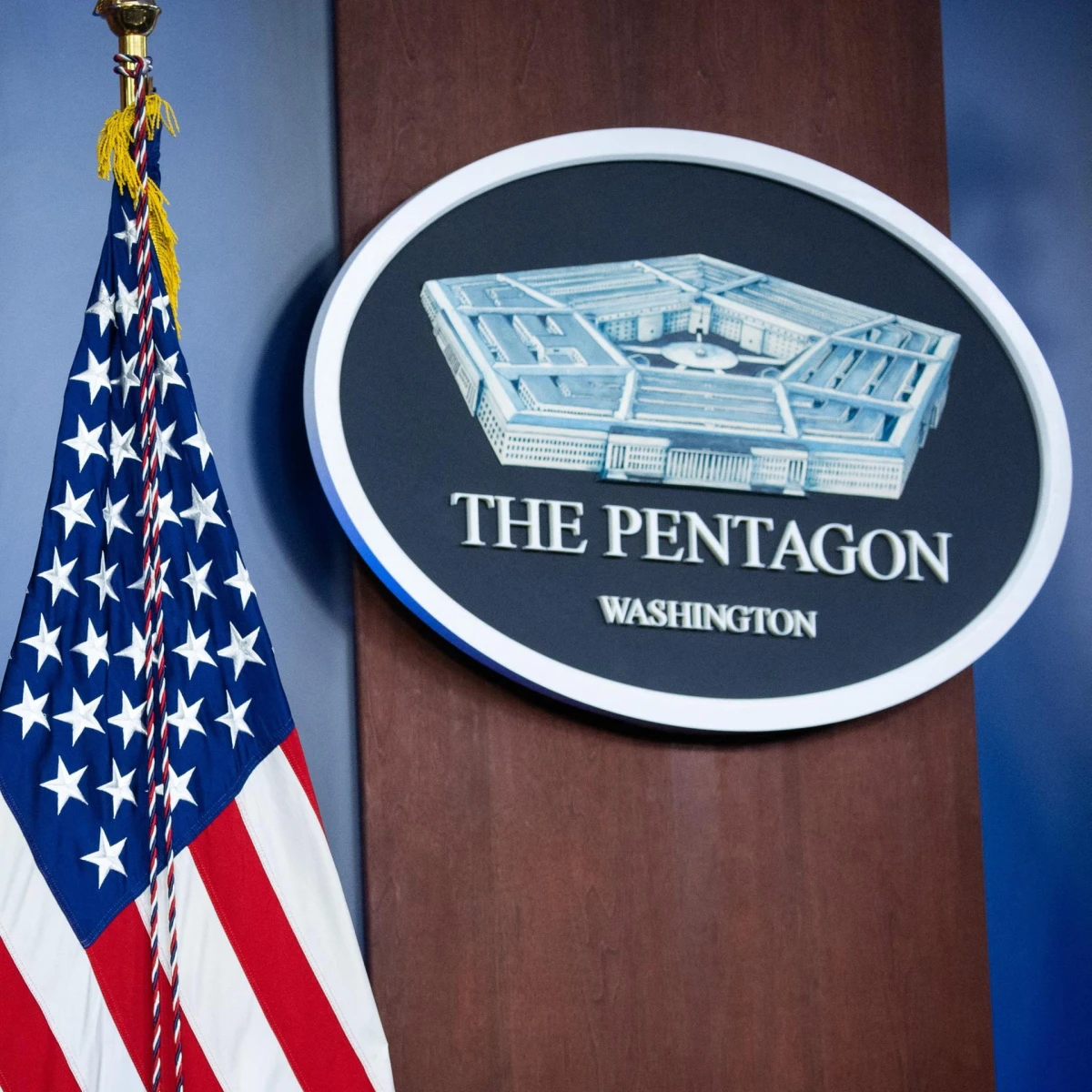
The U.S. Department of Defense has expanded the list of Chinese companies that Washington believes have ties to the armed forces of the PRC. The updated list includes Alibaba, BYD, Baidu, and several other technology companies. The decision has already provoked a sharp reaction from Beijing and the corporations themselves.
The U.S. Department of Defense has included a number of major Chinese companies, including Alibaba, BYD, and Baidu, on a list of organizations that, according to the Pentagon, are linked to the Chinese armed forces, reports NOS.
Once added to this list, companies will be unable to bid for contracts with the U.S. Department of Defense.
What the Pentagon's list entails
The so-called 1260H list was created in 2021. Its purpose is to identify Chinese companies that, according to U.S. authorities, have ties to the People’s Liberation Army of China, even if they are not under its direct control.
Being on the list does not mean a ban on selling goods or services in the U.S. However, U.S. military entities are prohibited from cooperating with such companies and purchasing their products.
The U.S. House of Representatives Committee on China, which participated in preparing recommendations for updating the list, stated that the new list should serve as a warning to American businesses and government entities.
Committee members believe that the listed companies cooperate with Chinese military entities in ways that contradict U.S. national security interests.
Major Chinese corporations are under restrictions
In addition to Alibaba, which owns the popular trading platform AliExpress, the updated list includes electric vehicle manufacturer BYD, internet giant Baidu, and companies operating in the fields of artificial intelligence, semiconductor production, and robotics.
Following the latest update, the Pentagon's list now includes 188 Chinese companies.
Chinese companies intend to challenge the decision
Representatives of Chinese businesses have sharply criticized Washington's actions.
Alibaba stated that it should not be on this list and intends to use all available legal mechanisms to protect its reputation.
The company emphasized that Alibaba is not a military organization and does not participate in any military-civilian programs.
Baidu and biotechnology company Wuxi AppTec made similar statements. They also consider their inclusion on the list to be unjustified and intend to seek its revision.
A new escalation of tension between the U.S. and China
Many analysts view the update of the list as another stage in the escalation of relations between the two largest economies in the world.
Notably, less than a month ago, U.S. President Donald Trump visited China on a state visit and held talks with Chinese President Xi Jinping.
At that time, the parties discussed possible trade agreements, but no specific agreements were announced as a result of the meeting.
Beijing accuses Washington of discrimination
The Chinese embassy in Washington criticized the U.S. authorities' decision.
The Chinese side stated that the U.S. should abandon the practice of creating "discriminatory lists" and ensure fair and equal working conditions for Chinese companies in the American market.
Beijing emphasized that it hopes for the creation of a non-discriminatory business environment for Chinese businesses.
The expansion of the Pentagon's blacklist demonstrates that technological and economic rivalry between the U.S. and China remains one of the key factors in global politics. Despite ongoing diplomatic contacts, mutual distrust regarding security and high technologies continues to grow, creating new obstacles for cooperation between the two countries.












Leave a comment