
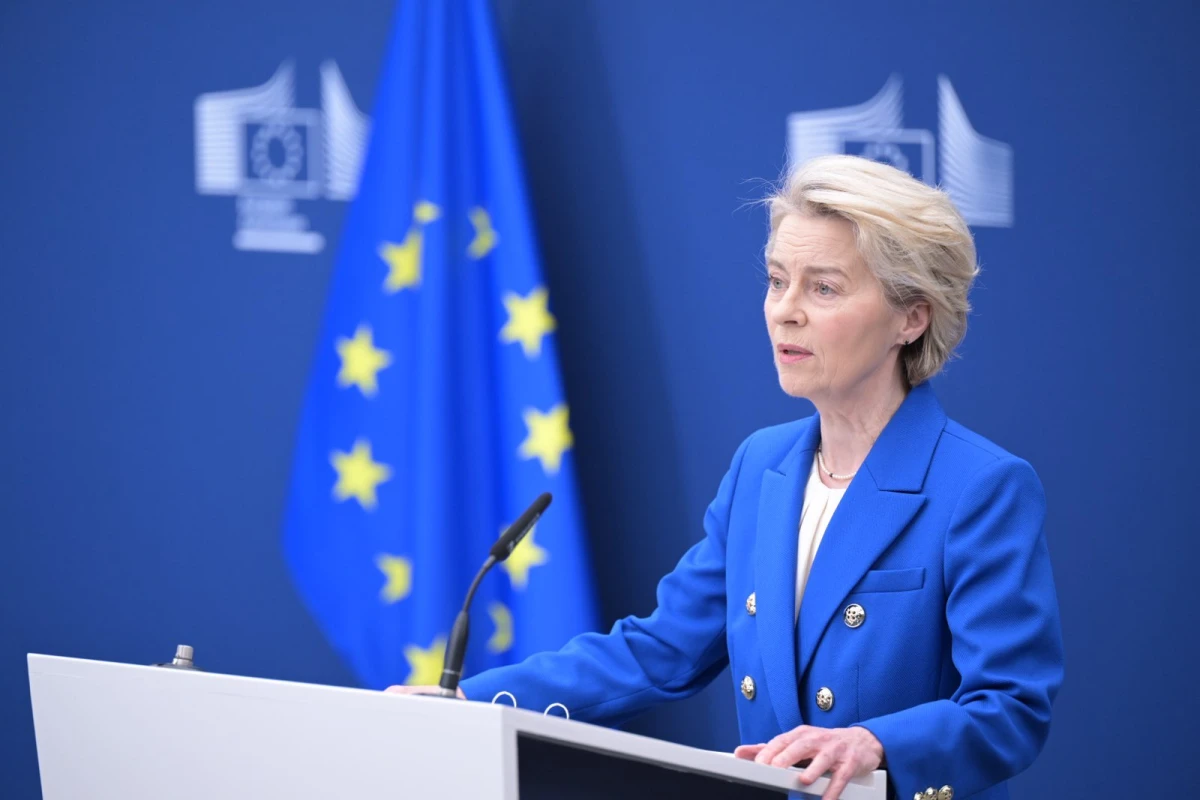
European Commission President Ursula von der Leyen presented in Brussels yet another, the 21st, package of sanctions against Russia. The measures include a ban on entry to the EU for former combatants who fought on Moscow's side.
European Commission President Ursula von der Leyen presented the 21st package of anti-war sanctions against Russia on Tuesday, June 9, as reported by DW correspondent in Brussels. This package includes, in particular, a ban on entry to the European Union for participants in Russia's war against Ukraine. The European Commission proposes to ban entry to the EU for anyone who has served in the Russian armed forces since the beginning of the full-scale war against Ukraine. "Europe remains closed to all those who participated in the invasion of Ukraine," von der Leyen stated while addressing journalists. Other restrictions are expected to affect the energy sector, the financial sector, trade, and for the first time, fishing.
"The goal of our package is absolutely clear: we want to fully maintain the intensity of our sanctions," Ursula von der Leyen clarified. According to her, the existing restrictive measures are already putting pressure on the Russian economy: Russia's revenues from energy resources decreased by about 40 percent at the beginning of 2026.
In the energy sector, the European Commission proposes to add another 30 vessels from Russia's "shadow fleet" to the sanctions list, in addition to the 632 already under restrictions. For the first time, the EU also intends to introduce measures against vessels that assist the "shadow fleet," such as providing refueling services. Infrastructure facilities related to the trade and processing of Russian oil may also fall under restrictions.
Brussels proposes to expand the operation ban to another 31 Russian banks
In the financial sector, Brussels proposes to expand the operation ban to another 31 Russian banks, as well as to 20 banks, crypto companies, and oil traders in third countries that help circumvent sanctions.
Additionally, the package includes new restrictions on the export of goods and technologies used by the Russian defense industry, including components for drones. New bans on the import of a number of goods from Russia worth about 60 million euros are also proposed.
For the first time, sanctions may affect the fishing sector: the European Commission proposes to restrict the import of certain fish products and completely ban the import of some of them.
The package must now be unanimously approved by EU countries. Representatives of the European Commission have repeatedly emphasized that in preparing each new sanctions package, Brussels seeks ways to close existing loopholes and increase pressure on Russia. The goal of the European Union is to limit revenues as much as possible, which allow Russia to continue its war against Ukraine.
Earlier, the EU's High Representative for Foreign Affairs and Security Policy, Kaia Kallas, stated that her service is preparing an addition to the blacklist of 80 individuals and organizations "linked to the defense complex" and Russian media for the meeting of EU foreign ministers, which will take place on June 15 in Brussels.







Leave a comment