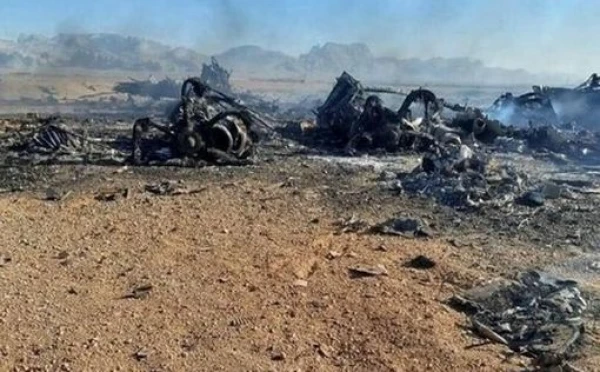
American media publish details of the rescue of a crew member of the F-15 fighter jet shot down over Iran.
This concerns a colonel who is an officer of the aircraft's weapon systems, who ejected along with the pilot after their plane was hit on Thursday night in southwestern Iran. After ejecting, he moved away from the crash site, ascended a high ridge, took cover there, and transmitted a distress signal. He was injured. He had a pistol, coded communication equipment, and a location transmitter.
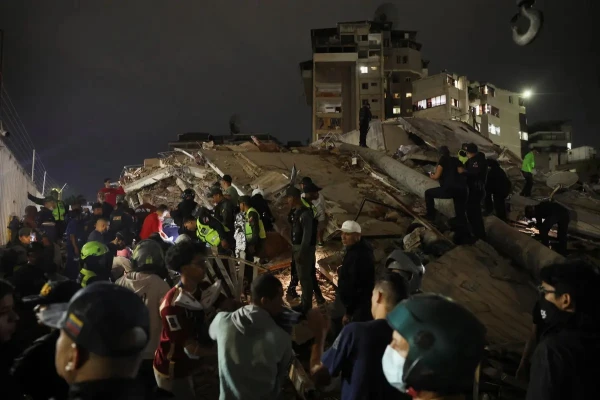
Local tribal representatives sheltered the American and assisted in the rescue efforts while Basij forces and Iranian security forces began combing the area. From that moment, once the location of the downed pilot was identified, American aircraft struck Iranian forces and columns moving toward the area of the incident, and at one point, there were also shootouts between American commando forces and Basij fighters and local Iranian forces. Al-Jazeera reported that the entire rescue operation took place under fire.
According to American media reports, hundreds of special operations soldiers, dozens of combat aircraft and helicopters, as well as intelligence, cyber, and space capabilities were involved in the rescue operation. It was also reported that after the crew member was rescued, two American transport planes became stranded on a remote runway deep in Iranian territory, and three backup planes were urgently dispatched to extract all forces from the risk zone. Reports indicated that two malfunctioning planes were destroyed by the Americans to prevent them from being captured by government forces.
The aircraft was shot down in an area where there is significant opposition to the regime, and Iranian authorities attempted to involve the local population in the search for the navigator, offering a reward for his capture.
According to Axios, the Islamic Revolutionary Guard Corps spent 36 hours trying to locate the missing crew member. According to three American sources, both crew members were ultimately rescued during special operations conducted on Iranian territory. The pilot and the weapon systems officer were able to communicate using their communication systems immediately after ejecting. The pilot was rescued within a few hours, but that operation was complicated as well: according to Axios, during the first rescue, an American Black Hawk helicopter was hit by Iranian fire, and the crew members on board were injured, but it was able to continue flying.
The second crew member was located by the Americans only after more than a day. After he was found on Saturday, another rescue operation began, while the Islamic Revolutionary Guard Corps also sent forces to the area, attempting to disrupt it. According to sources, U.S. Air Force planes struck Iranian forces to prevent them from reaching the scene.
Fox News also described the complex operation, which was conducted on several levels. It involved American special operations forces, including Air Force rescue units along with other elite units. According to reports, ground combat occurred during the operation, but there were no American casualties. A source familiar with the details of the operation described it as "very complex" and emphasized that several branches of the U.S. armed forces were involved.
It was also reported that the A-10 Warthog attack aircraft, which crashed on Friday, was involved in providing air cover for the rescue teams operating on the ground. The plane crashed in Kuwait, but its pilot successfully ejected and was rescued. It was also reported that as part of the operation, aircraft carrying sensitive equipment were destroyed as part of the combat rescue mission. According to Fox, the F-15E itself was almost completely destroyed at the moment of impact.
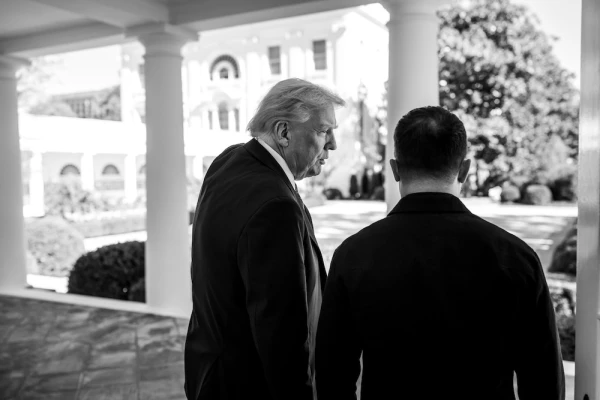
U.S. President Donald Trump gave an interview to Channel 12 of Israeli TV a few hours after the rescue of the missing serviceman. The U.S. was concerned that the Iranians had taken the downed American navigator hostage and were forcing him to try to lure American rescue forces into an ambush, the president reported.
The pilot said "God is good" on his encrypted communication device, which led rescuers to suspect that he was being held and forced to speak, Trump told Israeli media. American forces took several hours to determine that the colonel, being a religious man, was speaking of his own accord.
Trump stated that Israel assisted in conducting the rescue operation.