“Widespread discontent, anger over injustice, and obvious impoverishment in recent months.”
On April 19, it will become clear what the political landscape of Bulgaria will look like in the coming years.
This will be the 8th parliamentary election in 5 years! Of course, Bulgarians are endlessly tired of the state of permanent political crisis in the country and the steady decline in the standard of living. Voter turnout has been catastrophically decreasing with each new election campaign. For example, in 2024, only 2.3 million people voted! However, this time, the situation has changed radically. Sociologists predict nearly 50 percent turnout, which should amount to over 3 million people.
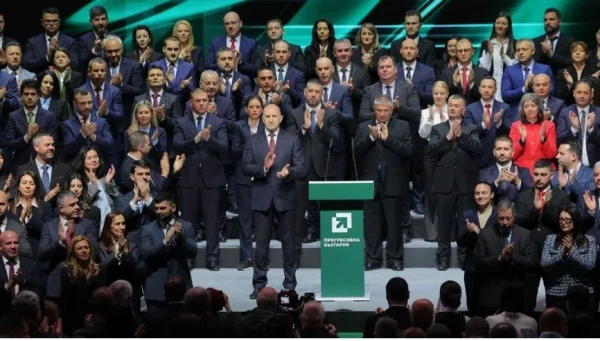
Such enthusiasm among Bulgarians is primarily related to the emergence of a new political force – “Progressive Bulgaria,” led by Rumen Radev, who recently left the presidential office. The figure of General Radev, a former military pilot, and nominal head of state since 2017 until recently, has become iconic for Bulgaria. It is worth noting that the functions of the president in the country are very limited and mostly consist of formal representation. Unless, of course, the president becomes the commander-in-chief in the event of the country entering a war… At the same time, Radev has managed to remain quite popular among the people, thanks to the balanced, pragmatic policy he has consistently adhered to. His ratings significantly surpassed the popularity level of any current Bulgarian politician.
Radev left his previous post before the end of his term and ran for election as the leader of a new political force. He clearly justified his step – the country needs to be saved from corrupt power. A real commotion began in the “sacred family” of the local political elite. The fact is that Bulgarian parliamentary parties have long formed something like a “higher caste,” a closed club that outsiders cannot enter.
Since his unexpected intrusion into real politics, Radev has adhered to an unusual strategy. He does not engage in disputes with opponents and speaks publicly quite rarely. But most importantly – he has led a small, previously little-known party “Progressive Bulgaria,” bringing with him a huge number of new people, who are not connected in any way with countless scandals and accusations of corruption. People who previously stood outside of politics, without any “skeletons in the closet.”
Radev voiced the main theses of his program at a meeting with voters in Bulgaria’s second-largest city – Plovdiv.
According to him, the political class has managed to alienate Bulgarians from the polls. “Over the years, the oligarchy has destroyed the dreams of thousands of entrepreneurs. People look in astonishment at their electricity and water bills. Now is the time to remember who took away their right to a referendum,” Radev noted.
The referendum that the leader of “Progressive Bulgaria” mentioned was supposed to answer the question – do Bulgarians themselves want to join the eurozone and are they ready to give up their national currency – the lev. Opposition parties and Radev himself, while still in the status of president, demanded this referendum. Engaged deputies of the parliamentary majority did not allow a nationwide vote to take place.
Radev pointed to “widespread discontent, anger over injustice, and obvious impoverishment in recent months”:
— “Today we are starting the most important battle of our lives. The battle for Bulgaria. The goal is clear: to overthrow the oligarchy, take back our state, strengthen the law, democracy, and civil liberties, and ensure that there are no poor people in European Bulgaria.”
Many have tried to predict the outcome of the former president's actions. Some predicted the failure of Radev's demarche. However, after the first sociological studies, skepticism in the words of his opponents diminished...
A recent survey conducted by the “Myara” agency, like all previous analyses, gives the top spot in the electoral race to Radev and his party, with support from the population of over 30%. Previous long-time leaders significantly lag behind “Progressive Bulgaria.” The GERB party (Citizens for European Development of Bulgaria) and their allies can count on 19 percent of the electorate. The third place goes to the political movement “Continuing the Change” (PP), with less than 13 percent of the votes. Several other parties have a chance to enter the new composition of the National Assembly.
<iframe width="560" height="315" src="https://www.youtube.com/embed/AXc6ja62z90?si=rbYquDG85szHzrFc" title="YouTube video player" frameborder="0" allow="accelerometer; autoplay; clipboard-write; encrypted-media; gyroscope; picture-in-picture; web-share" referrerpolicy="strict-origin-when-cross-origin" allowfullscreen></iframe>