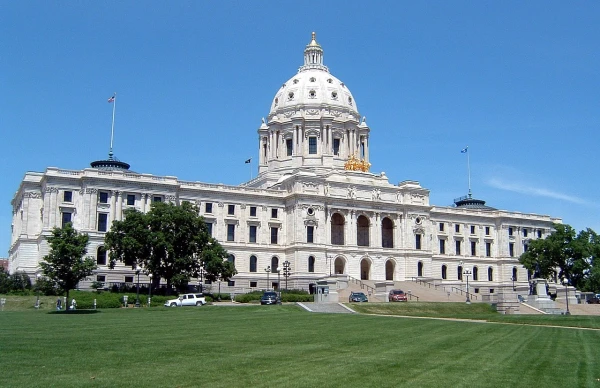
The state may decide the fate of the midterm elections in November.
The state of Minnesota has unexpectedly found itself in the spotlight. Five years ago, it was here that a nationwide wave of protests from the Black Lives Matter movement began, triggered by the murder of George Floyd and quickly spreading across the country.
The state might not have attracted such close attention from President Donald Trump if Minnesota Governor Tim Walz had not been invited by Democratic presidential candidate Kamala Harris as a vice-presidential candidate for the 2024 elections. Even then, two years ago, this choice had a clear political logic. Walz was perceived as the embodiment of the "stereotypical" Democratic image: a Midwesterner, a middle-class representative, understandable and relatable to the electorate of the entire region.
Confusion and Tragedy
In recent decades, Minnesota has been considered a state "leaning towards Democrats." Democratic Party representatives in the state hold a slight majority in almost all branches of government. Donald Trump has not been able to win elections there in 2016, 2020, or 2024. Besides Tim Walz, this state is also home to Senator Amy Klobuchar, one of the most consistent and vocal critics of the MAGA movement. After the establishment of a Democratic "trifecta" in Minnesota, controlling the governorship and both chambers of the legislature, a whole package of decisions ideologically unacceptable to Republicans was adopted in the state. This includes the legalization of marijuana, the introduction of free meals for students, and the expansion of employer obligations for health insurance for employees and their families. Collectively, these measures turned Minnesota into a convenient target for political criticism.
And the Trump administration directed federal immigration forces from ICE to Minneapolis, the largest city in the state.
After the political passions surrounding the 2024 elections subsided, Minnesota once again found itself in the spotlight – this time for a different reason. The state experienced a series of high-profile scandals related to fraud, primarily in the area of social benefits. Since the early 2020s, the FBI has been conducting several investigations here, some of which have become record-breaking in terms of the scale of thefts. These involved abuses in the healthcare system, illegal use of medical insurance, and laundering significant amounts of public funds.
All these episodes gradually became a reason for criticism directed at Governor Tim Walz. Complaints came not only from Republicans but also from liberals. A telling example is the legalization of marijuana, enshrined in the 2023 law. Despite its adoption, not a single legal cannabis store has opened in the state. Minnesota's courts have repeatedly postponed the licensing competition, citing corruption risks and procedural violations. Some potential participants claimed they were illegally excluded from the bidding process.
Pressure mounted, scandals persisted, and Tim Walz, after making a not very successful attempt in early January to stop the wave of fraud and restore order in the social programs system, ultimately decided to withdraw from the gubernatorial race in 2026, meaning he will not seek a third term. It was evidently a difficult decision, as participating in the 2024 presidential campaign as a vice-presidential candidate allowed Walz to accumulate significant political capital and strengthen his position within the Democratic Party. Back in September 2025, he officially announced his intention to run again and by that time had managed to raise over a million dollars for the campaign.
However, Minnesota's problems did not end there. In early January, a tragedy occurred in Minneapolis: an ICE officer fatally shot a protest participant during one of the raids. The incident almost immediately took on a political dimension. Republicans sided with the ICE officer, arguing that he acted in self-defense and strictly according to protocol. Democrats, on the other hand, expressed support for the deceased, accusing the shooter of exceeding his authority. Additional resonance was caused by a video that quickly spread online, capturing the moment of the shooting. The FBI initiated an investigation into the circumstances of the incident, but no criminal charges were filed.
Illegal Native Americans
In the published video, it is difficult to see how the deceased could have posed a direct threat to the ICE officer. Nevertheless, only a court or, at the very least, a full investigative review can establish all the circumstances of the incident and provide a legal assessment.
Donald Trump's unequivocal support for the ICE officer and his administration elicited mixed reactions even within the Republican Party. The image of a national leader firmly opposing illegal immigration undoubtedly aligns with the political goals of Trump, his administration, and most Republicans, including supporters of the MAGA movement.
But it is entirely impossible to ignore the fact that a U.S. citizen was shot by a federal officer.
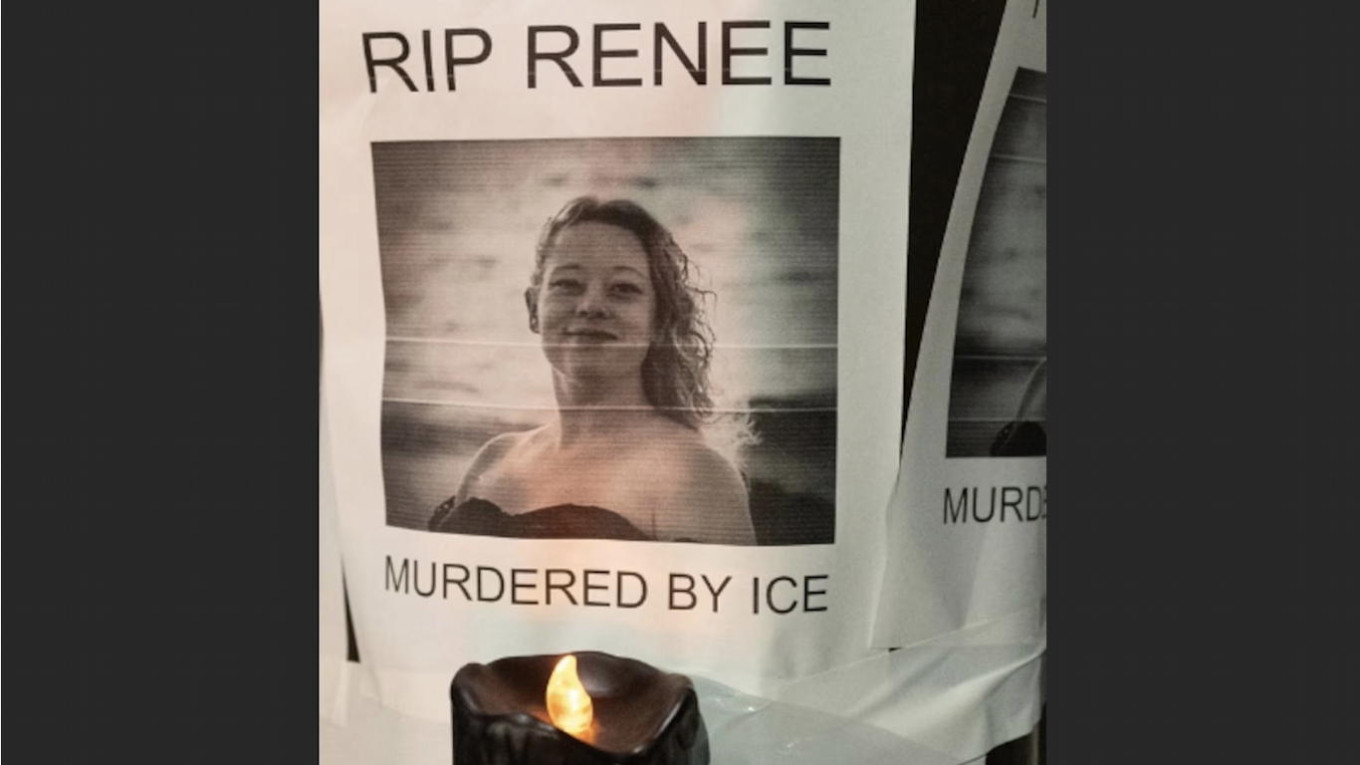
Even considering her political activism, proving that she provoked the use of force is objectively more difficult than raising the issue of possible abuse of power.
To reduce the level of tension, Vice President J.D. Vance traveled to Minneapolis. His visit yielded only partial results; the vice president did not use conciliatory rhetoric, although he did not defend the ICE agents with the same determination as President Trump, nonetheless placing blame for the incident on the leftist protesters.
ICE's activities in Minnesota are causing increasing bewilderment; in the same unfortunate January, immigration officers arrested Native Americans – representatives of local tribes – on suspicion of being illegal immigrants. The episode, which drew media attention, ended well, with their release a few hours after the circumstances were clarified. However, a similar incident occurred in Arizona in early January, and there is still no public information that the detained Native Americans there have been released.
Later, the authorities of Minnesota filed a lawsuit against the Trump administration, seeking to legally compel the withdrawal of immigration officers from the state. It is possible that the court will take public resonance into account and support such a position. In Minnesota, the issue of illegal immigration is objectively far from being the most pressing compared to states that directly border Mexico. An additional argument was a recent Supreme Court decision that deemed the deployment of the National Guard in Chicago illegal. However, even a possible court ruling in favor of Minnesota is unlikely to reduce the political tension surrounding this issue.
Fluctuations Expected
Politically, the Democratic Party is facing serious difficulties in Minnesota. The popular governor has dropped out of the electoral race, and corruption scandals continue to dominate the news agenda. Despite the murder and other manifestations of unwarranted brutality from federal agents, Republican positions in the state have noticeably strengthened, and now the election campaigns will be much more competitive both in the gubernatorial elections and in the fight for seats in the U.S. House of Representatives and the state legislature.
An additional blow to the Democrats was the death at the end of 2024 of influential Senator Kari Diedrich, thanks to whom the party managed to maintain a majority in the Minnesota legislature. As the 2026 election cycle approaches, the state is facing a complex of political problems and a high degree of uncertainty.
It is highly likely that Minnesota will fall into the category of swing states.