
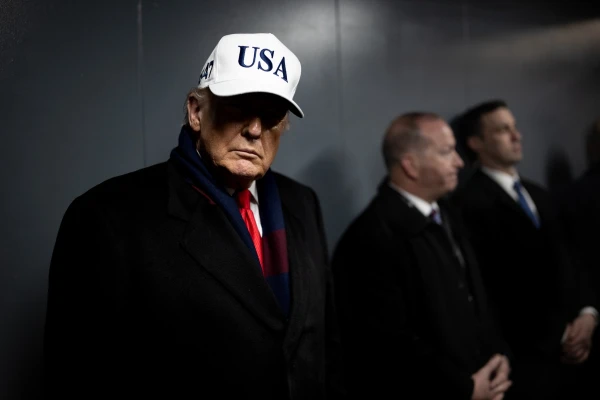
After the operation in Venezuela and the capture of dictator Nicolás Maduro, U.S. President Donald Trump suggested that other Latin American countries could be next, referring to the so-called 'Donro Doctrine'—a play on words based on the Monroe Doctrine.
Axios recalled which countries Trump threatened at different periods of his presidency and explained why.
Venezuela
The capture of Maduro was just the beginning of U.S. influence over Venezuela. It is noted that the Trump administration had already begun planning direct control over the sale of Venezuelan oil and the revenues from it. On Tuesday, Trump stated that the U.S. would receive up to 50 million barrels of sanctioned Venezuelan oil worth about $2.5 billion.
Venezuela has been an adversary of the U.S. for over 20 years. This South American country has long accused the United States of colonial chauvinism, noted Axios journalist Mark Caputo.
Greenland
Trump's efforts to establish control over Greenland intensified after the capture of Maduro. The U.S. administration views the self-governing territory as an important element of its defense strategy.
"We really need Greenland, absolutely. We need it for defense," the publication quotes Trump.
World leaders, particularly the leadership of Greenland and Denmark, have firmly opposed such U.S. intentions. Trump's recent statements have put NATO on heightened alert, as Greenland is part of the Kingdom of Denmark—a member country of the Alliance.
U.S. Secretary of State Marco Rubio announced on Wednesday that he will meet with his Danish counterpart next week to discuss the issue of Greenland.
Cuba
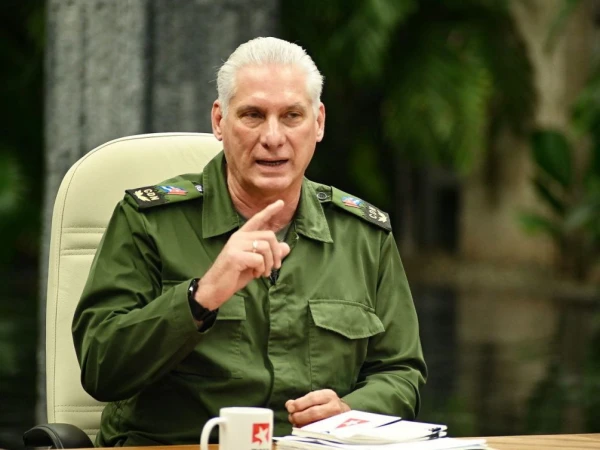
Axios writes that Trump has been reserved about direct U.S. intervention in Cuba, stating that the country may "fall on its own."
"It looks like Cuba is ready to fall. I don’t think any action is needed. It seems like everything is heading that way," he said.
Meanwhile, Rubio, whose parents are Cuban immigrants, takes a much tougher stance on the possibility of invasion or strikes.
"If I were living in Havana and part of the government, I would be worried," he stated on Saturday.
Colombia
Trump threatened military action against Colombia, citing the activities of cocaine laboratories and drug production as part of his "war on drugs."
The U.S. president referred to Colombian President Gustavo Petro, an ally of Maduro, as a threat and stated that he should "watch himself." According to him, Petro is a "sick man who loves to produce cocaine and sell it to the U.S." When asked by reporters if Trump could order the U.S. to conduct an operation against Colombia, he replied, "I like that."
Mexico
Throughout both his first and second presidential terms, Trump has had tense relations with Mexico, the publication writes. He has not ruled out military action against the country.
"Something will have to be done about Mexico," Trump said on Saturday during a Fox News broadcast.
His dissatisfaction is particularly related to fentanyl—a deadly drug that, according to the U.S. Government Accountability Office, enters the U.S. from Mexico after being produced and supplied from China, Axios noted.
Iran
A day before the capture of Maduro, Trump openly stated the U.S. readiness to intervene in Iran's affairs due to the deaths of protesters there.
"If Iran shoots and brutally kills peaceful protesters, as they are known to do, the United States of America will come to their aid. We are ready to act," he wrote on Truth Social.
Additionally, Senator Lindsey Graham warned Iran's Supreme Leader Ayatollah Ali Khamenei that Trump could order his elimination if the repression continues.
In June, Trump had already ordered bombings in Iran to halt its nuclear program and delay potential conflicts.
Canada
Several times, Trump has stated that Canada should become the "51st state of the U.S." and has not ruled out its annexation. The publication noted that he even promised to protect Canada with the U.S. missile defense system "Iron Dome" if it joined the United States.
At the same time, Canadian Prime Minister Mark Carney made it clear that the country is not interested in such a scenario. After the capture of Maduro, Trump did not mention Canada.
Panama
At the beginning of his second term, Trump stated that the U.S. should control the Panama Canal for strategic security reasons. In March, he claimed that the States had allegedly regained control over the canal after acquiring a controlling stake in a company operating near it.
Panama's authorities denied this, and President José Raúl Mulino accused Trump of lying.
Nigeria
Trump's threats against Nigeria peaked when the U.S. conducted airstrikes against ISIS positions in the country on Christmas. The attack followed months of statements from Trump and evangelical Christians about the alleged persecution of Christians in Nigeria.
Syria
In December, Trump ordered large-scale airstrikes against Syria after previously threatening the country due to the killing of two American soldiers.
"This is not the beginning of a war—it is a declaration of vengeance. Today we hunted and destroyed our enemies. Many. And we will continue," Defense Secretary Pete Hegseth wrote on social media X at that time.
Nicaragua
Republican Senator Rick Scott hinted on Wednesday that Nicaragua could become another target for the U.S.
"This is the beginning of change in Venezuela, then we will set things right in Cuba, Nicaragua will also be 'fixed,' and next year there will be a new president in Colombia. Democracy is returning to this hemisphere," he stated on Fox Business Live.
Trump's Policy
As previously reported by UNIAN, Trump is intensifying speculation about Greenland, Cuba, and Colombia after the overthrow of Maduro. The statements from the American leader and Secretary of State Rubio emphasize that the U.S. administration is serious about playing a more active role in the Western Hemisphere.
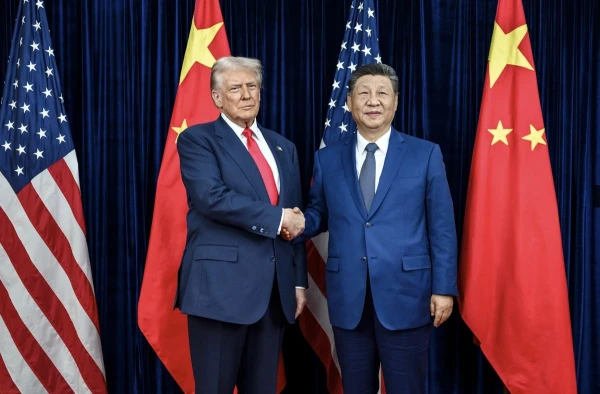
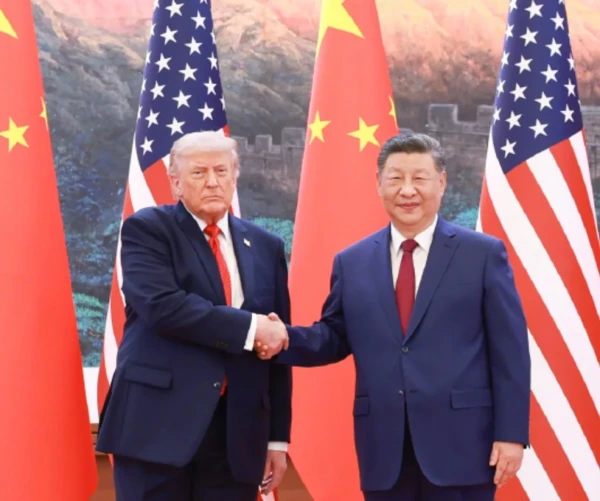
We also wrote that Trump's policy is pushing Latin America into the arms of China. According to experts from Foreign Policy, U.S. military intervention in Venezuela undermines international law and revives a model of imperial dominance that has previously led to prolonged hostility in the region. The publication noted that the United States risks losing political and economic influence, as Latin America is likely to increasingly seek alternative allies—primarily in China.





Leave a comment