
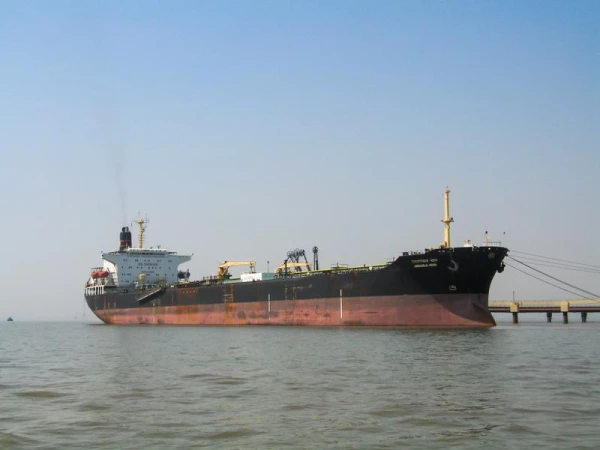
U.S. military detained the tanker Marinera on January 7, despite requests from Moscow not to do so. How will this affect Russian-American relations, sanctions against oil from Russia, and Moscow's 'shadow fleet' - DW.
On January 7, American military forces detained the tanker Bella 1 (also known as Marinera). The pursuit began back in 2025. At the end of December, the U.S. Coast Guard attempted to detain the tanker in the Caribbean Sea as it was heading towards the Venezuelan coast. U.S. authorities had an arrest warrant for the vessel for violating U.S. sanctions, transporting Iranian oil, and violating the blockade against oil tankers heading to and leaving Venezuela. However, the crew, consisting of citizens from Russia, Ukraine, and India, refused to comply with the demands of the American military. Bella 1 changed course, and a Russian flag was painted on its side. A few days later, it was renamed Marinera and registered in the Russian Maritime Register of Shipping. The American military continued the chase.
The New York Times (NYT) reported in early January that on December 31, Russian authorities requested to cease the pursuit of the vessel. The administration of Donald Trump, according to an informed source, nevertheless continued to consider the tanker as belonging to no state, as it was sailing under a "false flag" when approached by the Coast Guard. As a result, Marinera was detained in the North Atlantic, reported the U.S. European Command (EUCOM) - before the arrival of a Russian submarine that had headed towards it shortly before.
"Despite desperate attempts to avoid detention, including fleeing from the U.S. Coast Guard, the vessel Bella 1 was successfully detained this morning," U.S. Attorney General Pam Bondi reported. She threatened similar measures against any vessel that refuses to comply with the demands of the U.S. Coast Guard "or other federal officials."
Detention of Marinera - a blow to Russia or Venezuela?
Experts interviewed by DW agree that the operation against Marinera is an unprecedented event, as American military forces were directly involved in an operation against a tanker likely belonging to Russia's "shadow fleet" and later claimed to be owned by Moscow. "There have been several attempts to detain (vessels of the 'shadow fleet' of the Russian Federation - Ed.) by European countries, which faced legal issues. This time, since it was done by the U.S., and they have more weight, this can be called a significant development," shares Lea Aloné, co-founder of the Dark Waters Initiative based in Denmark, which analyzes the Russian "shadow fleet" and exerts pressure on it.
However, the expert continues, what happened fits more into the "oil quarantine" previously announced by the Trump administration regarding Venezuela. In the future, she believes, Washington is likely to expect more detentions of Venezuelan and possibly Iranian tankers, but not those belonging to Russia's "shadow fleet."
Americanist Alexandra Philippenko agrees: "The U.S. is the main power in the Western Hemisphere, and the perception of the Western Hemisphere as a sphere of influence of the U.S., it seems to me, underlies the current situation. Therefore, this has no direct relation to interactions with Russia or Iran, from where this tanker left in December. This is purely a matter of U.S. national security strategy." In her view, what happened only confirms the seriousness of the U.S. attitude towards their operation in Venezuela and the new national security strategy as a whole: "And this concerns Russia, Iran, and any other players on the international stage."
Will the detention of the Marinera tanker affect Russia-U.S. relations and negotiations on Ukraine? Alexandra Philippenko continues: this precedent may lead to a surge in tension in the already strained relations between Washington and Moscow, but not to their rupture. "If Russia goes further - becomes more active in speaking about violations of maritime law, starts to escort more tankers with naval forces, applies some measures of retaliation, which is currently hard to imagine - then yes, this could lead to a rupture in relations. But one or two captures of tankers <…>, in my opinion, will not lead to any severe consequences," she says.
A separate ongoing storyline, however, may be the crew members of Marinera, among whom are citizens of Russia. U.S. Attorney General Pam Bondi, reporting on the detention of the vessel, stated that an investigation will also be conducted regarding the sailors: "As a result of failing to comply with the orders of the Coast Guard, a full investigation is being conducted against the crew members of this vessel, and all guilty parties will face criminal charges." Alexandra Philippenko believes that Moscow will try to return the crew members to Russia as soon as possible, but much of the development of this storyline and the dynamics in Russian-American relations as a whole will depend on the actions of the Russian Federation.
Already the day after the detention of the tanker, on January 8, Republican Senator Lindsey Graham wrote on X that Donald Trump gave the green light to a bipartisan bill allowing for high tariffs against countries purchasing Russian oil amid the ongoing war in Ukraine. Philippenko notes that many place this action in line with the operation against Marinera, but she does not see a direct connection between them: "I still think that Donald Trump has a great desire to make deals with Russia. Therefore, in my opinion, he separates the issues of sanctions, Venezuela, tankers, and negotiations on Ukraine." At the same time, the political scientist adds, the U.S. operation strikes at the established Russian "ecosystem" for circumventing sanctions.
How the operation against Marinera will change Russia's "shadow fleet"
The American side in the case of the operation against Marinera referred to the fact that the tanker was sailing under a "false flag" when it was met by the Coast Guard. In this regard, Russia may consider changing the flags on such vessels from third jurisdictions, such as Cameroon, Sierra Leone, and others, to Russian ones. According to Lea Aloné, this has both advantages and disadvantages for Moscow: "We have reached a point where many of these vessels (of the 'shadow fleet' - Ed.) - possibly 60-80 percent - find it very difficult to hide that they are trading with China or Russia. Therefore, switching to a Russian flag was, in a sense, inevitable."
On the one hand, the Danish expert explains, vessels under the Russian flag lose the ability to hide their connections with Moscow when necessary and, for example, trade with some countries in dollars. "I suspect, this is just my guess, that partners like China and India also benefit from this (using Russian vessels under false flags - Ed.). They can say: we are not trading Russian oil. This oil was purchased through a third country, transported on a tanker under the flag of a third country, processed by us, and sold further," explains Aloné.
Thus, all participants in operations with oil from Russia can claim formal compliance with Western sanctions. And now, as Washington may be preparing to vote on a bill regarding tariffs against buyers of Russian energy resources, this issue may gain new relevance.
On the other hand, co-founder of the Dark Waters Initiative says, for European countries, changing the flags on such vessels to Russian ones will likely complicate the application of sanctions against them: "From a political point of view, it is much easier to detain a vessel falsely registered, for example, in Benin than a vessel that openly represents the Russian state." Lea Aloné believes that in Moscow, they themselves do not yet know what strategy they will adhere to regarding their "shadow fleet" in the future. However, now in the Baltic, they are using different flags: both Russian and those of third countries.
However, a complete transition to Russian tricolors on such vessels may be hindered by the U.S. operation against Marinera. "Now they have seen that this approach is vulnerable to displays of force from the U.S., and that the U.S. is not deterred by the presence of a Russian flag," the expert explains.
Is Trump signaling Europe regarding Russia's "shadow fleet"?
A separate episode within the American operation on January 7 was the participation of the United Kingdom in it. The country's Defense Minister John Healey stated that London "will not remain inactive while the number of malicious actions in open waters is increasing." "Together with our allies, we are strengthening measures against shadow vessels and will continue to do so," he stated during a speech in the House of Commons. But can the U.S. operation, conducted jointly with the United Kingdom, be considered a signal to other European countries? "Yes and no," believes Lea Aloné.
"The UK's contribution is important, especially in the broader context of the situation in Venezuela and recent U.S. statements regarding Greenland. Despite all this, the UK decided to participate in the operation. This gives some hope that EU countries may take this as a signal for a more decisive approach to 'shadow fleet' vessels," she says. Nevertheless, Aloné notes that European governments "are well aware of how dependent they are on political support from the U.S." in such actions. And Washington's sanctions policy, in turn, is more focused on Iran and Venezuela than on Russia.
Alexandra Philippenko states that we may be talking about "either covert or quite official sanctions measures, or closer cooperation between American and European" naval forces. "Donald Trump has repeatedly stated that new sanctions should not be imposed - existing ones need to be enforced. Therefore, more active actions in this direction from the U.S. and assistance to European countries, primarily the UK, are quite possible," she concludes.
Lea Aloné recalls instances when European countries themselves attempted to detain vessels suspected of connections with Russia's "shadow fleet." For example, in April 2025, Estonian military detained the tanker Kiwala, which, however, was released a few weeks later. On October 1, two crew members of the tanker Baracay, who introduced themselves as the captain of the vessel and his assistant, were detained in France. And on December 31, the Finnish border guard took control of a vessel in its economic zone after damaging a telecommunications cable in the Gulf of Finland. According to the Finnish public broadcasting company Yle, this concerns the vessel Fitburg, 132 meters long, flying the flag of Saint Vincent and the Grenadines. Prior to this, Finland accused the captain of the vessel Eagle S, a citizen of Georgia, as well as his first and second mates, of damaging five electrical and telecommunications cables in the Gulf of Finland.
"Finland and Estonia have demonstrated leadership and taken bold actions, but there has not yet been a coordinated plan at the EU level, not only from a legal point of view but also in terms of practical implementation," summarizes Aloné.









Leave a comment