

Not all familiar beverages are safe to take with medications. Tea – especially black, green, or herbal blends – can weaken the action of drugs or increase the risk of side effects, including bleeding, liver problems, and reduced medication effectiveness.
Many are accustomed to taking medication with tea and are unaware that this can affect the action of the drugs. Some herbal and classic teas can weaken the effect of the medication or, conversely, increase the risk of dangerous side effects.
Pharmacists have named seven medications that should not be mixed with tea, according to Health.
Aspirin
Cranberry and ginger tea can enhance the effects of aspirin and increase the risk of bleeding. This is especially dangerous for people with stomach or vascular problems. Aspirin itself slows blood clotting, and some teas can further amplify this effect.
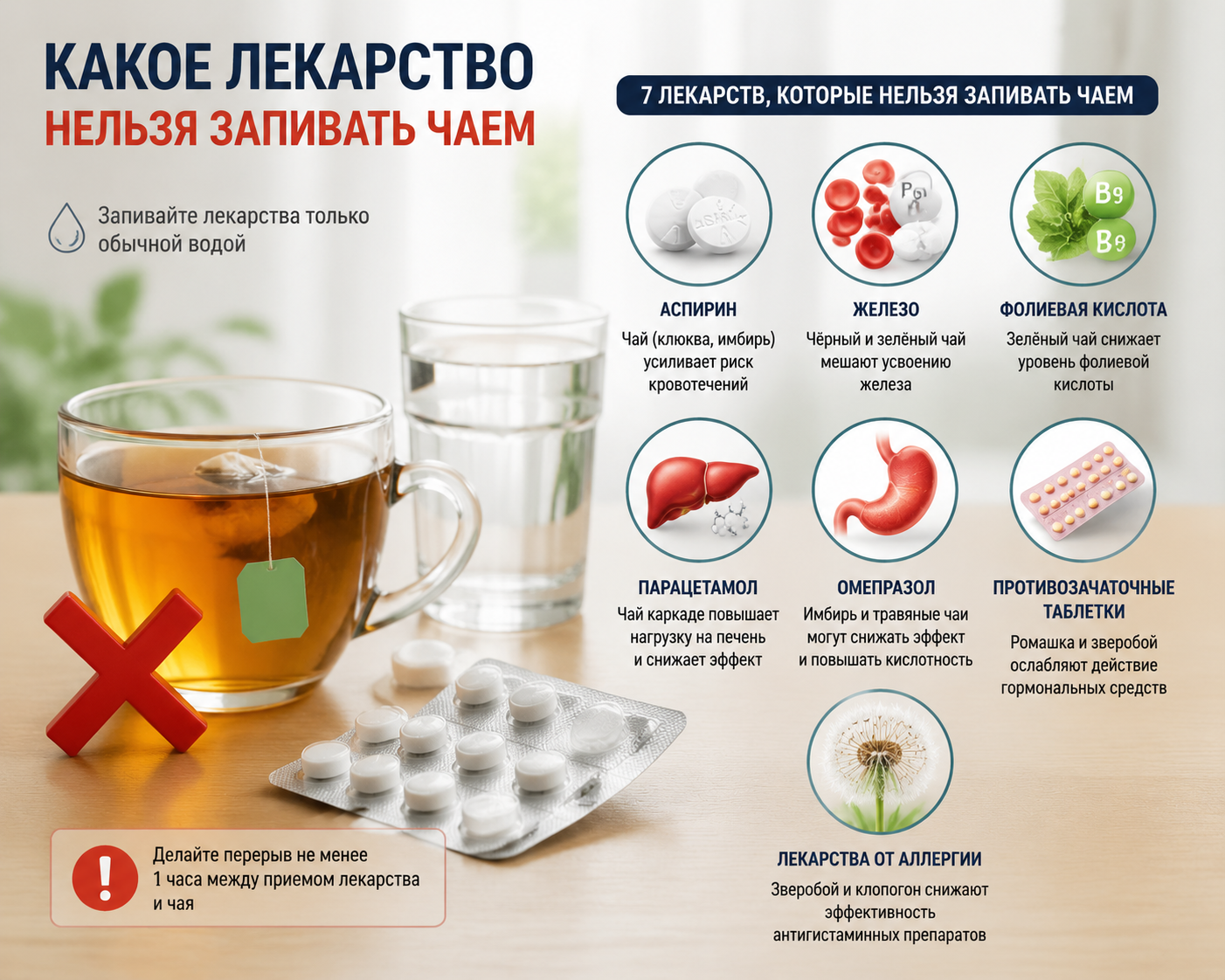
Iron
Black and green teas contain a lot of tannins – substances that hinder the body's absorption of iron. Therefore, iron supplements may be less effective. This is particularly relevant for pregnant women, postpartum women, people with anemia, and those with low hemoglobin. Doctors recommend drinking tea no sooner than one hour before or after taking iron supplements.
Folic Acid
Excessive consumption of green tea may lower the level of folic acid in the body. This is especially important for pregnant women, as a deficiency in folic acid increases the risk of congenital defects in the child. Specialists recommend that pregnant women avoid excessive green tea consumption.
Paracetamol
Hibiscus tea may influence the action of paracetamol (acetaminophen). For example, it can increase the load on the liver, accelerate the elimination of the drug from the body, causing it to be less effective or to act for a shorter duration.
Omeprazole
Ginger and some herbal blends can affect the action of omeprazole – a medication for heartburn and reflux. Some teas can increase stomach acidity, reduce the effectiveness of the drug, and even increase the risk of bleeding.
Contraceptive Pills
Chamomile and St. John's Wort can weaken the effects of hormonal contraceptives. Therefore, the risk of unwanted pregnancy may increase. Caution should be exercised with St. John's Wort, as it often interacts with various medications.
Allergy Medication
St. John's Wort and bugbane can reduce the effectiveness of antihistamines. If you regularly drink herbal teas while treating allergies, it is better to consult a doctor or pharmacist.
What to Drink with Medications
A cardiologist advises taking medications only with water and being cautious not only with tea.
– It is recommended to take medications with a sufficient amount of plain water. It is not advisable to consume medications with juices, carbonated drinks, or alcohol, the doctor notes.
For medications to work properly, they should only be taken with water. Special caution should be exercised with seven categories of drugs: aspirin, iron supplements, folic acid, paracetamol, omeprazole, contraceptive pills, and allergy medications. Tea can alter their action, so it is better to maintain an interval of at least one hour between taking the medication and drinking tea and to consult a doctor or pharmacist when regularly consuming herbal blends.












Leave a comment