
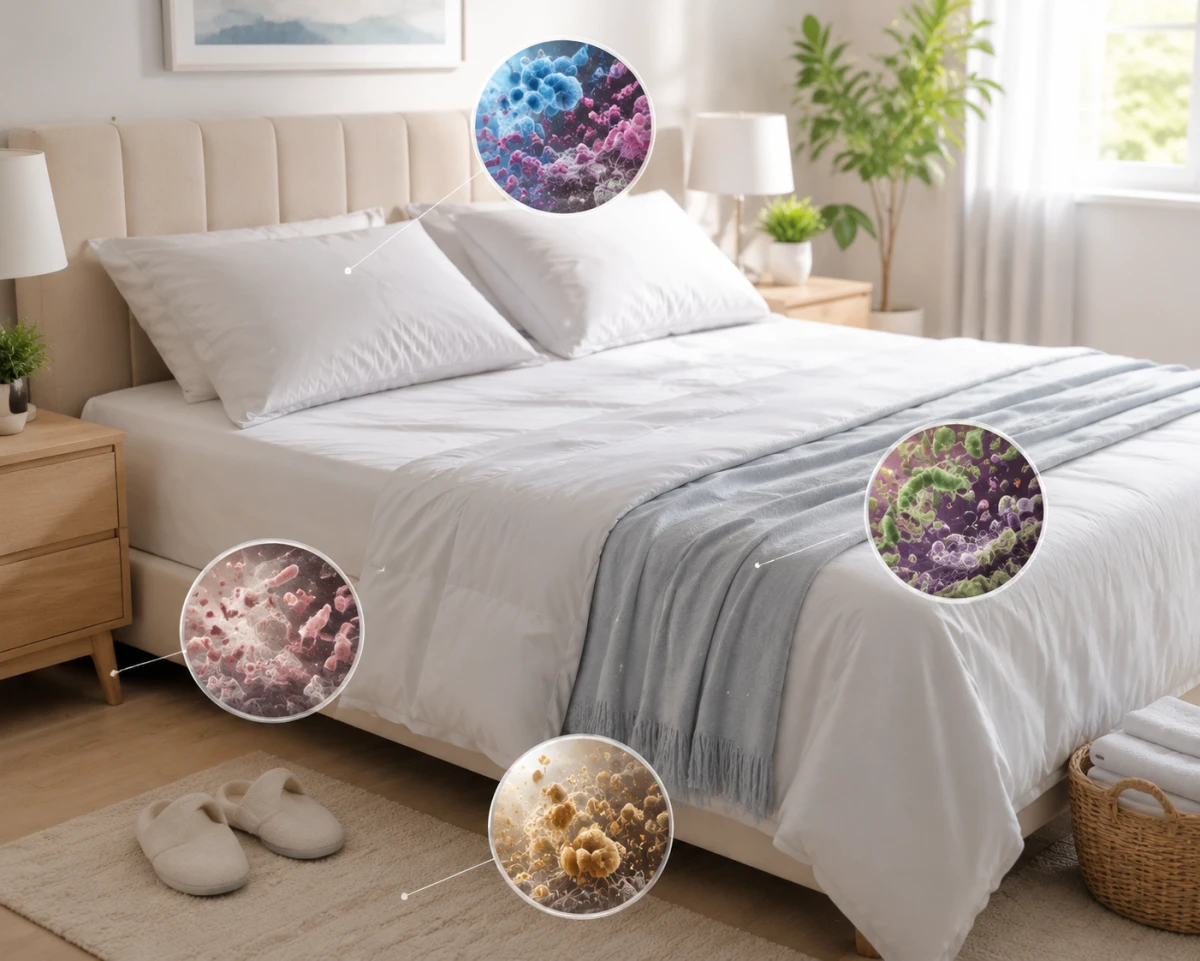
We are used to fearing the toilet, but in reality, the dirtiest area in the house is your bed. Millions of bacteria and fungi accumulate on sheets and pillows at night, feeding on dead skin cells, sweat, and remnants of cosmetics.
You sleep every night in one of the dirtiest places in your home. And no, this is not an exaggeration. Research shows that the concentration of bacteria on bedding can be tens of thousands of times higher than their amount on a toilet seat. While you enjoy your sleep, invisible life is thriving on your sheets and pillows.
In one night, a person sheds up to half a billion dead skin cells and secretes up to one and a half liters of sweat. Add saliva, remnants of cosmetics, and dust particles to this — and you get the perfect nutrient medium for bacteria and fungi. American dermatologists have calculated that on a pillowcase that hasn’t been changed for a week, there can be up to 5 million bacteria per square centimeter. In comparison, on the same area of a toilet seat, there are only about 50.
But where is the epicenter of this bacterial universe? Scientists identify two main risk zones.
The first is the pillowcase and headboard. Here, staphylococci and streptococci from hair, saliva, and dead skin cells from the face accumulate. Up to 16 types of fungi can live on one pillow, and if it is more than one and a half years old, there can be about a million spores, including Aspergillus fumigatus, which causes severe allergies.
The second zone is the lower part of the sheet, at the feet. Here, we bring in soil particles and even fecal bacteria on our soles. And if you let pets into your bed, the risk of contracting E. coli increases significantly.
How often should you change your bedding? Doctors are unanimous: at least once a week. However, there are exceptions. If you have allergies, live with pets, sleep without pajamas, or enjoy snacking in bed — you should change your bedding every 2–3 days.
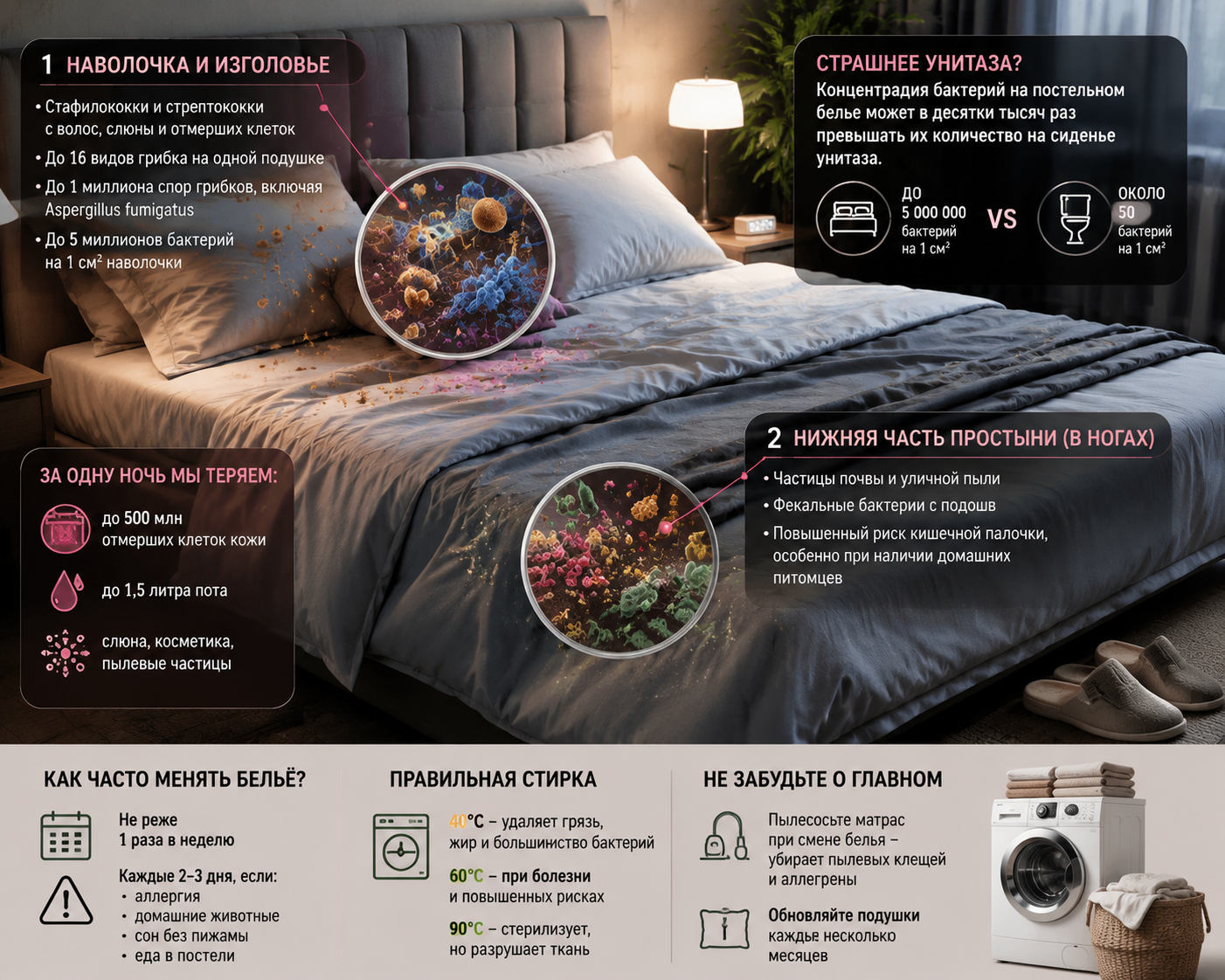
Equally important is washing correctly. Experts agree: the optimal temperature for killing microbes without harming the fabric is 40–60 degrees Celsius. At 40°C, dirt, grease, and most bacteria are removed. If you have been ill, it is better to choose the 60°C setting. However, washing at 90°C, while sterilizing, quickly destroys the fibers of the fabric.
And one last piece of advice: don’t forget about the mattress and pillows. Professor of Microbiology Primrose Freestone reminds us that when changing bedding, you should vacuum the mattress to remove dust mites and allergens. Pillows should be replaced every few months.
Your bed is a place for rest, not a testing ground for bacteria. Changing your bedding once a week separates healthy sleep from questionable company with millions of unwanted guests.
Pillowcases, headboards, and the lower part of the sheet are the most dangerous zones. Regularly changing bedding at least once a week, washing correctly at 40–60°C, and cleaning the mattress and pillows help reduce the number of microbes and maintain health, turning the bed into a safe place for rest.












Leave a comment