
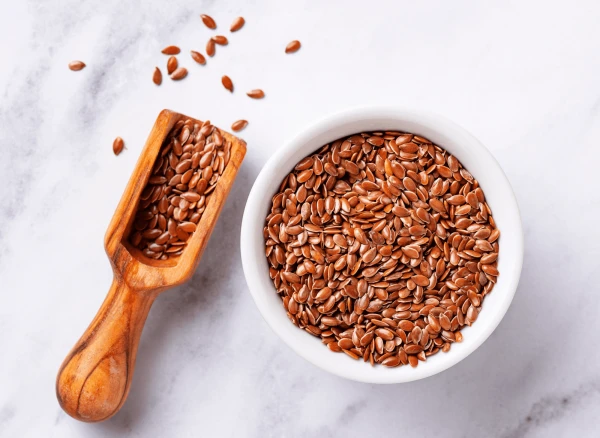
As women age, their bodies change: metabolism slows down, hormonal levels fluctuate, and the burden on the heart and blood vessels increases. In this context, flaxseeds are often referred to as "a simple and accessible way to support health." But how justified are such claims?
Why Flaxseeds Are Discussed After 40
After the age of 40, many women begin to experience a gradual hormonal shift associated with the approach of menopause. Against this background, there is an increased interest in products containing phytoestrogens — plant compounds that partially mimic the action of female hormones.
Flaxseeds indeed belong to such products. They contain lignans — substances with estrogen-like effects that may participate in regulating hormonal balance.
In addition, during this period, the risk of cardiovascular diseases increases, and flax is also considered a beneficial addition to the diet.
Main Health Benefits: What Science Confirms
Flaxseeds are not a "magic remedy," but their composition has been studied quite well. They contain:
-
omega-3 fatty acids, which support heart and vascular health;
-
fiber, which improves digestion;
-
lignans, which have antioxidant and hormone-regulating properties.
Research shows that regular consumption of flax may:
-
reduce levels of "bad" cholesterol by 9–18%;
-
improve bowel function and microbiota;
-
decrease inflammatory processes in the body;
-
potentially lower the risk of hormone-dependent diseases, including breast cancer.
Some studies also indicate possible relief from menopausal symptoms — for example, a reduction in hot flashes and stabilization of well-being.
Impact on Hormonal Background and Well-Being
The main argument in favor of flax for women over 40 is its influence on hormones.
Phytoestrogens do not replace full-fledged hormone therapy but can gently support the body. This is especially relevant in cases of:
-
hot flashes;
-
sleep disturbances;
-
dry skin.
However, it is important to understand: the effect is individual and not always pronounced. Medical sources emphasize that such products work as part of a diet, not as treatment.
Do Flaxseeds Help with Weight Loss?
Another popular claim is that flax can aid in weight loss. This is partially true.
The high fiber content:
-
provides a feeling of fullness;
-
reduces appetite;
-
helps control blood sugar levels.
But without changes to diet and lifestyle, significant effects should not be expected. Flaxseeds are an auxiliary, not a primary tool.
How to Properly Consume Flaxseeds
To maximize benefits, it is important to consider how to consume them:
-
it is better to use ground seeds, as whole ones are poorly absorbed;
-
the optimal dose is about 1–2 tablespoons per day;
-
they can be added to cereals, yogurts, smoothies, or salads;
-
it is important to drink enough water.
Some studies indicate that regular intake of 30–40 g per day can provide noticeable health effects, but such dosages are best discussed with a specialist.
Possible Harm and Limitations
Despite their benefits, flaxseeds are not suitable for everyone.
They should be consumed with caution in cases of:
-
gastrointestinal diseases;
-
hormone-dependent diseases (without consulting a doctor);
-
pregnancy and lactation;
-
tendency to allergies.
Excessive consumption may cause digestive problems due to the high fiber content.
...Flaxseeds are indeed a beneficial product, especially for women over 40, when the importance of hormonal balance and cardiovascular health increases. However, they are not a universal solution and only work as part of a balanced diet and healthy lifestyle.















Leave a comment