
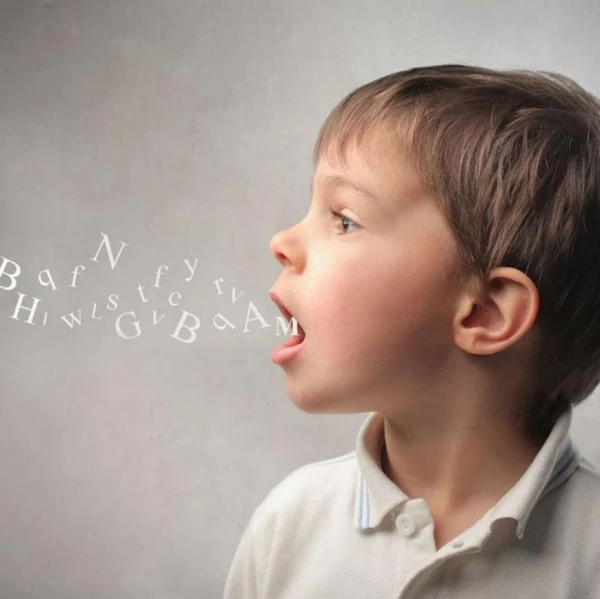
Many parents face the situation where their child begins to stutter in speech. In some cases, this is a natural stage of development, while in others, it is a signal of a deeper problem. It is important to timely distinguish temporary speech disruptions from stuttering that requires the attention of specialists.
At an early age, especially during the active formation of speech, children may speak with pauses, repeat words, and get stuck. This is because thoughts develop faster than the speech apparatus can express them.
What is Childhood Stuttering
Stuttering (logoneurosis) is a disorder of the fluency and rhythm of speech. It manifests as the repetition of sounds and syllables, elongation of words, pauses, and so-called "blocks," when the child cannot start a phrase.
The key sign is regularity. If such manifestations persist for more than a few months and are accompanied by tension, it is no longer a temporary phenomenon but a disorder. Most often, the problem manifests itself between the ages of 2 and 5 — during the period of most active speech development.
Main Causes of Stuttering
Specialists emphasize that stuttering rarely arises from a single factor. Usually, it is a combination of causes:
-
hereditary predisposition;
-
peculiarities of the nervous system's functioning;
-
immaturity of speech centers;
-
possible neurological disorders.
Stress or fear can only serve as a trigger, but not the main cause. They activate an already existing predisposition rather than create a problem from scratch.
How to Distinguish Normalcy from a Problem
Not every stutter is a cause for panic. It is important to pay attention to the nature of speech.
Normal Age Characteristics:
-
repetition of words or phrases;
-
pauses without tension;
-
absence of fear of speaking;
-
the child does not notice their mistakes.
Signs of Stuttering:
-
sounds and syllables are repeated;
-
speech is accompanied by tension;
-
"stuck" moments occur;
-
additional movements appear (blinking, nodding);
-
fear of speech develops.
If such symptoms increase, it is important not to delay a consultation.
Can Stuttering Resolve on Its Own
In some cases, stuttering does indeed resolve without intervention — in about 70–80% of children. However, waiting is not always safe. If the problem persists for more than six months, intensifies, or causes anxiety in the child, professional help is necessary. Otherwise, there is a risk that the disorder will become entrenched and carry over into adulthood.
Who to Consult
Stuttering correction requires a comprehensive approach.
-
Speech therapist — the main specialist working with speech;
-
Neurologist — assesses the condition of the nervous system;
-
Psychologist — helps with anxiety and fear of speech.
Diagnosis includes an analysis of speech, the child's emotional state, and possible provoking factors.
How Parents Can Help
The behavior of adults plays a key role. An incorrect reaction can exacerbate the problem.
What Not to Do:
-
rush the child;
-
interrupt or finish their sentences;
-
emphasize the defect;
-
show irritation or anxiety.
What Really Helps:
-
a calm atmosphere at home;
-
slow and clear speech from adults;
-
support without pressure;
-
patient listening.
How Stuttering is Treated
The main focus is not on medications but on working with speech and psychology.
The following are used:
-
breathing and speech exercises;
-
speech therapy techniques;
-
psychotherapy;
-
play and creative methods (art and storytelling therapy).
Medications are used only as an additional measure.
What the Result Depends On
The success of correction is directly related to early diagnosis. The earlier the work begins, the higher the likelihood of complete speech recovery.
Factors Affecting the Result:
-
the child's age;
-
the severity of the problem;
-
emotional state;
-
regularity of sessions;
-
parental involvement.
Childhood stuttering is not just a speech peculiarity but a signal that requires attention. In most cases, with timely help, the problem can be corrected or minimized. The main thing is not to ignore the symptoms and not to wait for everything to resolve on its own if the signs persist and intensify.
















Leave a comment