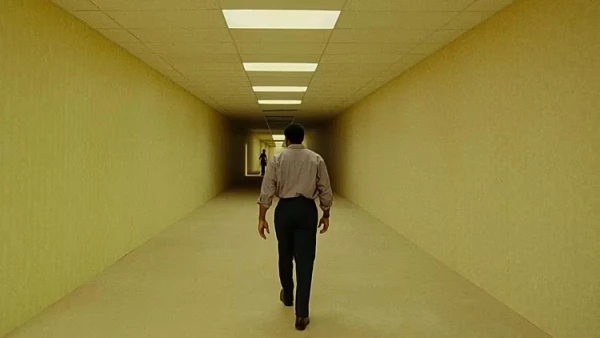
You may strongly desire to change something in your life, but desire alone is not enough. We continue to act out of inertia, even if the familiar scenario causes pain and suffering. How to change your life is explained by psychologist Denis Dolgov.
The human psyche sometimes works in astonishing ways: certain things can irritate us, yet we stubbornly continue to do them. For example, a person may stay in a relationship for years out of inertia, even when they feel unwanted. It is important to consider both codependency and the fact that the psyche does not like novelty: it is better to feel bad, as long as everything is clear and familiar.
For the same reason, we continue to live in ways we do not want. Changing our beliefs is always a significant stress.
A person falls back into old reactions because understanding and behavior rely on different systems of the brain, which operate at different speeds and according to different rules.
"Rational awareness is formed in the cortex, where we analyze and draw conclusions, while real actions are triggered in areas associated with the basal ganglia and cerebellum, where patterns ingrained over the years turn into automatic routes that activate before a person has time to think," says Denis Dolgov.
To simplify, many people act first and think later. And this happens involuntarily. Who wants to shed a tear in response to an offensive remark? It is better to leave with dignity, but the reaction is faster than the desire.
Another important fact: you are accustomed to a specific reaction. That is, the brain is familiar with one path—why forge another? It is better to take the path that has been walked for many years.
How to Stop Repeating the Same Mistakes
"To change this route, you need not an epiphany, but repeated practice of new behavior, preferably in very small doses, as procedural memory is built on regularity rather than bursts," says Denis Dolgov.
You cannot change everything at once; it would be a significant stress for the body. The best thing you can do is to outline the steps that will lead you to your goal. After that, each step must be repeated many times to firmly establish it in your consciousness, and only then can you increase the level of difficulty. Only in this way can you automatically reinforce the desired reactions.
"Choose one specific action that symbolizes your new line of behavior and repeat it daily in the smallest possible volume," adds Denis Dolgov.
Neural habits are always the result of consistency, not self-violence. Only regular work will allow you to change your perception of the surrounding world.