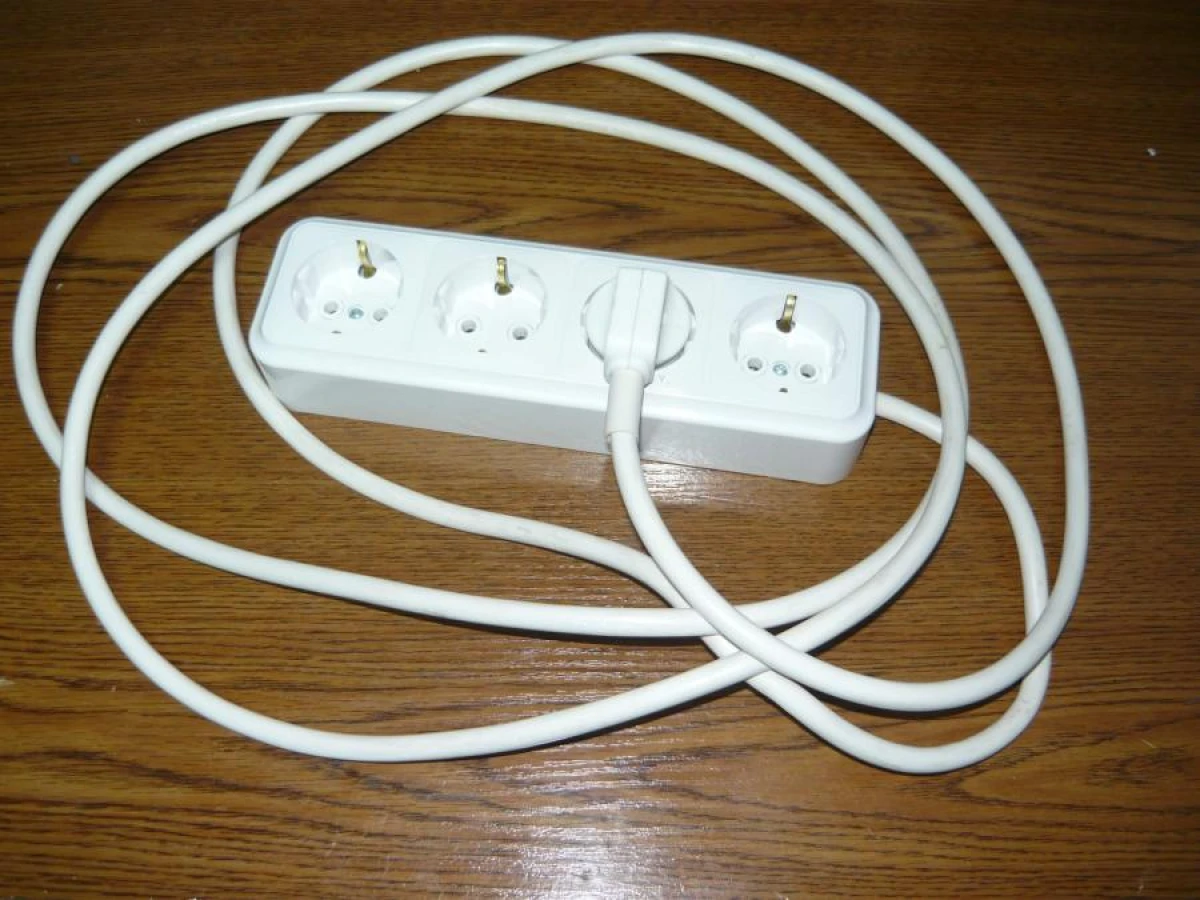
Extension cords are designed for temporary connection of low-power devices: floor lamps, phones, laptops, printers, fans.
“Devices that generate heat, have motors, or require grounding should not be connected to an extension cord,” said electrical engineering experts.
- Powerful heaters (the most dangerous group)
Electric heaters (especially fan heaters and oil radiators), electric kettles, irons, hair dryers, electric hot plates.
They have extremely high power consumption. A typical heater consumes 1500–2500 W. This is practically the limit for a standard outlet. An extension cord, especially a cheap one or one that is coiled, is not designed for such current. In places of poor contact (in a cheap extension cord or if the plug is not inserted tightly), high resistance occurs. The wire begins to heat up, the insulation melts, and a fire can break out.
- Large household appliances with electric motors
Refrigerator, washing machine, dishwasher, air conditioner, powerful vacuum cleaner.
When the motor of a refrigerator or air conditioner starts, the energy consumption jumps 3–5 times the nominal value for a fraction of a second. Even if the label states 500 W, at startup it can draw 2000 W.
The constant load — the refrigerator runs 24/7. If it is connected through a poor extension cord, it will constantly heat up. Over time, the contacts will loosen, and smoldering will begin.
Grounding — modern refrigerators and washing machines have a grounded plug (Euro). Extension cords are often sold without grounding, which removes protection against electric shock.
- “Heavy” kitchen appliances
Microwave, multicooker, electric kettle, toaster, air fryer, coffee machine.
In the kitchen, there is usually one group of outlets. If an extension cord is plugged into it and a microwave (800–1000 W) and kettle (2000 W) are plugged into it simultaneously, a slow-motion short circuit is created. The total power easily exceeds 3 kW, and the wiring will begin to heat up. It is better to use such appliances one at a time and only in stationary outlets.
Many dishes can be prepared in a regular pot. They do not belong here. Which kitchen appliances may turn out to be useless? More details
- Precise and expensive devices (risk of damage)
Computer (especially gaming), server, Hi-Fi amplifier, television.
Cheap extension cords have poor contacts and lack interference filters. They can cause voltage drops that damage computer power supplies and distort sound in audio equipment.
Exception: high-quality surge protectors and UPS can be used — this is no longer just an extension cord, but a protective device.