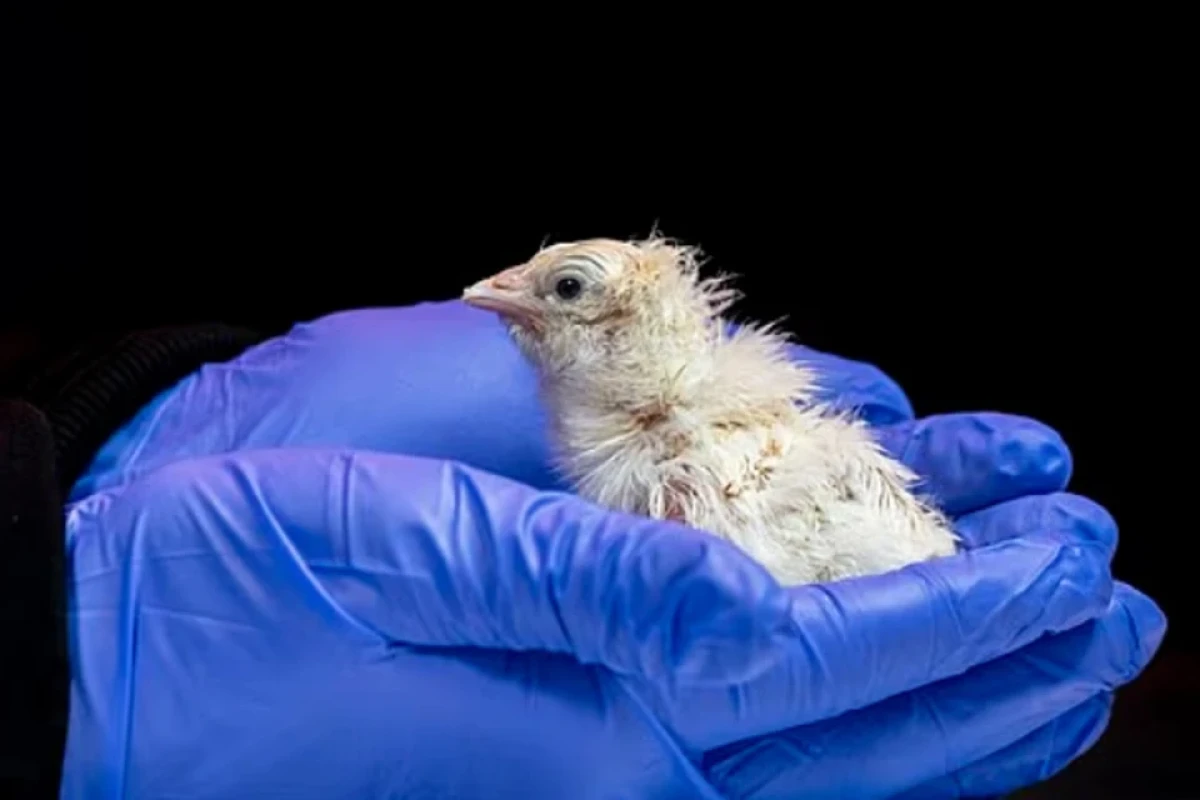
Researchers from the American biotechnology and genetic engineering company Colossal Biosciences believe they have taken a significant step towards the resurrection of the giant extinct bird moa, which once inhabited New Zealand. They created an "artificial shell" – a device in which they plan to eventually realize their idea, and successfully raised a full-fledged chick – a chicken. They joyfully announced this.
According to Ben Lamm, the CEO and founder of Colossal Biosciences, 26 chicks have "hatched" from artificial eggs over the course of several months.
The company has gained worldwide fame for its original activities. It is attempting to recreate extinct animals. And it is somewhat succeeding. Using genetic material extracted from remains, scientists are embedding characteristic DNA fragments into the embryos of currently living animals. These animals then carry and give birth to individuals that are quite similar to the "prototypes," if one can put it that way.
Last year, Colossal Biosciences surprised the world by "producing" mice with long, reddish, curly fur. Just like mammoths. For this, modern genome editing methods were used to insert characteristic DNA fragments of the woolly mammoth into 8 key mouse genes.
In addition to their characteristic appearance, the newborn mice also acquired frost resistance – again, just like their larger "prototypes." Scientists plan to perform similar manipulations with the embryos of Asian elephants – so that the female elephants give birth to calves resembling mammoths. And then they will reproduce on their own.
After the mammoth-like mice, scientists similarly created the extinct "dire wolf." It lived in North America and went extinct 12,500 years ago. Those who watched "Game of Thrones" know the huge beast as the direwolf.
Three puppies were born from genetically edited gray wolf embryos. The DNA for editing was extracted from the skull of a real direwolf that lived 72,000 years ago and from a tooth that was 13,000 years old. The direwolf pups were carried by domestic dogs.
And now, the chicks. They were bred solely to test the functionality of the "artificial shell" that Colossal Biosciences specialists made using a 3D printer. The membrane it was equipped with successfully allowed oxygen to pass through, mimicking a real egg. This greatly contributed to the success of the "incubation" in a regular incubator.
The device is set to be scaled up – that is, to build a similar one, but much larger, so that it can accommodate an embryo comparable in size to a moa embryo. These flightless birds, which stood over 3 meters tall, laid eggs 80 times larger than chicken eggs.
Moa DNA has been found – it was extracted from the remains of giant birds discovered in caves in New Zealand. The embryos for editing will be "provided" by emus. Moa are planned to be grown in artificial eggs from edited emu embryos.
Colossal Biosciences describes its activities as the resurrection of extinct animals. This has drawn quite justified criticism from colleagues. In their opinion, it may be about creating genetically modified animals that outwardly resemble the extinct ones. But to actually resurrect someone through the transplantation of part of their genes – that is certainly an exaggeration.
Enthusiasts believe that there is nothing reprehensible in pseudo-resurrection either. And recreating animals that simply resemble the extinct ones is a noble cause.