Due to their porous structure, they allow the reaction to occur deeper, capturing more metals.
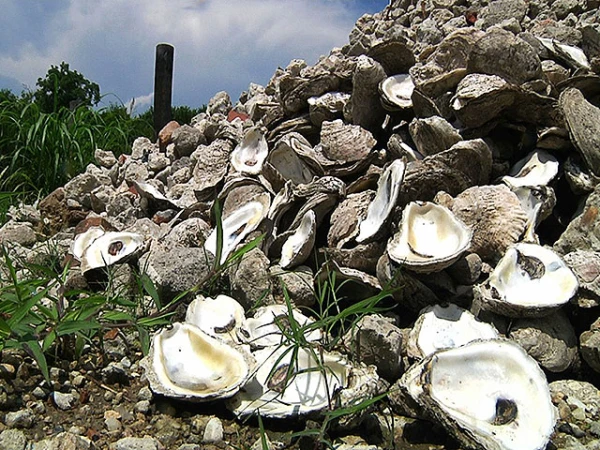
Researchers from Trinity College Dublin have proposed an inexpensive and environmentally friendly method for purifying water from pollutants – using waste marine shells that are typically discarded after consumption. The work, published in the journal Science of the Total Environment, showed that shells, particularly oyster shells, can effectively extract rare earth elements from water. This occurs naturally: dissolved metals are transformed into stable mineral crystals and remain "trapped" within the structure of the shell.
Rare earth elements are widely used in modern technologies – from wind turbines to smartphones; however, their extraction and entry into the environment are associated with ecological risks. In water bodies, such metals can accumulate and negatively affect living organisms, making the search for simple removal methods increasingly important.
During experiments, scientists placed crushed shells of mussels, clams, and oysters into solutions containing rare earth elements. It was found that the shells initiate a chemical process: their main component – calcium carbonate – dissolves and is replaced by new minerals containing these metals. Thus, the shells act as a kind of "matrix," transforming dissolved substances into solid compounds.
Oyster shells showed the best results. Due to their porous structure, they allow the reaction to occur deeper, capturing more metals. In contrast, mussel and clam shells quickly form a dense layer of crystals on the surface, which slows down further interaction. As a result, oyster shells were able to absorb up to 1.5 grams of rare earth elements for every gram of material. This means that even a small amount of such waste can effectively purify contaminated water and potentially be used to extract valuable metals from industrial effluents.